
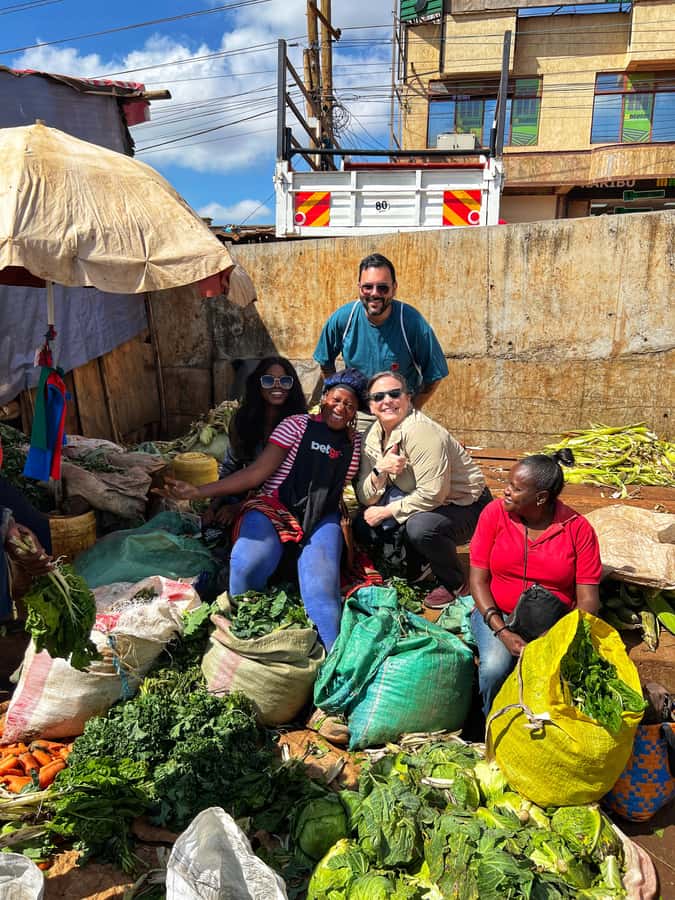
Reviewed · NAIROBI TOURS
Local Market Tour and Traditional Meal Cooking Class
The best part of this three-hour Nairobi experience is the move from local market shopping to a private home kitchen. You do not just hear about Kenyan food. You help choose the ingredients, prepare the meal, and sit down to eat it with a local host.
I like the small group limit of six, which should make it easier to ask questions and take part. I also like the choice of an optional matatu ride, since public transport adds a useful slice of everyday Nairobi life. The main drawback is the apartment itself: it is on the fourth floor with stairs only, so the home portion will not suit everyone.
Key points to know before you book
- Shop before you cook: The visit begins in a real local farmers market, where you help buy fresh ingredients for the meal.
- Meet a local host: Gladys and Ninoh are named in connection with the experience, and the cooking takes place in a private home.
- Choose your transport: A matatu ride is offered as an optional part of the local-life experience.
- Expect hands-on work: You will prepare and cook Kenyan food, then sample the finished dishes.
- Small group setting: A maximum of six people keeps the class personal and practical.
- Plan for stairs: The host’s apartment is on the fourth floor and the building has no lift.
From Westlands Square to a Nairobi market
You meet at Westlands Square, outside the Java cafe entrance. This is a central, recognizable meeting point, but hotel pickup is not included, so you need to arrange your own way there.
The experience has two listed starting times, 11:30am and 5pm. The earlier option gives you a daytime market visit, while the later start may suit you if your morning is already filled with sightseeing. Ask about the exact schedule when you book, since market activity and traffic can affect the pace.
From the meeting point, you may travel by bus for about 10 minutes. The optional matatu ride is one of the more interesting touches here. A matatu is a shared public minibus used widely in Kenya, and riding one gives you a closer look at ordinary city transport than a private car would.
That said, a matatu is public transport, not a sightseeing vehicle. It may feel less predictable and less comfortable than a taxi. If you prefer a simpler start, you can skip that optional part and focus on the market and cooking class.
More cooking classes in Nairobi:
- Traditional Kenyan Cooking Class & Local Market Tour
★ 5.0 · 129 reviews - Authentic Kenyan Cooking Class & Market Tour in Nairobi
★ 5.0 · 12 reviews - Private Traditional Kenyan Cooking Class with Lunch in Nairobi
★ 5.0 · 10 reviews
Shopping for ingredients in a working market

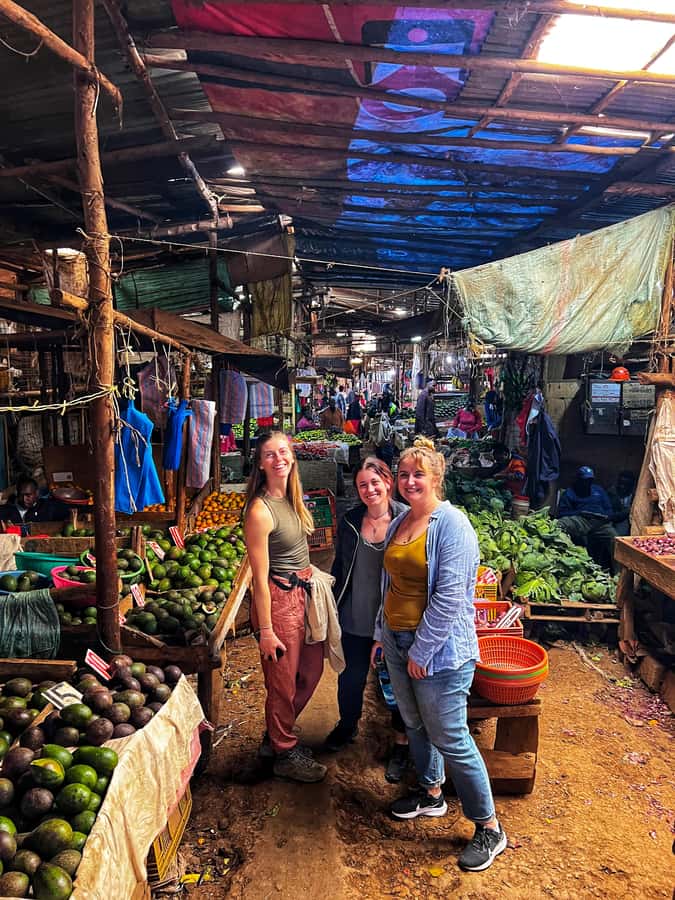
The market visit is not just a quick stop for photographs. You enter a local African fresh market and help shop for the food used later in the class. This gives the cooking a clear beginning: first see the produce, then choose it, then prepare it.
I like this order because it helps you understand Kenyan food in a practical way. You can connect the finished dish to the ingredients you saw in the stalls, rather than treating the meal as an isolated demonstration.
The market portion is listed as a guided walk with shopping and food-market sightseeing. The schedule information gives different time figures for this section, so you should not expect every minute to run on a rigid clock. The full experience is advertised as three hours, but traffic, shopping, and cooking can affect the actual finish time.
Wear flat, closed shoes or comfortable sports shoes. Market walking can be uneven, and you will enjoy the visit more if you are not worrying about sore feet. A light jacket is useful, and an umbrella or raincoat is sensible during the rainy season.
Dress modestly for the market and the home visit. Trousers or a long skirt are recommended, while crop tops and shorts are not suitable for this activity. This is simple advice, but following it shows respect and keeps you comfortable in a local setting.
A short trip to the host’s apartment
After shopping, you travel to the host’s home, about 10 minutes from the market depending on traffic. The apartment is on the fourth floor and has a nice view, but there are no lifts. You must use the stairs.
This is the most important practical limitation to consider before paying. The activity is marked wheelchair accessible, yet the apartment building has stairs only. If you use a wheelchair, have difficulty climbing stairs, or simply want to avoid four flights after a market walk, contact the operator first and ask exactly which parts can be adapted.
The home setting gives the cooking class a personal feel. You are not in a large teaching kitchen with a row of strangers watching from a distance. You are in a local apartment, using a normal home environment for a shared meal.
The home has Wi-Fi and a clean washroom. You can also take a short break after the meal before arranging your return transport. The host can help request an Uber, but the fare back to your hotel is your responsibility.
Cooking Kenyan food with the host
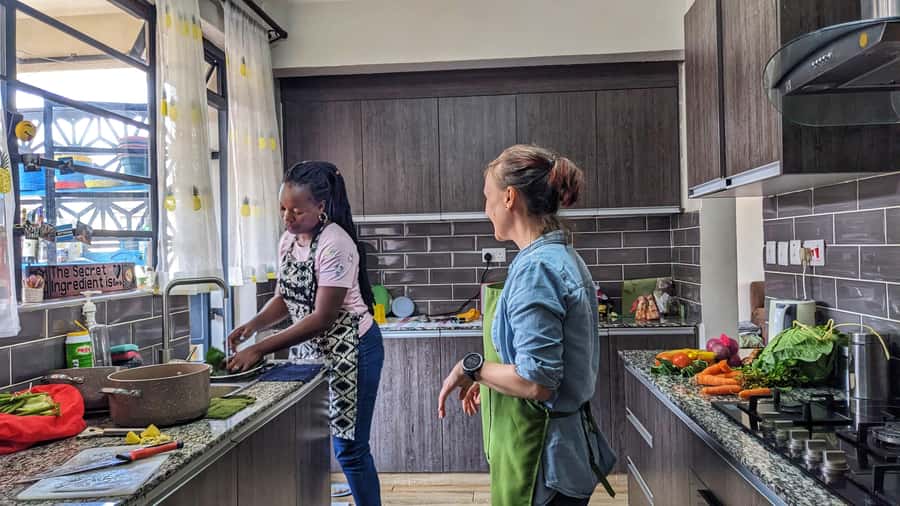
Once you arrive, you receive a refreshment and begin cooking. The class is designed to be hands-on, so expect to chop, prepare, stir, and work alongside the host rather than sit through a long lecture.
The food is described as Kenyan traditional and national cuisine, prepared with fresh, organic local ingredients bought during the market visit. The menu can suit meat eaters, vegetarians, vegans, and pescatarians. If you have a specific meal request, contact the host before the experience rather than waiting until you arrive.
That flexibility is useful for mixed groups. One person may want a meat dish, while another prefers vegan food, and the class is set up to accommodate those diets. Still, the exact menu is not specified in advance, so ask if you have a particular Kenyan dish in mind.
I like the idea of learning through a full meal rather than a single recipe demonstration. You get a sense of how ingredients are selected, how food is prepared at home, and how the finished dishes are served. It is also a good way to ask about food customs and daily routines in Nairobi.
The host’s personal role matters here. One guest specifically praised Gladys for her care with security, meal preparation, cooking, and presentation. Another named Ninoh as the person who made the market and cooking experience especially personal and connected to the community. Depending on your booking, you may meet one of them, so confirm the host’s name if that is important to you.
More market walks in Nairobi:
- Memorable Daily KIBERA Slums/Toi Market Tour with Locals (2 hours)
★ 5.0 · 29 reviews - Half-Day Nairobi National Park and Maasai Market with Pick up
★ 5.0 · 16 reviews - Nairobi: Hop on Hop off and Maasai market Collections Visit
★ 3.5 · 10 reviews - Explore local Market matatu ride & Make Kenyan Cuisines with a home cook
★ 5.0 · 8 reviews
Sitting down to a traditional Kenyan meal
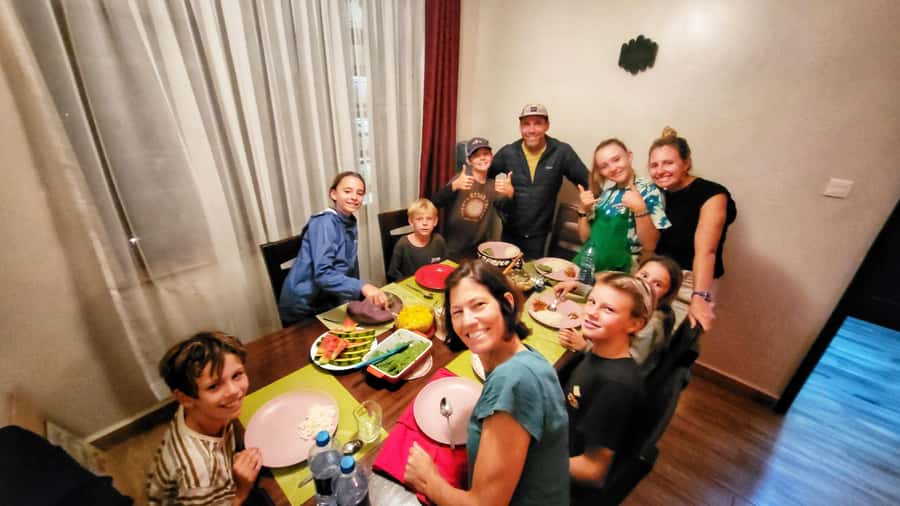
After the preparation comes the reward: you eat and sample the Kenyan food together. The meal is part of the class price, and it turns the cooking session into a shared social visit rather than a simple lesson.
This is also where the experience differs from a standard restaurant meal. At a restaurant, you can taste the food, but you do not see the shopping, preparation, or home setting behind it. Here, the meal gives you a reason to talk with the host and ask about local food culture.
The pace should feel relaxed, although three hours is not a long time once you include transport, shopping, cooking, and eating. If you want a slow, elaborate culinary workshop, this may feel brief. If you want one well-shaped introduction to Kenyan food and daily life, the schedule makes sense.
There is time to relax a little at the end. You are not dropped straight onto a coach after the final bite. When you are ready, you arrange your own taxi or Uber back to your hotel, with help from the host if needed.
What the $64 price really covers
At $64 per person, this is not the cheapest way to eat in Nairobi. You can certainly find a low-cost meal for less. The value here comes from combining several parts in one small-group activity: a guided market visit, ingredient shopping, possible public transport, a cooking class, and a prepared meal.
The price is easier to justify if you want contact with a local host and prefer an activity that gives you context around the food. You are paying for time, guidance, ingredients, transport during the activity, and access to a private home setting, not just a plate of food.
It is also a better deal for people who will take part fully. If you are happy to shop, cook, ask questions, and eat with the host, you receive more from the experience. If you mainly want to watch a chef prepare food, a restaurant or formal demonstration may offer better value.
The small group maximum of six is another point in its favor. A small class can make it easier to handle ingredients and ask direct questions. It also means the experience is more social, so it may suit solo visitors, couples, or friends who enjoy meeting others.
Hotel pickup and drop-off are not included. Remember to budget for your trip to Westlands Square and your return from the apartment. The optional matatu ride may keep the experience more local, while an Uber afterward gives you a more direct ride back.
Who will enjoy this Nairobi experience most
I would recommend this to you if food is one of your main ways of understanding a place. You do not need advanced cooking skills. The point is to work with the host and learn as you go.
It is also a good fit if you want a break from Nairobi’s major attractions. The market, bus ride, and apartment kitchen show ordinary routines rather than famous sights. That makes the experience feel different from a standard city tour.
Vegetarians, vegans, pescatarians, and meat eaters can all be accommodated. Tell the host about your needs ahead of time, especially if you have a specific dish request.
The tour may be less suitable if you dislike public transport, crowded markets, or home-based activities. You should also avoid it if you have animal allergies, as the experience is specifically marked as unsuitable for people with them.
Families and older participants should think about the stairs. The group is small, but the apartment is still four floors up with no lift. Comfortable clothes and shoes will make the day easier, and a light jacket helps if the weather changes.
Timing, comfort, and small details that matter
The start point is Westlands Square, at the Java cafe entrance. The tour ends at Waiyaki Real Gardens on Waiyaki Way according to the route information, but the home portion also includes help arranging a taxi back to your hotel. Confirm the final drop-off plan before you start, since hotel transport is not included.
English and Swahili are the tour languages. That gives you a chance to hear both languages in a natural setting, while English provides the main communication for the class.
Bring comfortable clothes that allow you to move around the kitchen. Closed shoes are safer and more useful than sandals. If you are visiting during rainy weather, pack an umbrella or raincoat.
The activity allows free cancellation up to 24 hours before the start for a full refund, and you can reserve now and pay later. Those terms are helpful if your Nairobi plans may shift, but you should still check the exact availability for your chosen start time.
The experience has a five-star average from four verified bookings, with praise focused on the personal nature of the day, the market visit, the cooking, the food, and the host’s care. One couple especially liked taking a bus, shopping, and cooking in the home because it gave them a clearer view of daily life in Nairobi. Another described the meal and conversation as a memorable part of a Nairobi visit.
Should you book the market and cooking class?
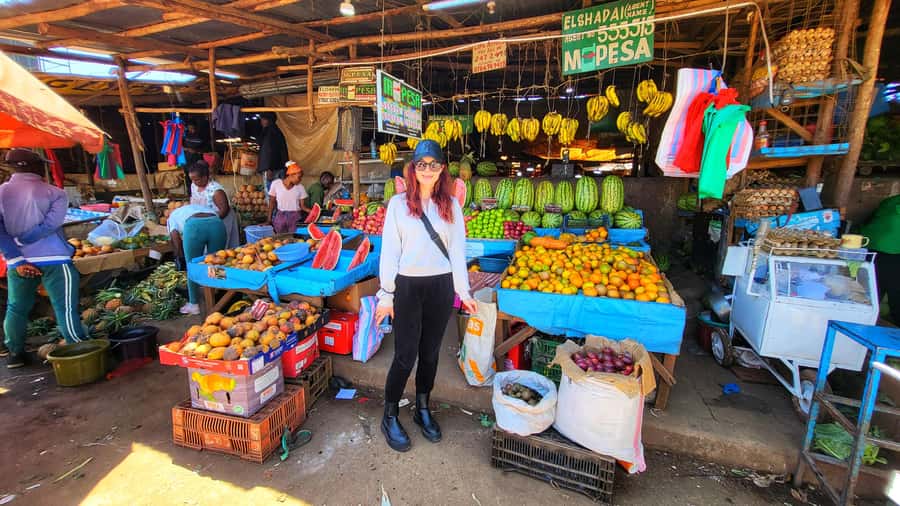
Book it if you want to take part rather than watch. The strongest reason to choose this experience is the chain from market to kitchen to meal. You see the ingredients, help buy them, cook with a local host, and eat what you prepared.
The $64 cost is fair for that combination, especially with a group capped at six and food included. It is not the right pick if you want a polished restaurant meal, a private vehicle all day, or a highly structured culinary school.
Before booking, confirm the host, menu, exact start time, and accessibility of the apartment. If you are comfortable with stairs and open to a real local setting, this is a thoughtful way to spend three hours in Nairobi and leave with more than a full stomach.
FAQ
Where does the experience begin?
It begins at Westlands Square. Meet the guide at the entrance to the Java cafe inside the mall.
How long does the experience last?
The advertised duration is three hours. The start times are listed as 11:30am and 5pm.
Is hotel pickup and drop-off included?
No. You must make your own way to Westlands Square, and transport back to your hotel is also at your own cost. The host can help request an Uber.
What languages does the guide speak?
The live guide speaks English and Swahili.
Can the meal accommodate different diets?
Yes. The meal can suit pescatarian, vegan, vegetarian, and meat-eating diets. Contact the host ahead of time for specific meal requests.
Is the apartment accessible by lift?
No. The apartment is on the fourth floor, and the building has stairs only. This is important for anyone with limited mobility, even though the activity is marked wheelchair accessible.
More Workshops in Nairobi
- Market Tour and Traditional Kenyan Cooking Class in Nairobi
★ 4.8 · 6 reviews - Private Kenyan Cooking Class in Nairobi with a Local
★ 5.0 · 3 reviews - Malindi : Kenyan Cooking Class with Campfire Meal
★ 5.0 · 3 reviews - Beginner Swahili Woodcarving Classes with Woman Woodcarver
★ 5.0 · 3 reviews
More shopping trips in Nairobi
- Nairobi souvenir Shopping and Historical Half day Tour
★ 5.0 · 61 reviews - Nairobi Cultural Shopping Experience
★ 5.0 · 21 reviews - Nairobi Guided Cultural Shopping Experience Day Tour
★ 4.0 · 12 reviews - Nairobi cultural souvenir shopping tour with a local
★ 5.0 · 12 reviews
Recently added around Nairobi
- Nairobi; City Walk Tour★ 4.5 · 3 reviews
- 2 Days Amboseli National Park Safari★ 3.5 · 3 reviews
- Private 3-Day Masai Mara Safari Adventure★ 5.0 · 3 reviews
- Kenya safari★ 5.0 · 3 reviews
- Full Day, Small Group Guided Tour to Amboseli National Park★ 4.5 · 3 reviews
- 11-Days Best of Kenya & Tanzania Big 5 Safari on a 4×4 Jeep★ 5.0 · 3 reviews
- 10-Days Explore Kenya Wildlife Private Safari★ 5.0 · 3 reviews
- Nairobi: Giraffe Center, Beads Factory & Bomas of Kenya Tour★ 4.5 · 3 reviews
Nairobi Tours, compared.

Nairobi National Park Half-Day Tour; Free Wi-Fi connection
Read our review →
National Park & Optional Elephants & Giraffe Center
Read our review →
NAI NAMI: Nairobi Storytelling Tour with Street Children
Read our review →




Elephant Orphanage and Giraffe Center Tour with Options
Read our review →Browse the lists this tour appears in