
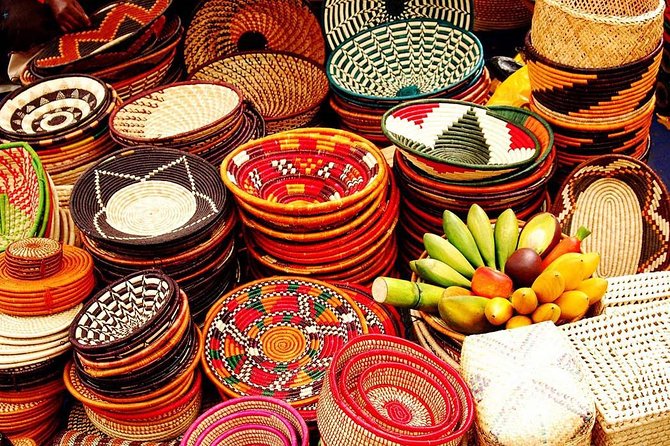
Reviewed · NAIROBI TOURS
Nairobi Guided Cultural Shopping Experience Day Tour
Nairobi shopping is far easier when someone helps you sort handmade work from tourist clutter. This full-day outing takes you from the African Heritage Gallery to craft centers, Kazuri Beads Factory, City Market, and possibly the Maasai Market. I like the door-to-door transport and the chance to compare fixed-price galleries with places where bargaining is expected. I also like the personal help with beads, carvings, textiles, jewelry, and ceramics.
The main caution is that the final route can change. Maasai Market depends on its opening day, and one reported outing substituted other shops and a giraffe orphanage instead. If you want a strict shopping day, confirm the stops before setting out. Guide Stephen has earned particular praise for being patient, friendly, and professional, but the experience can depend heavily on the guide assigned.
Key points before you book
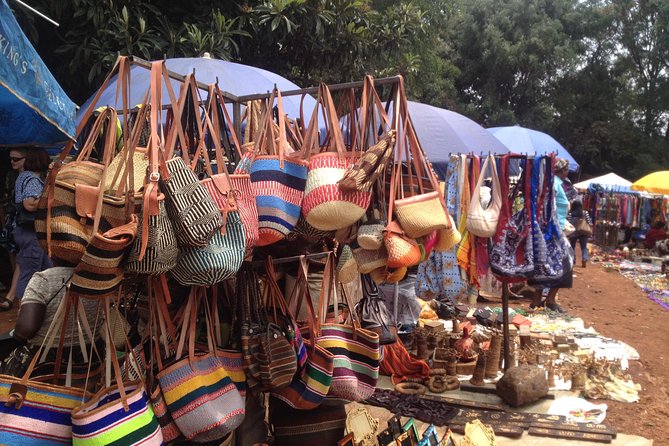
- Kazuri Beads Factory is the clearest specialty stop: See handmade ceramic beads, jewelry, and pottery in Karen.
- The route mixes fixed prices with bargaining: Galleries make comparison easier, while City Market tests your haggling skills.
- Maasai Market is not guaranteed: You visit only if it is open on the day of your tour.
- Hotel pickup and drop-off save time: The tour begins at 9:00 a.m. and lasts about eight hours.
- Group size needs checking: The detailed booking information gives a maximum of seven, while another description says no more than 15.
- Lunch costs extra: You receive transport and a professional guide, but not the midday meal.
Why a guided shopping day helps in Nairobi

Shopping in Nairobi can be fun, but it is not always simple. Prices may change depending on the stall, the item, and your confidence at bargaining. You can also find similar-looking masks, beads, fabrics, and carvings at very different levels of quality.
That is where this tour can earn its $90 price. You are not just being driven to one shop. The day links several kinds of buying places, from galleries with marked prices to a traditional market where you negotiate. A guide can also help you decide if a piece is worth carrying home, though the quality of that help depends on who leads your outing.
I especially like the comparison built into the route. You can first see polished African art and home goods, then handmade beads and pottery, then the more informal market setting at City Market. By the end, you should have a better sense of what is fairly priced and what suits your budget.
The door-to-door setup matters in Nairobi. You do not need to arrange several taxis or keep track of directions between stops. Pickup and return to your hotel also make it easier to carry purchases, though you should still leave room in your luggage.
More shopping trips in Nairobi:
- Traditional Kenyan Cooking Class & Local Market Tour
★ 5.0 · 129 reviews - Nairobi souvenir Shopping and Historical Half day Tour
★ 5.0 · 61 reviews - Memorable Daily KIBERA Slums/Toi Market Tour with Locals (2 hours)
★ 5.0 · 29 reviews
African Heritage Gallery at the Carnivore grounds
The first stop is the African Heritage Gallery, described as part of the African Heritage House Museum experience at the Carnivore grounds. Allow about an hour here.
The African Trader Gallery focuses on African textiles, sculpture, and handicrafts. This is a useful opening stop because it gives you a more polished introduction to the kinds of objects you will see later. You might find fabric pieces, carved works, and decorative items that feel more suited to a home than to a quick airport purchase.
The gallery is also a good place to slow down before bargaining begins. Prices here may feel clearer than at a market, making it easier to judge workmanship without having to negotiate immediately.
The main limitation is that the supplied details do not identify particular collections, artists, or price ranges. Treat this as an orientation and shopping stop rather than a guided museum visit with a long historical lecture. Admission is included.
Utamaduni Craft Centre: many choices under one roof
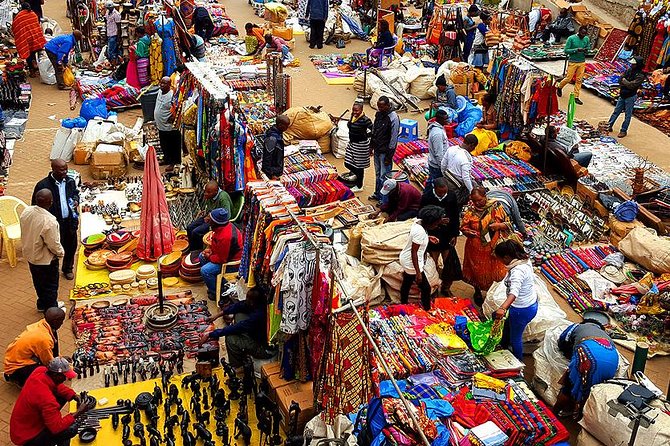
Next comes Utamaduni Craft Centre, with another hour set aside for browsing. The selection is broad: African masks, rugs, furniture, ebony furniture, antiques, jewelry, dolls, safari clothing, kikoy, sarong, beads, and other curios.
This is the place where you can cover a lot of gift ideas quickly. If one person in your group wants a wood carving and another wants clothing or jewelry, you are not limited to one narrow type of shop. Larger home pieces are also part of the selection, though you will need to consider how you would transport them.
I would use this stop to compare, not rush. Notice the finish of wood carvings, the feel of fabric, and the construction of jewelry before buying. If you see something similar later, remember the price and use it as a reference.
A wide selection can also be tiring. An hour passes quickly when you are looking at furniture, textiles, masks, clothing, and small gifts in the same place. Ask your guide for help narrowing the choices instead of trying to inspect everything.
Admission is free, and the guide’s advice is meant to make this less confusing. Still, the purchase decision remains yours. A guide can offer an opinion, but you should buy only what you genuinely like and can carry home.
Kazuri Beads Factory in Karen
Kazuri is likely to be the most distinctive stop for many people. The factory sits on Mbagathi Ridge in Karen, close to the Karen Blixen Museum. Its name means small and beautiful in Swahili, and the workshop produces handmade ceramic beads, jewelry, and pottery.
This stop gives your shopping a stronger connection to the making process. Instead of seeing only finished objects on a shelf, you get a sense of the handwork behind the beads and ceramics. That makes a bracelet, necklace, bowl, or small decorative item feel less like a generic souvenir.
Set aside the full hour. Kazuri is especially useful if you want a gift that is light, distinctive, and easier to pack than furniture or large carvings. Jewelry also lets you spread your budget across several gifts rather than spending everything on one object.
This is one stop where the $90 fee can make sense if you value convenience and selection. You receive transport to Karen, time to shop, and a guide who can help you compare pieces. If you already know exactly what you want and are comfortable arranging your own ride, the value is less clear.
One detailed account of the day called the bead factory great, so I would treat Kazuri as a priority. If the route begins to change, speak up early and ask whether this stop will remain on the schedule.
A few more Nairobi days to weigh up
- Nairobi National Park Half-Day Tour; Free Wi-Fi connection
★ 5.0 · 878 reviews - Nairobi: National Park & Optional Elephants & Giraffe Center
★ 4.8 · 874 reviews - NAI NAMI: Nairobi Storytelling Tour with Street Children
★ 5.0 · 792 reviews - Nairobi National Park Half-Day Game Drive
★ 4.5 · 738 reviews
City Market and the art of bargaining
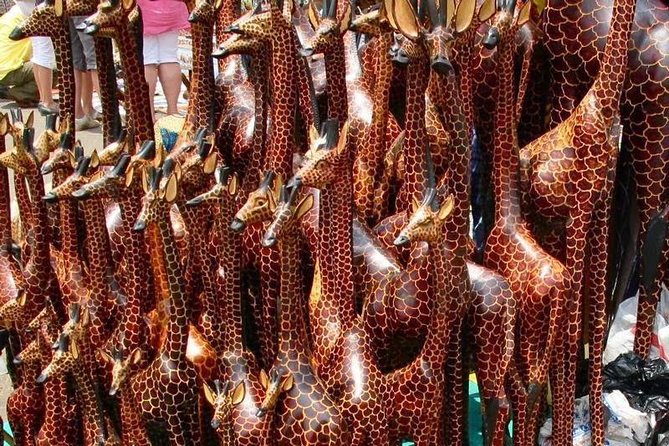
The Nairobi City Market on Muindi Mbingu Street brings a different mood. The complex began as an aircraft hangar and now includes stalls selling curios and souvenirs, along with food vendors. You have about an hour here.
This is where the tour’s shopping advice matters most. Bargaining is part of the experience, so do not assume the first price is final. Stay polite, decide what an item is worth to you, and be ready to walk away if the price no longer feels sensible.
City Market may suit you if you enjoy browsing several stalls and comparing similar products. It may be less comfortable if you prefer quiet galleries and clearly marked prices. That contrast is useful, though. You learn that Nairobi shopping is not one single experience, and the right buying style depends on the setting.
Keep your purchases and personal belongings close, and avoid making a rushed decision simply because a seller is persistent. The guide can help you understand the local rhythm, but you should never feel pressured to buy.
The food vendors may offer a chance to find something for lunch, but lunch is not included in the tour price. Ask about the meal plan before the day gets away from you.
Maasai Market, only when the calendar works
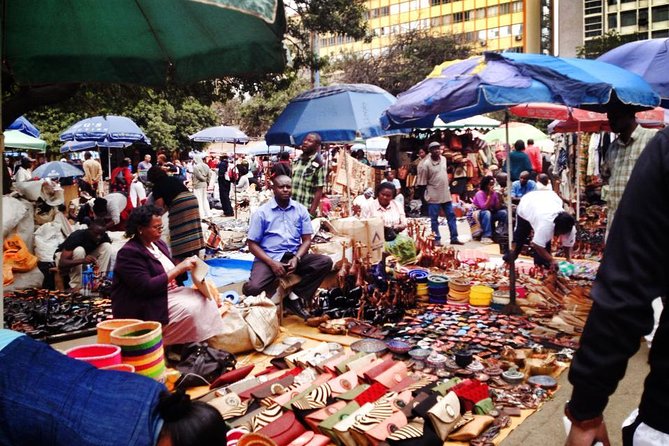
The final listed shopping stop is the Maasai Market, but this part comes with an important condition: you enter if it happens to be open on the market day.
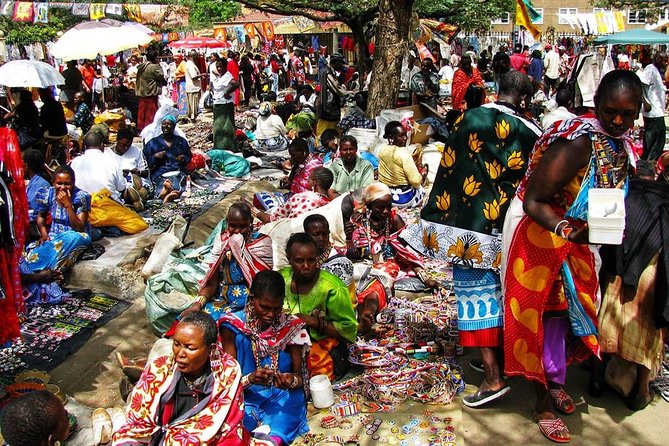
The market began with Maasai women selling directly to visitors. It has grown into a place for arts and crafts, wooden carvings, beadwork, and other handmade goods. For many people, this is the stop they most want to see, so the opening-day condition should not be treated as a footnote.
If the Maasai Market is operating, you can expect another chance to compare beadwork, carvings, and colorful craft items. It may be the best place to practice bargaining after you have already seen the more organized shopping centers.
If it is closed, ask your guide exactly what replaces it. One unhappy account described being taken to three other stores and a giraffe orphanage instead of the expected large Maasai Market. Those substitutions may suit someone interested in a broader Nairobi outing, but they do not fit a shopper who booked specifically for the market.
My practical advice is simple: confirm the market day when you book, then confirm it again with the guide at pickup. If it is essential to your plans, do not assume the advertised route guarantees entry.
Stephen and the importance of your guide
The guide can make or break this experience. Stephen is the clearest name associated with the positive feedback, and his reported strengths are useful ones for a shopping day: patience, friendliness, professionalism, and a willingness to let a solo visitor browse without feeling rushed.
That last point matters. Shopping works best when you can look closely, compare prices, and decide at your own pace. A guide who hurries you from shelf to shelf defeats the purpose of the outing.
At the same time, one very poor account described a driver-guide who asked intrusive questions about employment and salaries and provided little of the expected cultural shopping help. I would not ignore that warning. If the conversation feels too personal, redirect it to the day’s route and the items you are considering.
When you meet the guide, confirm three things right away:
- Which stops are definitely open today?
- Is the Maasai Market included, or will another site replace it?
- Where and when will lunch happen?
Those questions set a clear plan and reduce the chance of disappointment.
What $90 buys you
At $90 per person, this is not the cheapest way to shop in Nairobi. The price covers a professional guide plus hotel pickup and drop-off, not lunch or the cost of your purchases.
The value is strongest if you are new to Nairobi, want to shop in several parts of the city, or dislike negotiating transport on your own. It is also useful for a solo visitor, since a guide can provide company and help you avoid feeling rushed or uncertain.
The value is weaker if you want only the Maasai Market, already know where you want to shop, or prefer to set your own timetable. You may spend an hour at each stop, even if one location is not your priority.
The tour is generally suitable for most people, and children must be accompanied by an adult. Group discounts are offered. The published details conflict slightly on group size, giving both a maximum of seven and a statement that the group will be no larger than 15. I would confirm the actual number before paying, especially if you prefer a small group.
Timing, meals, and practical planning
The start time is 9:00 a.m., and the day lasts about eight hours. With five planned stops at roughly an hour each, the remaining time is used for driving between locations, shopping transitions, and the return to your hotel.
Wear comfortable clothing and shoes. You will be browsing several types of spaces, and the day is long enough that comfort matters more than dressing up. Bring enough luggage space for purchases, but avoid carrying more than you need.
Lunch is not included. The route may include food vendors at City Market, and one account described being taken to a pleasant lunch spot, but you should not treat a meal stop as guaranteed. Carry money for food as well as shopping.
Mobile tickets are accepted, and confirmation arrives when you book. Free cancellation applies if you cancel at least 24 hours before the 9:00 a.m. start. Inside that 24-hour window, the payment is not refunded, and changes are not accepted.
Who will enjoy this day most?
I would recommend this tour to a first-time Nairobi visitor who wants several shopping styles in one day. It suits anyone looking for beads, masks, ceramics, jewelry, textiles, wood carvings, clothing, or home goods without arranging transport from scratch.
It also fits a solo shopper, particularly if you can request Stephen and want a patient guide who lets you take your time. Families can participate too, provided children are accompanied by an adult.
I would be more cautious if you have a fixed must-see list. The Maasai Market depends on its schedule, and the route may be adjusted. Ask for a firm plan at the start and be clear about your priorities.
Should you book the Nairobi cultural shopping tour?
Book it if you want a full day of guided shopping, appreciate hotel transfers, and like the idea of comparing galleries, a bead factory, and markets. Kazuri Beads Factory and the African Heritage Gallery give the day more substance than a simple souvenir run, while City Market gives you a chance to practice bargaining.
Skip it, or choose a more tightly controlled private plan, if the Maasai Market is your main reason for going. The route can change, lunch is extra, and the quality of the day depends strongly on the guide. At $90, the tour offers useful convenience and variety, but confirm the guide, group size, and market opening before you commit.
FAQ
How much does the tour cost?
The tour costs $90 per person. Group discounts are available, but the cost of souvenirs and lunch is not included.
How long does the experience last?
The tour lasts approximately eight hours and begins at 9:00 a.m.
Is hotel pickup and drop-off included?
Yes. Hotel pickup and drop-off are included in the tour.
Which shopping stops are planned?
The planned stops are the African Heritage Gallery at the Carnivore grounds, Utamaduni Craft Centre, Kazuri Beads Factory, Nairobi City Market, and the Maasai Market if it is open.
Is the Maasai Market guaranteed?
No. You visit the Maasai Market only if it is open on the scheduled market day.
What is the maximum group size?
The detailed additional information gives a maximum of seven participants. Another description says the group will be no larger than 15, so confirm the group size when booking.
Can I cancel for a refund?
Yes. You can cancel at least 24 hours before the start time for a full refund. Cancellations or changes made less than 24 hours before the start are not accepted and are not refunded.
Recently added around Nairobi
- Nairobi; City Walk Tour★ 4.5 · 3 reviews
- Private 3-Day Masai Mara Safari Adventure★ 5.0 · 3 reviews
- Kenya safari★ 5.0 · 3 reviews
- 2 Days Amboseli National Park Safari★ 3.5 · 3 reviews
- 11-Days Best of Kenya & Tanzania Big 5 Safari on a 4×4 Jeep★ 5.0 · 3 reviews
- Full Day, Small Group Guided Tour to Amboseli National Park★ 4.5 · 3 reviews
- 10-Days Explore Kenya Wildlife Private Safari★ 5.0 · 3 reviews
- Nairobi: Giraffe Center, Beads Factory & Bomas of Kenya Tour★ 4.5 · 3 reviews
Nairobi Tours, compared.

Nairobi National Park Half-Day Tour; Free Wi-Fi connection
Read our review →
National Park & Optional Elephants & Giraffe Center
Read our review →
NAI NAMI: Nairobi Storytelling Tour with Street Children
Read our review →




Elephant Orphanage and Giraffe Center Tour with Options
Read our review →Browse the lists this tour appears in