
Reviewed · WORKSHOPS
Agro-Tourism Tea Workshop in Nandi Hills
Nandi Hills gives you a rare look at Kenyan tea as a working crop, not just a drink on your breakfast table. In one long day, you watch tea being harvested, weighed, moved, processed, and tasted, with the green hills of western Kenya as your backdrop.
I like the direct contact with tea pluckers and the chance to see their skill in a repetitive job that demands speed and stamina. I also like the balance of farm, factory, and food: you get both the human side of production and the machinery that turns fresh leaves into a finished product.
The main drawback is the length. At about 10 hours, with an early start and several stops, this is a full day rather than a quick outing. The price of $137.46 per person also makes more sense if you value private transport, lunch, and a focused cultural visit rather than a simple scenic drive.
Key points to know before booking
- Tea from field to cup: Follow harvesting, weighing, transport, factory production, and tasting in one day.
- A working tea region: Visit Nandi Hills and one of the 19 tea factories in Nandi County.
- Private from start to finish: Only your group takes part, with transport included from Iten.
- A close look at tea pluckers: See how quickly and carefully workers handle a repetitive but essential task.
- Lunch at the cottage: The midday break returns you to the cottage before the factory visit.
- Best for curious food and farm visitors: This suits you if you want context, not just photos and scenery.
Why this Nandi Hills tea day is different
Many farm outings stop at a pretty field and a cup of tea. This one follows the whole chain. You begin with the harvest, then see the crop weighed, transported, processed, and tasted. That order matters because fresh tea leaves are not yet the dry product you buy in a shop.
The experience is also tied to a specific place. Nandi County has 19 tea factories, and your visit to one of them gives the day an industrial side that a small plantation walk cannot provide. You see how a major crop moves beyond the farm and becomes ready for sale.
The setting adds plenty of appeal. Nandi Hills is known here as a special tea-growing region, with a cool highland feel and wide natural views. The scenery is not simply decoration. It helps explain why the area supports tea production and why a farm visit feels different from a city food tour.
You should also know what this activity is not. It is not a cooking class, a long hike, or a casual tea stop. It is a full working-day program built around farming, processing, and tasting. If you want to understand how Kenyan tea is made, that focus is the point.
A few more Kenya days to weigh up
- Traditional Kenyan Cooking Class & Local Market Tour
★ 5.0 · 129 reviews - Authentic Kenyan Cooking Class & Market Tour in Nairobi
★ 5.0 · 12 reviews - Private Traditional Kenyan Cooking Class with Lunch in Nairobi
★ 5.0 · 10 reviews
Starting early from Iten
Your meeting point is The Swiss Side ItenFriends Bar in Iten, Kenya. Listed start times run from 5:00 AM to 9:00 AM, Monday through Sunday, so confirm your exact departure time when booking. A 10-hour schedule makes an early start useful, especially since the day includes transport, a farm visit, lunch, a factory tour, and tasting.
Private transportation is included, and the activity ends back at the same meeting point. That is a real advantage in this part of Kenya. You do not need to arrange separate rides between a farm, cottage, and factory, and your group can keep the day together.
The tour is private, meaning only your group participates. That can make a big difference during the farm portion. You can ask about the crop, the work, and the steps in production without trying to follow a large group or wait for strangers to finish taking photos.
The meeting point is near public transportation, but public transport is not the main feature here. The included private vehicle is more useful because the day moves between different sites. Personal expenses are not included, so bring money for anything outside the stated program.
Watching tea being picked by hand
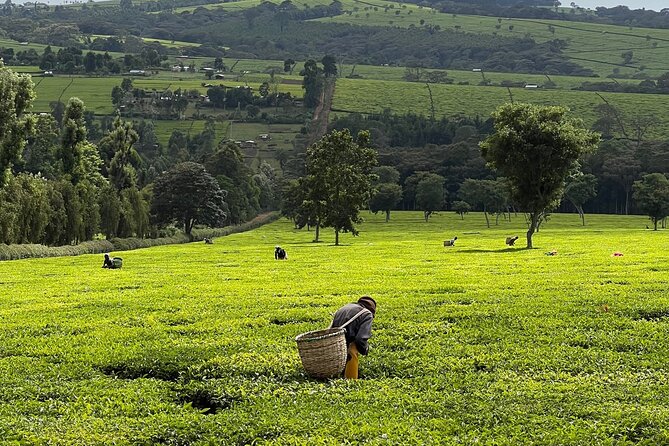
The morning starts with an explanation of how tea harvesting is done. This opening gives you a useful frame before you meet the tea pluckers. Rather than seeing rows of plants as a wall of green, you begin to understand what workers are looking for and why the harvest has to be handled with care.
The meeting with the tea pluckers is one of the strongest parts of the day. Their work is repetitive, but it is far from effortless. You see the speed, accuracy, and physical resilience needed to carry out an important task over and over again.
This is a good moment to pay attention to the human side of the crop. A cup of tea can seem simple when it reaches your table. Here, you see the labor that comes before the leaves ever reach a factory.
The visit does not turn the workers into a staged show. It gives you a chance to observe their proficiency and the demands of the job. You should approach this part with respect and listen closely to the explanation of the harvest.
The natural setting helps, too. Time among the tea plants offers a quiet contrast to the factory later in the day. You get open space, farm work, and the chance to see why Nandi Hills has become associated with tea.
Seeing the modern weighing stage
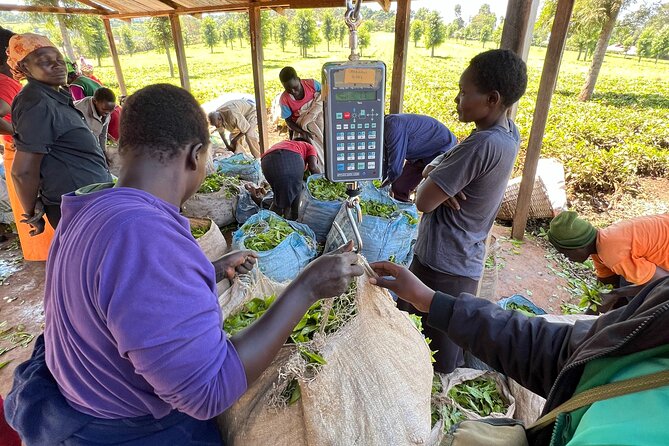
After harvesting, you witness the tea being weighed. This stage has recently been modernized, making it an especially useful detail for anyone interested in how farms manage production today.
Weighing may sound less exciting than walking through tea rows, but it answers practical questions. How is the amount collected recorded? How does the crop move from individual work to the next stage? A modern weighing system shows that tea production depends not only on farming skill but also on accurate handling and organization.
This stop links the people in the field to the factory system. The leaves have been picked, but they now need to be measured and moved onward. You can see the crop becoming part of a larger operation.
Do not expect a long technical demonstration unless your guide provides one on the day. The supplied details promise that you will witness the weighing and learn about its recent modernization, not operate the equipment yourself. Still, this short stage gives the day a useful practical edge.
A different kind of day from the same base:
- Nairobi National Park Half-Day Tour; Free Wi-Fi connection
★ 5.0 · 878 reviews - Nairobi: National Park & Optional Elephants & Giraffe Center
★ 4.8 · 874 reviews - NAI NAMI: Nairobi Storytelling Tour with Street Children
★ 5.0 · 792 reviews - Nairobi National Park Half-Day Game Drive
★ 4.5 · 738 reviews
Lunch at the cottage
After the morning farm activities, you return to the cottage for lunch. It breaks up the day at a sensible point, before the afternoon factory visit.
Lunch is included in the price, so you do not need to plan a separate meal during the tour. Since the overall outing lasts about 10 hours, that matters. A full-day activity built around an early start would feel less convenient if you had to search for food between stops.
The cottage also gives you a change of pace. The morning is about outdoor work and observation. Lunch offers time to sit, eat, and take stock before moving into the production side of tea.
Specific menu details are not provided, so do not book this expecting a particular dish or a specialized tasting meal. Think of lunch as a practical included meal that keeps the itinerary moving. If you have dietary needs, ask about them before the day.
Inside one of Nandi County’s tea factories
In the afternoon, you visit one of the 19 tea factories in Nandi County. This is where the experience moves from farm labor to industrial production.
The factory visit shows how tea leaves become a finished product. You can expect to follow the production process and see the stages that turn harvested leaves into the tea you recognize at home. The farm visit explains where the crop starts. The factory explains what happens after collection.
This pairing is the reason the activity offers more value than a plantation photo stop. You see two very different settings: workers handling leaves outdoors and a factory managing the crop on a much larger scale.
Factory tours can be less atmospheric than fields. They may involve machinery, noise, and a more controlled route through the facility. That is part of the trade-off. You gain a clearer picture of production, but the afternoon may feel less relaxed than the shaded tea rows.
The visit is also a reminder that tea is both an agricultural product and a commercial one. The factory does not replace the farm experience. It completes it. Without this stop, you would see the crop but not the system that prepares it for the market.
Ending with a Kenyan tea tasting
The day ends with tea tasting. This is a fitting close because you have just seen the work behind the drink.
Tasting becomes more useful after the farm and factory visits. You can think about the difference between fresh leaves and the finished product, and connect the flavor in your cup to the stages you have followed during the day.
For tea drinkers, this may be the most enjoyable part. One of the strongest reasons to choose this experience is that it treats tea as both a crop and a food tradition. You are not only looking at plants. You are using your senses to finish the process.
The exact teas and tasting format are not specified, so you should not assume a formal tasting flight or a long lesson in flavor notes. The confirmed feature is a tea tasting at the end. Even a simple tasting gains meaning after you have spent the day learning how Kenyan tea is grown and made.
If you already enjoy chai or Kenyan tea, this final stop should have extra appeal. The experience gives you a better answer to the everyday question of where that familiar cup comes from.
Is $137.46 per person fair value?
At $137.46 per person, this is not the cheapest way to see Nandi Hills. The price is easier to justify when you count what is bundled together: private transportation, all fees and taxes, a farm visit, lunch, a tea factory visit, and the tasting.
You are paying for a full private day rather than a single admission. That matters if you are based in Iten and want a planned route between several tea-related stops. You also avoid the hassle of arranging transport and coordinating the timing yourself.
The value is strongest for small groups that care about privacy and learning. Since only your group participates, the cost may feel more reasonable when shared among a couple, family, or group of friends. Solo visitors should think more carefully about the price because there are fewer people to divide the private experience among.
I would not choose this activity only for scenery. If your main goal is a short outing among tea plants, the 10-hour duration and price may feel excessive. If you want the complete story, including workers, weighing, factory production, lunch, and tasting, the package is more convincing.
All fees and taxes are included, but personal expenses are not. That makes the core price fairly clear. You should still budget separately for anything you may want to buy or pay for outside the listed inclusions.
Who will enjoy this experience most?
I would recommend it to tea drinkers, food-minded visitors, photographers interested in working farms, and anyone spending time in Iten who wants a cultural day away from running or outdoor sports.
It also works well for people who prefer a private activity. The pace can stay focused on your group, and the private vehicle removes some of the stress of a long day across several locations.
Families may appreciate the variety, though the repetitive nature of harvesting and the factory process may not hold every child’s attention for 10 hours. The activity is a better fit for older children and adults who enjoy seeing how ordinary products are made.
You should be comfortable with an early start and a long itinerary. The experience requires good weather, and the operator may offer another date or a full refund if poor conditions make the outing impossible. The same applies if the minimum number of participants is not met.
Free cancellation is available up to 24 hours before the start time. Within 24 hours, you generally cannot receive a refund or make changes, so keep local time and the weather in mind when setting your plans.
The best reasons to choose this tea workshop
The strongest feature is its complete production story. You see the beginning, middle, and end of tea making instead of stopping at a scenic farm.
The second is the contact with the tea pluckers. Their skill and persistence turn an ordinary crop visit into a closer look at work, timing, and local livelihoods.
The third is the setting in Nandi Hills. The quiet highland environment gives the day a clear sense of place, while the factory visit keeps it from becoming only a nature outing.
The experience has also been used as part of a wider Kenya trip that included safari, Lake Baringo, bike rides, hikes, and a running camp in Iten. That makes it a useful add-on if you are already staying in the area and want a slower, food-focused day between more active excursions.
The provider is The Safari Side. The meeting point uses the Swiss Side ItenFriends Bar name, so check the exact pickup instructions carefully when you receive confirmation.
Should you book the Nandi Hills tea workshop?
Book it if you want to understand Kenyan tea from field to cup and you value a private, all-day program. The farm workers, modern weighing stage, factory visit, lunch, and tasting create a fuller experience than a quick plantation stop.
Skip it if you want a short visit, a formal cooking class, or a low-cost scenic excursion. The 10-hour schedule is the key decision. For a tea fan staying in or near Iten, this is a thoughtful use of a day and one of the more distinctive cultural activities in the region.
FAQ
Where does the tea workshop start?
It starts at The Swiss Side ItenFriends Bar in Iten, Kenya.
Where does the activity end?
The activity ends back at the meeting point in Iten.
How long does the experience last?
The activity lasts approximately 10 hours.
What is included in the price?
Private transportation, all fees and taxes, a farm visit, lunch, and a visit to a tea factory are included.
Is the tour private?
Yes. Only your group participates in this private activity.
What time can the activity start?
The listed opening hours allow starts from 5:00 AM to 9:00 AM, Monday through Sunday. Confirm your exact start time at booking.
Can I cancel for a refund?
Yes. You can cancel at least 24 hours before the experience start time for a full refund. Cancellations or changes made less than 24 hours before the start time are not accepted for a refund.
Recently added around Kenya
- Nairobi; City Walk Tour★ 4.5 · 3 reviews
- 2 Days Amboseli National Park Safari★ 3.5 · 3 reviews
- Private 3-Day Masai Mara Safari Adventure★ 5.0 · 3 reviews
- Kenya safari★ 5.0 · 3 reviews
- 11-Days Best of Kenya & Tanzania Big 5 Safari on a 4×4 Jeep★ 5.0 · 3 reviews
- Full Day, Small Group Guided Tour to Amboseli National Park★ 4.5 · 3 reviews
- 10-Days Explore Kenya Wildlife Private Safari★ 5.0 · 3 reviews
- 1-Day Tsavo East Safari From Mombasa★ 5.0 · 3 reviews
Workshops, compared.

Traditional Kenyan Cooking Class & Local Market Tour
Read our review →
Authentic Kenyan Cooking Class & Market Tour in Nairobi
Read our review →
Private Traditional Kenyan Cooking Class with Lunch in Nairobi
Read our review →
Market Tour and Traditional Kenyan Cooking Class in Nairobi
Read our review →
Local Market Tour and Traditional Meal Cooking Class
Read our review →
Beginner Swahili Woodcarving Classes with Woman Woodcarver
Read our review →
Private Kenyan Cooking Class in Nairobi with a Local
Read our review →Browse the lists this tour appears in