
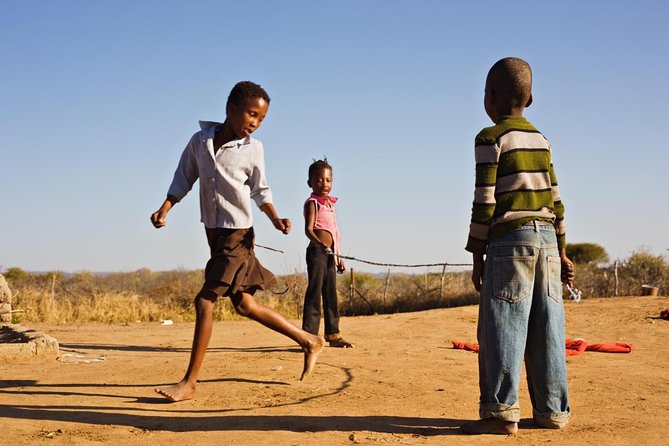
Reviewed · NAIROBI TOURS
Memorable Daily KIBERA Slums/Toi Market Tour with Locals (2 hours)
Kibera is not a museum or a staged village. It is a living Nairobi community, and this walking tour takes you there with a local youth guide who knows its streets, families, and daily pressures. Guides such as Bramwel and Frederick have personal ties to Kibera, which gives the visit a human scale that a bus ride cannot match.
I like two things right away: your $25 supports local employment and community work, and the tour goes beyond poverty statistics to discuss schools, housing, health projects, and the informal economy. The main consideration is that this is a serious, sometimes uncomfortable visit. You need to treat Kibera as people’s home, not as a photo backdrop, and sturdy shoes are a smart choice.
Key points to know before you book
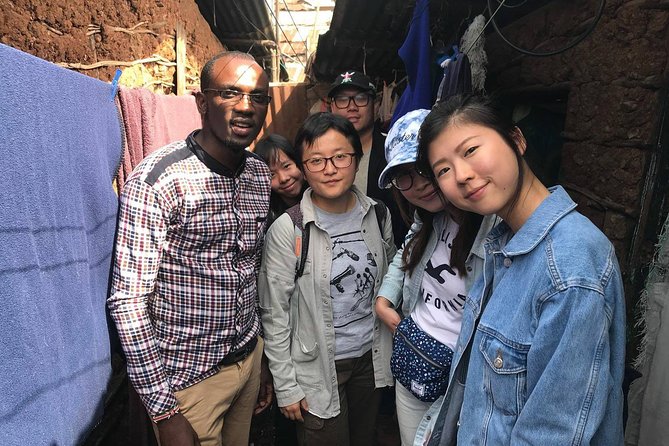
- Walk Kibera with a local guide: Bramwel and Frederick are among the guides praised for their personal connections and calm, friendly manner.
- Finish at Olympic Primary School: The tour ends at a major public school with a long record of helping Kibera families improve their prospects.
- Learn how community projects work: You hear about efforts in housing, education, health, and support for a settlement estimated to hold about one million people.
- See the informal economy up close: The experience explains how residents earn, trade, and support one another outside Nairobi’s formal systems.
- Plan for mud and uneven ground: Wear sturdy shoes that can get wet or dirty, and keep your camera use respectful.
- Budget-friendly, but allow extra time: The price is $25 per person, and the advertised duration is roughly two to three hours.
Entering Kibera with a guide who knows the community
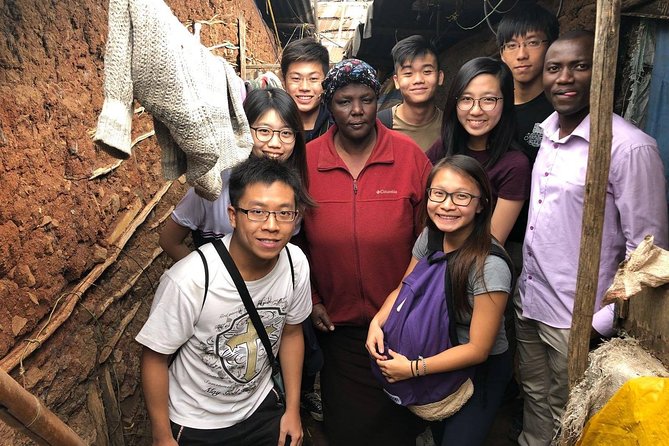
The tour begins at Olympic Primary School, at MQQH+3FJ in Nairobi, and returns there. That fixed meeting point matters. You are not being dropped at a random street corner and left to find your way through an unfamiliar part of the city.
The walk is led by a local youth guide. Bramwel, also spelled Bremwal in some descriptions, grew up in Kibera and still has close ties to the area. Frederick is also praised for explaining the community clearly and helping visitors feel at ease. Erick, the company founder, lived in Kibera for a period and has relatives there.
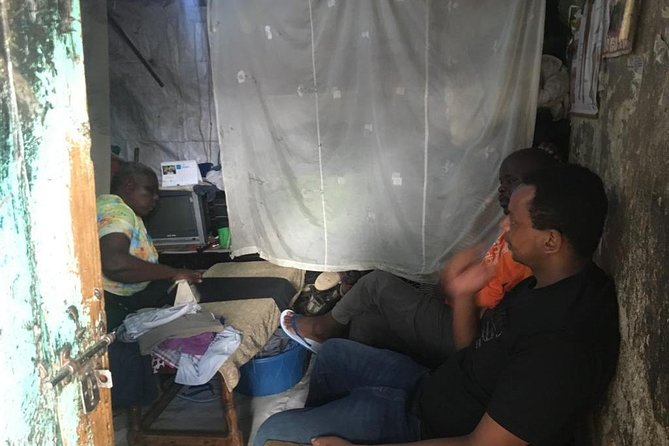
That personal connection is central to the experience. A guide who knows local residents can explain more than what a building looks like. You may hear how a family uses its space, how a school serves the area, or how a community project affects daily life. Some visits may include an invitation into a local home, but you should understand that this depends on the people involved and should never be treated as an entitlement.
The settlement is described as covering about 2.5 square kilometers and housing an estimated one million people from across East Africa. Those numbers are difficult to pin down, as population estimates in informal settlements often vary, but they help explain the density and pressure you will encounter.
The guide’s job is not simply to point out hardship. You will also hear about work, family life, education, local football, faith, and the ways people solve problems with limited formal services. That balance is important. Kibera is poor, but it is not without energy, skill, humor, or ambition.
More community walks in Kibera:
- Nairobi: Explore Kibera Slum with Local Guides
★ 4.9 · 365 reviews - Kevins Kibera Slum Tours
★ 5.0 · 213 reviews - Nairobi: Kibera Slum storytelling tour with a Local
★ 5.0 · 185 reviews
What the two-hour walk actually focuses on
The main stop is Kibera itself, with about two hours set aside for walking and conversation. The route is intended to show you daily life rather than deliver a quick roadside view.
You can expect the guide to explain the informal economy, the systems residents use to earn a living, and the role of small local businesses. The exact route can vary, but the emphasis is on understanding how the settlement functions. You might see people working, trading, moving goods, or carrying out ordinary household tasks.
This is where the tour has more value than a quick drive past Kibera. From a vehicle, you see density. On foot, you begin to understand how people use narrow paths, shared services, small workspaces, schools, and homes. You also have the chance to ask questions as they arise.
The walk can be muddy or wet, according to the practical advice attached to the experience. Wear shoes with a firm sole. Clothing that can handle dust or rain is sensible, and you should avoid bringing anything you would worry about during a walk through crowded areas.
Photography needs care. One of the strongest pieces of advice for this tour is to put the camera down and pay attention to the fact that you are walking through someone’s neighborhood. Ask before taking pictures of people, homes, children, or workplaces. A respectful approach will also make your conversations more natural.
Community projects, schools, and the work behind the statistics
A major part of the discussion concerns NGO and local projects aimed at improving housing, education, and health. The stated focus is on work that could affect roughly one million people in Kibera.
You will not simply hear that aid is good or bad. The experience presents projects as efforts with mixed results. Some work has helped. Other projects have struggled because of corruption or poor execution. That practical view is useful, since community development is rarely a neat success story.
The tour also connects Kibera to the company’s own local work. DALA Tours, Safaris & Volunteers Kenya says part of its proceeds supports MAKLWETA, a charity founded to assist rural girls’ education. It also links the tour to youth employment in Kenya, where youth unemployment is described as exceeding 50 percent.
That gives your payment a purpose beyond admission. You are helping fund a locally run company and its employment model, while also buying an experience guided by someone from the community. The effect of your individual $25 cannot be measured precisely, but the model is more direct than paying for a large outside operator with no stated local connection.
You should still keep your expectations grounded. A two-hour walk cannot explain every NGO, political issue, or economic problem in Kibera. It can, however, give you a more useful starting point for understanding Nairobi’s inequalities and the efforts to address them.
Olympic Primary School gives the visit a hopeful ending

The tour ends with a visit to Olympic Primary School, described as Kenya’s largest public primary school. The school reportedly had a long period as one of the country’s best-performing public schools and has helped families in Kibera move toward better opportunities.
Ending at a school changes the mood of the visit. After hearing about crowded housing, limited services, and the struggle to earn a living, you see an institution built around possibility. Education is not presented as an abstract solution. It is a daily resource for children and a route that can affect entire families.
The school stop also helps you avoid reducing Kibera to hardship alone. Children attend classes, teachers work, and families invest hope in results that may take years. If you are interested in education or social development, this may be the most meaningful part of the itinerary.
The available details do not promise a long classroom visit, a meeting with teachers, or access to lessons. Think of it as a concluding stop and a place to understand the role of public education in the community, not as a school exchange program.
More market walks in Nairobi:
- Traditional Kenyan Cooking Class & Local Market Tour
★ 5.0 · 129 reviews - Half-Day Nairobi National Park and Maasai Market with Pick up
★ 5.0 · 16 reviews - Authentic Kenyan Cooking Class & Market Tour in Nairobi
★ 5.0 · 12 reviews - Nairobi: Hop on Hop off and Maasai market Collections Visit
★ 3.5 · 10 reviews
Where does Toi Market fit in?

The experience title includes Toi Market, a well-known market area associated with Kibera. However, the supplied itinerary specifically describes Kibera and Olympic Primary School, and it does not give Toi Market its own timed stop.
That distinction is worth noting before you pay. If the market is important to you, ask the operator whether the current route includes it on your date. Do not assume the title guarantees a separate market visit or shopping period.
This is a small but useful booking question. The tour appears designed mainly as a guided community walk, with discussion of local life and projects. It is not presented as a food tour or a dedicated shopping excursion.
Is $25 good value for a Kibera walking tour?
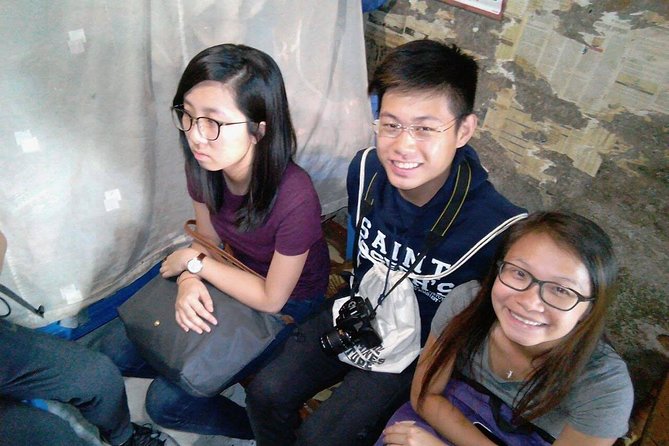
At $25 per person, the tour is reasonably priced for a guided Nairobi experience lasting about two hours, or up to three hours depending on timing. All fees and taxes are included, and round-trip transfers from the designated meeting point are provided.
The value comes from the local guide and the access to context. You are paying for a person who can explain the area, introduce its human side, and help you walk respectfully. The price also supports a locally owned company that says it employs young people and contributes to education work.
Lunch and drinks are not included. They are optional, and the operator says local restaurants can be visited at your request. That is a useful choice if you want to extend the experience, but you should budget separately and not expect a meal to be part of the $25.
The maximum group size is listed as 50. That is a fairly large possible group for a sensitive walking tour. A smaller group would usually make conversations easier and reduce the feeling of moving through a neighborhood in a procession, but the actual number on your date may be lower. Ask if group size matters to you.
The tour is often booked about 11 days ahead, so it is sensible to reserve before your Nairobi visit rather than leave it until the last morning. Confirmation is issued at booking, and mobile tickets are accepted.
What the guides add to the experience

The most praised feature is the guides’ personal approach. Bramwel is described as someone who knows many people in Kibera, grew up there, and still plays for a local football team. Frederick is repeatedly praised for being friendly, helpful, and clear in his explanations.
Those details matter because the success of a visit like this depends heavily on the guide. A guide can make the walk feel like a respectful conversation, or like a hurried tour of hardship. Here, the strongest accounts point toward relaxed explanations, personal introductions, and attention to visitor comfort.
You should not expect the guide to erase every concern about safety or poverty. You may still feel awkward at times. That is normal. A good guide can help you handle that discomfort without turning it into a performance.
Some visitors have been welcomed into a resident’s home and heard personal stories about family life. This can be powerful, but it should remain voluntary on both sides. If a household opens its door, listen more than you speak, ask before taking pictures, and remember that hospitality is not a product you can demand.
Safety, comfort, and respectful behavior
The tour is described as suitable for most participants, near public transportation, and open to service animals. It begins and ends at Olympic Primary School, which simplifies the day’s transport plan.
The walking conditions are the larger practical issue. Bring sturdy shoes that can get muddy or wet. The route is through a dense informal settlement, so you should dress for walking rather than for a polished city sightseeing stop.
Keep your belongings secure and avoid displaying expensive equipment. This is sensible advice in any crowded urban area, not a claim that every part of Kibera is unsafe. Your guide is there to help you move through the community and understand local customs.
The most important safety rule is social, not physical: do not treat residents as scenery. Ask permission before photographs, especially with children. Avoid blocking paths, staring into homes, or making jokes about conditions that are difficult for the people living there.
This tour suits people who want to listen and ask thoughtful questions. It is a poor match if you want polished attractions, guaranteed photo opportunities, or a lighthearted morning.
The one serious logistical warning
There is one recorded complaint about a missed appointment during a Nairobi lockdown, when communication broke down and the booking was eventually refunded. The operator attributed the problem to pandemic restrictions and apologized.
That incident does not outweigh the otherwise strong rating of 4.8 from 29 ratings, with 97 percent recommending the experience, but it is a reminder to confirm the meeting details. Pay attention to messages, make sure you know the start time in Nairobi, and contact the operator if you have not received clear instructions.
The published cancellation terms are simple: cancel at least 24 hours before the start for a full refund. Cancellations inside 24 hours are not refunded, and late changes are not accepted. The cut-off uses local Nairobi time.
Who should book this Kibera experience?
I would recommend it to you if you want to understand Nairobi through local voices rather than only through monuments, wildlife, and restaurants. It is particularly suited to people interested in education, urban development, community work, youth employment, and the everyday economy.
It can also fit a first visit to Nairobi because it adds social context to the city. The walk may challenge your assumptions, but the guide’s personal connections and the school visit keep the experience grounded in real people rather than broad statistics.
Families should think carefully about the age and temperament of their children. The supplied information says most participants can take part, but it also makes clear that the tour can be humbling and uncomfortable. Anyone joining should be ready to behave respectfully and hear difficult stories.
You may want to skip it if you are looking for a conventional attraction or a market-only outing. If Toi Market is your main goal, confirm the route first. If you want a gentle, predictable activity, this may not be the right choice.
Should you book the Kibera Slums and Toi Market Tour?
Book it if you want a short, locally guided introduction to Kibera and are prepared to approach the community with humility. The strongest reasons are the local guides, the chance to discuss real development work, the Olympic Primary School visit, and the direct connection to youth employment and education support.
Before booking, confirm whether Toi Market is included as a distinct stop, ask about the expected group size, and plan for muddy ground. Then arrive ready to listen, not to collect dramatic photographs.
For $25, this offers good value, provided you understand what you are buying: not entertainment, but a guided encounter with one part of Nairobi that is rarely explained in such personal terms.
More shopping trips in Nairobi
- Nairobi souvenir Shopping and Historical Half day Tour
★ 5.0 · 61 reviews - Nairobi Cultural Shopping Experience
★ 5.0 · 21 reviews - Nairobi Guided Cultural Shopping Experience Day Tour
★ 4.0 · 12 reviews - Nairobi cultural souvenir shopping tour with a local
★ 5.0 · 12 reviews
Recently added around Nairobi
- Nairobi; City Walk Tour★ 4.5 · 3 reviews
- Private 3-Day Masai Mara Safari Adventure★ 5.0 · 3 reviews
- Kenya safari★ 5.0 · 3 reviews
- 2 Days Amboseli National Park Safari★ 3.5 · 3 reviews
- 11-Days Best of Kenya & Tanzania Big 5 Safari on a 4×4 Jeep★ 5.0 · 3 reviews
- Full Day, Small Group Guided Tour to Amboseli National Park★ 4.5 · 3 reviews
- 10-Days Explore Kenya Wildlife Private Safari★ 5.0 · 3 reviews
- Nairobi: Giraffe Center, Beads Factory & Bomas of Kenya Tour★ 4.5 · 3 reviews
Nairobi Tours, compared.
Nairobi National Park Half-Day Tour; Free Wi-Fi connection
Read our review →
National Park & Optional Elephants & Giraffe Center
Read our review →
NAI NAMI: Nairobi Storytelling Tour with Street Children
Read our review →


Elephant Orphanage and Giraffe Center Tour with Options
Read our review →Browse the lists this tour appears in