
Reviewed · NAIROBI TOURS
Explore local Market matatu ride & Make Kenyan Cuisines with a home cook
The best part of this Nairobi experience is that the cooking begins before you reach the kitchen. You ride a matatu, shop with Josephine among local vendors, then use those ingredients to prepare a five-course Kenyan and Indian meal in her home. It gives you a close look at everyday food, transport, and hospitality in one compact outing.
I like the private format, since Josephine can guide your group step by step and adjust her pace for children or less confident cooks. I also like that the market trip is part of the lesson, not just a stop for photographs. The main consideration is comfort: a matatu ride and a home kitchen offer a real local experience, but not the polished setting of a cooking school.
Key points at a glance
- Matatu ride from Westlands: Travel to and from the market by Nairobi’s familiar local bus system.
- Market shopping with Josephine: Help choose fresh produce and interact with local vendors before cooking.
- Private home setting: Only your own party takes part, giving you direct guidance throughout the class.
- Five-course Kenyan and Indian meal: Learn dishes that can include curries and ugali, with Kenyan and Asian influences.
- Food and equipment included: Ingredients, cooking tools, water, fruit, lunch, coffee, and tea are provided.
- A family-friendly pace: Josephine has experience cooking with children and is described as patient, funny, and welcoming.
A Nairobi food experience that starts on the bus
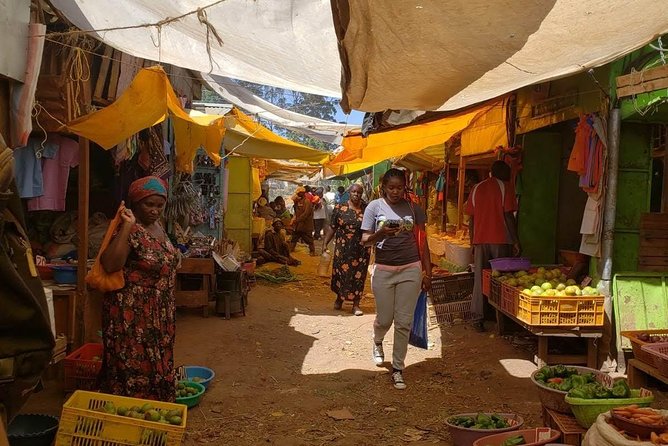
Many cooking classes begin with a basket of ingredients already laid out on a counter. This one begins at the meeting point near Westlands, where you set off by matatu for a local market. That choice gives the outing a wider purpose. You are not only learning recipes. You are seeing how ingredients enter a Nairobi kitchen and how people move through the city.
The matatu is part of ordinary Kenyan life, so the ride adds a useful slice of local culture. You can interact with vendors at the market, look at the produce Josephine selects, and see the buying process before the cooking starts. Since the experience lasts about four hours, the market visit is not an afterthought. It forms the first part of the day.
I would choose this activity if you want food to be your way into Kenyan culture. It suits curious eaters who enjoy asking questions and taking part rather than simply sitting down to a prepared meal. It also works well for a private family outing, since your group does not share the class with strangers.
More market walks in Nairobi:
- Traditional Kenyan Cooking Class & Local Market Tour
★ 5.0 · 129 reviews - Memorable Daily KIBERA Slums/Toi Market Tour with Locals (2 hours)
★ 5.0 · 29 reviews - Half-Day Nairobi National Park and Maasai Market with Pick up
★ 5.0 · 16 reviews
From Westlands to the local market by matatu
The stated starting point is in the Westlands area, and the experience begins with transportation to a local market. The exact market is not named, so you should expect the setting to be a working neighborhood market rather than a formal food hall designed for sightseeing.
That uncertainty is worth noting, but it is also part of the appeal. You are there to buy food for the meal, not to follow a fixed shopping script. Josephine can help you understand what you are seeing and what will work in the recipes. You may handle produce, compare ingredients, and watch her speak with vendors.
The matatu ride adds a practical note. Transportation to and from the market is included, but hotel pickup and drop-off are not. You need to reach the meeting point on your own and arrange your return from the end point on David Osieli Road.
For some people, the ride will be a highlight. For others, public transport may feel less comfortable than a private car. I would keep your expectations realistic. This is not a luxury transfer, and the experience does not try to hide the everyday side of Nairobi. If you want a polished vehicle and a quiet ride, this may not be the right choice. If you want to see a normal part of city life, it adds real value.
Shopping for the ingredients you will cook
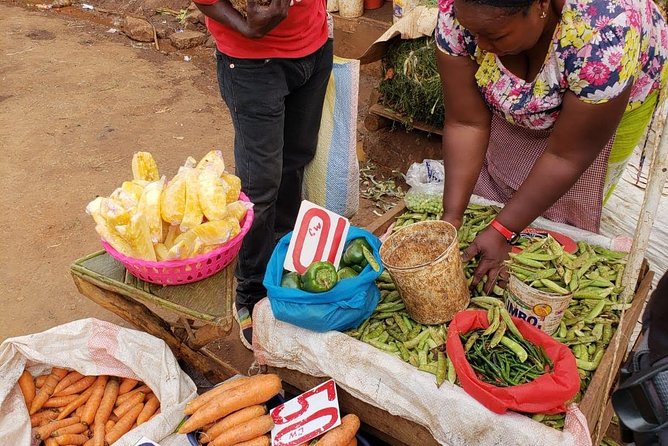
The market visit gives you a reason to pay attention to ingredients instead of simply walking past them. Josephine leads the shopping, and the produce becomes part of the meal you later prepare. That connection makes the cooking lesson easier to remember because you have seen and handled the food from the start.
The meal has Kenyan and Indian influences. Curries are included among the possible dishes, and ugali, a firm cornmeal staple, is specifically named. This combination gives you a useful introduction to two food traditions that meet in the home kitchen.
The experience is not presented as a fixed restaurant menu, so the exact five courses may depend on the ingredients available and the recipes Josephine chooses. That is another reason to tell her about food intolerances before the activity. Ingredients are provided, but you should not assume every dietary need can be handled unless you discuss it in advance.
I like this market-to-table structure because it shows that recipes are not isolated instructions. Spices, vegetables, and staple foods make more sense when you see how they are bought and used. You also get a better idea of the work behind a family meal.
Cooking in Josephine’s Nairobi home
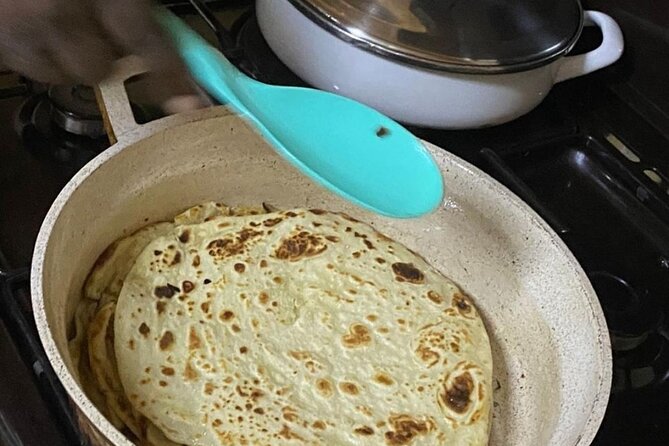
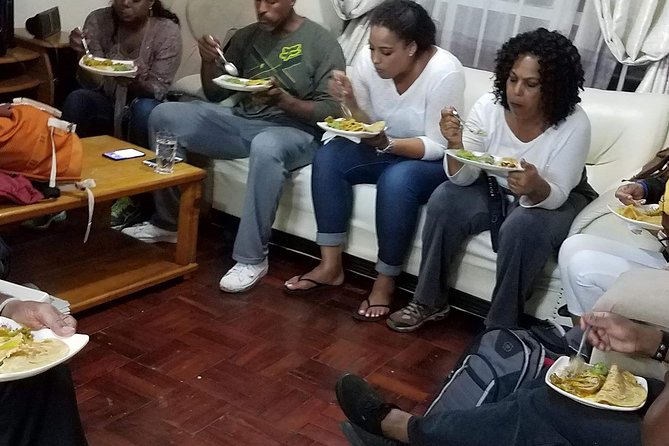
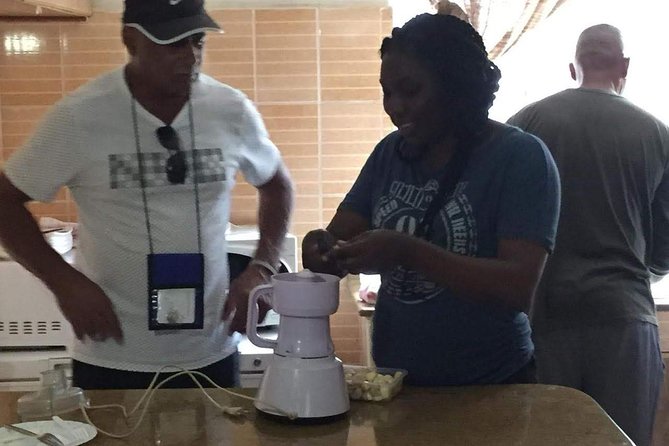
After the market, you head to Josephine’s home for the cooking lesson. This is a private activity for your group, so you are not competing with a large class for space, tools, or attention. Josephine guides you through the food step by step and encourages you to take part rather than watch from the side.
You should be ready to get your hands dirty. The description makes clear that this is practical cooking, with direct work on the dishes and close attention to spices and technique. The focus is less on professional presentation and more on learning how food is prepared in a Kenyan home.
That home setting is the heart of the experience. You can ask questions about daily meals, entertaining, and the way food is served to family and friends. The setting is described as peaceful and private, which may be a welcome change after the movement and noise of the market.
A home kitchen can also be less predictable than a cooking studio. Space, equipment, and timing may feel informal. I see that as a fair trade for a more personal encounter, but it is useful to know what you are buying. This is a cultural home visit with cooking, not a formal culinary certification class.
Josephine is the named provider and the person leading the activity. The available feedback presents her as patient, funny, and attentive. One family found her especially good with children, and her own experience as a parent may help her adjust the lesson for younger cooks. Her large collection of family recipes also gives the class a personal angle.
More shopping trips in Nairobi:
- Nairobi souvenir Shopping and Historical Half day Tour
★ 5.0 · 61 reviews - Nairobi Cultural Shopping Experience
★ 5.0 · 21 reviews - Nairobi Guided Cultural Shopping Experience Day Tour
★ 4.0 · 12 reviews - Authentic Kenyan Cooking Class & Market Tour in Nairobi
★ 5.0 · 12 reviews
What you may cook and eat
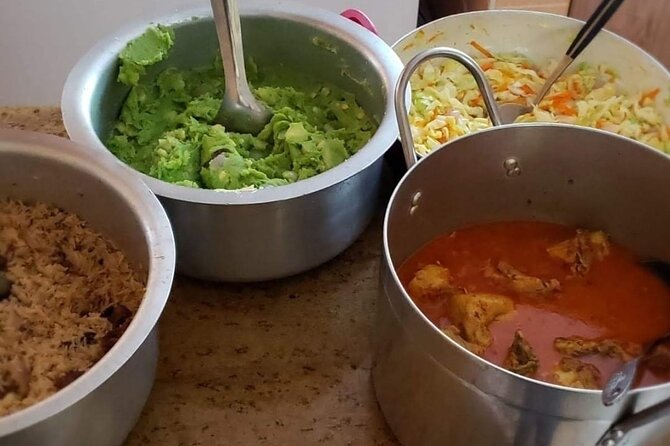
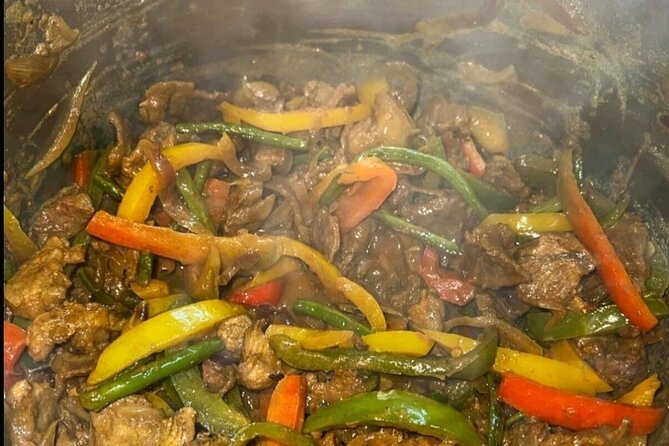
The promised meal has five courses and combines Kenyan and Indian influences. Curries and ugali are named examples, while fruit, coffee, tea, water, and lunch are included. You cook the food and then eat your work in the privacy of the home.
Ugali is especially useful for first-time visitors because it is a familiar Kenyan staple with a simple appearance but a particular method and texture. Learning how to prepare it gives you more than a recipe. It helps explain how a common starch fits into a full meal.
The curries bring spices and technique into the lesson. Josephine shows you how to work with seasonings firsthand, so you can pay attention to order, balance, and cooking time. The precise dishes are not listed, and that may allow the meal to respond to the market’s fresh ingredients.
The five-course format makes the $60 price easier to assess. You are paying for about four hours, transport to and from the market, ingredients, equipment, instruction, and a full meal. It is not the cheapest way to eat lunch in Nairobi, but it offers far more than lunch alone. You receive a private class and a market visit as well.
Value depends on what you want. If you only want a meal, $60 per person may seem high. If you want a hands-on cultural activity for a small group, the price is reasonable because several costs are bundled together. Bottled water, fruit, coffee, and tea are also included, so you do not need to pack supplies.
Why the private format matters
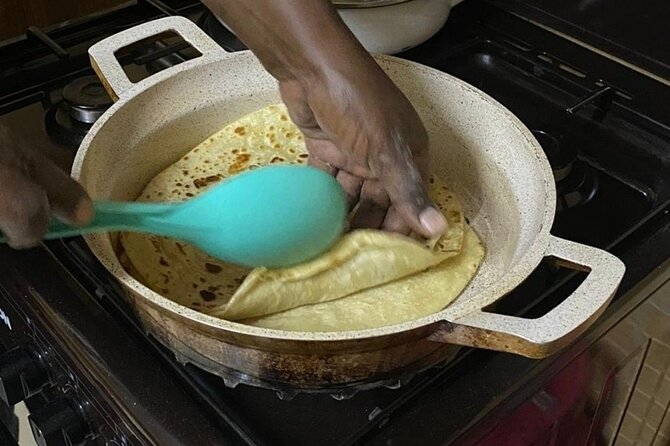
A private class changes the feel of a cooking lesson. Josephine can answer your questions without stopping to manage a crowd, and your group can move at a pace that suits everyone. That is useful if one person loves cooking while another needs more help with basic steps.
Families may find this especially convenient. The activity is described as suitable for most people, and the personal feedback indicates that children were welcomed and included. Still, the class involves a market visit, public transport, and hands-on kitchen work, so parents should decide if that mix suits their children.
Couples, friends, and solo bookers who want a private group can also benefit. You can focus on the foods that interest you and have a more natural conversation with Josephine. The home setting makes it easier to ask about Kenyan life than a short restaurant meal would.
The private format does not mean the day is formal or highly customized in every detail. The main structure remains the same: meet in Westlands, ride to the market, shop, return to the home, cook, and eat. You are gaining personal attention within that structure.
Timing, meeting points, and practical planning
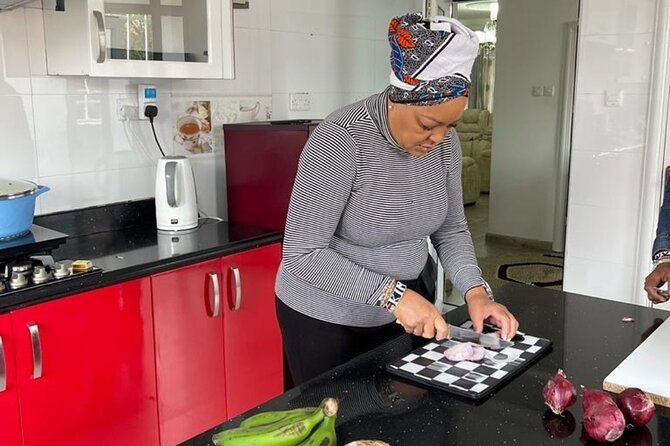
The activity lasts about four hours. That is enough time for a market visit, two matatu journeys, cooking, and a five-course meal, but you should keep the rest of your schedule flexible. Market stops and cooking do not always run like a timed museum visit.
The starting information gives a P.O. Box address in Nairobi, while the end point is listed on David Osieli Road. Because hotel pickup and drop-off are not included, confirm the precise meeting instructions before setting out. The activity is near public transportation, but you should still allow time to reach the starting point.
A mobile ticket is provided, and confirmation comes at booking. Food intolerances should be shared in advance. That is one of the most important practical steps, since the class centers on a shared meal and the exact dishes are not fully specified.
The cancellation terms are simple but firm. You can receive a full refund if you cancel at least 24 hours before the start time. Cancellations or changes inside that window are not refunded or accepted, based on the stated policy.
Who will enjoy this experience most
I would recommend this outing to you if you enjoy meeting people through food and want to see more than the usual sightseeing route. It is a good fit for anyone who likes learning by doing, especially if you want to bring home techniques rather than just photographs.
It may be a strong choice for families because of the private setting and Josephine’s reported patience with children. Friends can also make good use of the format, particularly if everyone is happy to share a kitchen and try unfamiliar flavors.
Food-focused visitors will get the most from the market section. The ingredients are not simply props. You help buy them, cook them, and eat them, which gives the four hours a clear thread.
You may want to choose another activity if you need guaranteed dietary control, dislike public transportation, or prefer a set menu in a restaurant. The food has Kenyan and Indian influences, but the precise courses are not promised in advance. Ask about intolerances and menu concerns before booking.
Is the $60 price fair?
For a four-hour private experience, the price covers a good range of elements. You receive transport to and from the market, cooking equipment, all ingredients, a five-course meal, lunch, fruit, water, coffee, and tea. The real value comes from the combination of services rather than any single item.
The market and matatu ride are important to the calculation. A standard cooking class might provide ingredients and instruction but skip the shopping and transport. Here, the extra time gives you a look at how the meal begins, while the private group format keeps the lesson personal.
There are limits. Hotel transfers are not included, and the home setting may not suit someone who expects a professional cooking studio. Also, the small number of posted ratings means the perfect score is encouraging but not enough reason to ignore your own preferences.
I would call the price fair for a visitor who wants a personal cultural activity with a substantial meal. It is less compelling if you are mainly searching for a low-cost lunch or a formal cooking course.
Should you book the Nairobi market and cooking class?
Book this experience if you want a personal introduction to Kenyan food that includes the market, the ride, the preparation, and the meal. Josephine’s role is central, and the private format gives you room to ask questions, work at your own pace, and share the experience with family or friends.
Before booking, make sure you are comfortable with a matatu journey and an informal home kitchen. Confirm the meeting details, tell Josephine about any food intolerance, and leave your schedule open around the four-hour duration.
For the right person, this is a smart way to spend part of a Nairobi visit. You leave with more than a full stomach. You gain a clearer sense of how local ingredients, spices, transport, and hospitality fit together in everyday life.
FAQ
How long does the experience last?
The experience lasts approximately four hours.
Where does the activity start?
It starts in the Westlands area of Nairobi, with the provided starting information listing P.O. Box 66283, Nairobi, Kenya.
Where does the activity end?
The listed end point is David Osieli Road, Nairobi, Kenya.
Is hotel pickup and drop-off included?
No. Hotel pickup and drop-off are not included.
How do I travel to the market?
The experience includes transportation to and from the market by matatu, a local Kenyan bus.
Is this a private activity?
Yes. Only your own group takes part in the activity.
What food will I learn to cook?
You will prepare a five-course Kenyan and Indian meal. Curries and ugali are given as examples, but the exact dishes are not specified.
Are cooking equipment and ingredients provided?
Yes. Cooking equipment and the ingredients for the meal are provided.
What drinks and extra food are included?
Water, bottled water, fruit, coffee, and tea are included, along with lunch and the five-course meal.
Can I report a food intolerance?
Yes. You should let Josephine know about any food intolerance before the activity.
Can I cancel for a full refund?
Yes. You can cancel at least 24 hours before the start time for a full refund. Cancellations or changes made less than 24 hours before the start time are not refunded.
Recently added around Nairobi
- Nairobi; City Walk Tour★ 4.5 · 3 reviews
- Private 3-Day Masai Mara Safari Adventure★ 5.0 · 3 reviews
- Kenya safari★ 5.0 · 3 reviews
- 2 Days Amboseli National Park Safari★ 3.5 · 3 reviews
- 11-Days Best of Kenya & Tanzania Big 5 Safari on a 4×4 Jeep★ 5.0 · 3 reviews
- Full Day, Small Group Guided Tour to Amboseli National Park★ 4.5 · 3 reviews
- 10-Days Explore Kenya Wildlife Private Safari★ 5.0 · 3 reviews
- Nairobi: Giraffe Center, Beads Factory & Bomas of Kenya Tour★ 4.5 · 3 reviews
Nairobi Tours, compared.

Nairobi National Park Half-Day Tour; Free Wi-Fi connection
Read our review →
National Park & Optional Elephants & Giraffe Center
Read our review →
NAI NAMI: Nairobi Storytelling Tour with Street Children
Read our review →




Elephant Orphanage and Giraffe Center Tour with Options
Read our review →Browse the lists this tour appears in