

Reviewed · NAIROBI TOURS
Nairobi: Chocolate City Kibera Slum Walking Tour
Kibera is not a sightseeing backdrop. It is a living Nairobi community, and this resident-led walking tour gives you a direct look at its daily life, challenges, and local efforts to build a better future. You visit Agape Hope Children Centre, see beadwork in progress, and walk through the area known as Chocolate City.
I like two things right away: the money supports local initiatives, and the guides take safety seriously. Collins and Allan are both praised for staying with visitors through the tour and even waiting while a taxi arrives. The main consideration is that the experience can be emotionally heavy, and the advertised language options may not always mean a non-English tour.
Key points to know before you book
- Local guides lead the walk: Collins and Allan are named guides who explain Kibera and answer questions along the way.
- Agape Hope Children Centre is a central stop: Your ticket helps support community work connected with children.
- Beadwork gives the visit a practical focus: You can visit a beadwork factory and take part in a community-based project.
- Safety is handled with care: The walk begins and ends at an agreed meeting point, and guides help with the return taxi.
- The price is modest: At $15 per person, the tour offers a lot of local contact for a two-hour experience.
- English may be the safest language choice: French, German, Japanese, Italian, and Spanish are listed, but Japanese bookings were handled in English.
Why Kibera deserves a careful visit

Kibera is Nairobi’s largest informal settlement, and visiting it asks you to pay attention to how you look, listen, and respond. This is not a quick photo stop beside a famous monument. You walk through streets where people live, work, shop, study, and raise families.
That difference matters. A poorly handled visit could reduce a community to poverty images. This tour tries to place the focus on people and local work. The route includes a children’s centre, a beadwork project, a factory, a market, and a home visit, so you see more than one side of Kibera.
I would book this only if you are ready for a serious experience as well as an interesting one. You may see conditions that feel shocking compared with your own home. The best approach is to listen first, ask polite questions, and let your guide explain what you are seeing.
More City Tours in Nairobi
- Nairobi Historical Walking City Tour
★ 5.0 · 258 reviews - Nairobi City Walking Tour with Traditional Kenyan Lunch
★ 5.0 · 106 reviews - Nairobi: Private 4-Hour City Tour
★ 4.5 · 68 reviews
Starting at Ayany Equity Bank or Prestige Plaza
Your meeting point depends on the option you choose. The listed starting points are Agape Hope for Kibera and Prestige Plaza Shopping Mall. The walk itself begins at Ayany Equity Bank Kibera, described as a common local meeting place.
This arrangement is useful because it gives you a clear public place to meet your guide. At the start, you receive a safety briefing and get your bearings before entering the community. Confirm the exact meeting point when booking, since the two options are not interchangeable.
The end points are also Agape Hope for Kibera or Prestige Plaza Shopping Mall. If you plan to use a taxi afterward, allow a little time for the handoff. The guides Collins and Allan both made a point of staying until a taxi arrived, which is a small but valuable service in an unfamiliar part of Nairobi.
Walking through Chocolate City
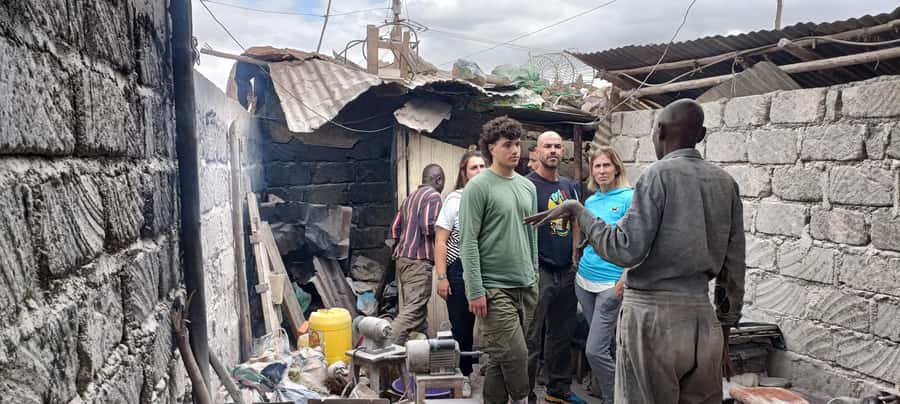
The heart of the experience is the walk through Kibera, sometimes called Chocolate City. The route is described as a guided walk through narrow and busy streets, with time for photographs, explanations, and questions.
You may also see the route described as including a bus tour or a self-guided tour, but the main experience here is the Kibera walking tour with a professional guide. I would not book it expecting a passive ride. The point is to move at street level and understand how the area functions.
Your guide explains the local situation and points out places connected with everyday life. Collins, one of the named guides, is especially noted for checking throughout the walk to see if questions remained. That matters in Kibera, where a brief glance can easily leave you with the wrong impression.
Photography needs care. A photo stop is included, but this does not mean every person or home is automatically a photo subject. Ask before taking close-up pictures, and follow the guide’s direction. You will get more from the visit by treating residents as neighbors, not scenery.
Agape Hope Children Centre

Agape Hope Children Centre gives the walk a clear social purpose. It is presented as a place connected with education, healthcare, and economic support, and the visit is included in the price.
This stop helps explain where some of the tour’s community benefit goes. Rather than only showing you difficult living conditions, the visit introduces a local effort focused on children and families. You can learn how a community-based project responds to needs that may otherwise seem distant or abstract.
The supplied details do not promise a formal presentation, a classroom activity, or a set time with children, so keep your expectations modest. One visitor wished there had been more contact with children, but also recognized that this could have been discussed with the guide. That is useful advice: if you want to understand the centre’s work, ask your guide respectfully what interaction is appropriate.
You should also remember that a children’s centre is a working place, not a tourist attraction. Listen to the staff and guide, avoid interrupting activities, and do not assume that giving gifts or taking photos is suitable.
More Walking Tours in Nairobi
- Nairobi: Historic and Modern Highlights Walking Tour
★ 4.8 · 703 reviews - Nairobi Downtown Walking Tour
★ 4.7 · 208 reviews - Nairobi Walking Tour: Downtown & City Tour
★ 4.8 · 32 reviews - Day tour to Hells Gate, Lake Naivasha and Crescent Island Walk
★ 5.0 · 26 reviews
Beadwork, local enterprise, and Toi Market
The beadwork portion gives the tour a welcome change of pace. You visit a beadwork factory and participate in a community-based beadwork project. This shows a productive side of Kibera and connects the visit with local income rather than only hardship.
For you, the value is not simply watching an item being made. You get a clearer sense of how a small craft business can offer skills, work, and a way for residents to earn money. If you choose to buy something, do so because you like it and want to support the maker, not because you feel pressured.
One useful detail from the experience is that visitors were not forced to shop at the places they visited. That is worth knowing before you book a community tour. You can take part in the project, ask about the work, and decide for yourself if you want to purchase anything.
Toi Market adds another layer. It is described as a colorful market filled with commerce and local activity. The tour gives you a guided route through the market rather than leaving you to manage it alone. Your guide can help you understand what you are seeing and keep the walk organized.
Markets can feel crowded and distracting, so stay close to your guide and carry only what you need. Comfortable, closed-toe shoes are required in practical terms, and high heels are not allowed. The supplied information also rules out bare feet, weapons, sharp objects, and explosive substances.
The home visit and the limits of the format

A home visit is included, which can be one of the most personal parts of the experience. It offers a chance to see domestic life rather than only public streets and community projects.
At the same time, the details do not explain whether the home visit is hosted by a resident, how long it lasts, or what areas of the home are shown. I would treat it as an invitation, not an entitlement. Be respectful, ask before taking photos, and let your guide set the tone.
The tour is short. The advertised duration is two hours, while the itinerary gives the Kibera portion as two and a half hours. That inconsistency means you should allow roughly two to two and a half hours, plus time for meeting and returning to your drop-off point.
A short tour cannot explain every part of Kibera. It gives you an introduction, a handful of local encounters, and a chance to ask questions. If you want a long research-style visit, this will feel limited. If you want a focused introduction during a Nairobi stay, the length works well.
Safety, comfort, and what to wear

Safety is one of the strongest parts of the arrangement. The tour is led by professional guides, begins with a safety briefing, and follows a planned route. The guides are described as residents or people closely connected to the community, which helps them navigate the streets and explain local life.
That does not mean you should switch off your common sense. Keep valuables secure, follow instructions, and stay with the group. Your guide is there to help, but respectful behavior and attention remain your responsibility.
Wear comfortable shoes with closed toes. The walk takes place on local streets rather than a polished attraction path, so practical footwear is more important than style. Bottled water is included, but you may still want to bring any personal supplies you need.
The activity is not suitable for wheelchair users or people with mobility impairments. It is also not suitable for people with epilepsy, pregnant women, babies under one year, or very young children. The supplied restrictions refer to several child age limits, including children under two, three, and four years, so families should confirm the exact rule before booking.
People prone to motion sickness are also listed as unsuitable, though the main activity is a walk. This may relate to the transport portion connected with some options.
Language and guide quality

English is the language you should count on. The booking information lists English, French, German, Japanese, Italian, and Spanish, but Japanese-speaking visitors reported that the tour was conducted in English despite selecting Japanese.
That is not a minor detail if you need interpretation. If you are comfortable in English, this should not be a problem. If you are booking specifically for a French, German, Japanese, Italian, or Spanish guide, confirm this before paying.
The named guides provide a useful sense of the guiding style. Collins is described as attentive, willing to answer questions, and helpful with photographs and the return taxi. Allan is described as kind and also waited until the taxi arrived. These details suggest a hands-on approach rather than a guide who simply walks ahead and recites facts.
The experience has a 4.9 rating from 13 reviews, with strong praise for the guides’ care, safety, and explanations. That is a small sample, so I would treat it as encouraging rather than definitive.
Is $15 a good value?
At $15 per person, this is inexpensive for a two-hour guided experience in Nairobi. The fee includes the professional English-speaking guide, bottled water, the Kibera walk, Agape Hope Children Centre, the beadwork factory, participation in a community beadwork project, and a home visit.
The strongest value is the access and local connection. You are not paying for a grand attraction or expensive transport package. You are paying for a guide, a planned route, and entry into community projects that would be difficult to understand on your own.
The price also has a direct local benefit, according to the tour’s stated purpose. Your ticket supports initiatives connected with children and the community. That makes the cost more meaningful than a standard sightseeing fee, though you should still ask questions if you want to know exactly how funds are used.
Do not judge value by the number of stops alone. The walk is worthwhile if the explanations help you understand Kibera and if the community visits are handled with respect. If you only want dramatic photographs, this is the wrong reason to book.
Booking flexibility and practical planning
You can cancel up to 24 hours before the activity for a full refund. A reserve-now, pay-later option is also available, which helps if your Nairobi schedule includes safari plans or changing transport arrangements.
Check availability for the starting time and verify the meeting point for your selected option. Since the activity has two starting and two ending locations, a quick confirmation can prevent a needless taxi ride.
The tour is listed at two hours, but I would avoid scheduling it tightly against another appointment. The route description includes a safety briefing, a walk through Kibera, community visits, and a return to the drop-off location. Allow extra time if you want to speak with the guide or arrange a taxi afterward.
Who should book this Kibera walk?
I would recommend it to you if you want to understand Nairobi beyond parks, hotels, and shopping centers. It suits adults and older children who can walk comfortably, listen carefully, and handle a serious subject with maturity.
It is also a good fit if you want your money to support a local initiative and prefer meeting community guides to taking a distant drive-by view. The beadwork project makes the experience more active, while the children’s centre and home visit add human context.
I would hesitate if you dislike walking on uneven or crowded streets, need step-free access, or are looking for a light, carefree outing. I would also think twice if you expect a guaranteed Japanese, French, German, Italian, or Spanish guide. English is the practical choice.
Should you book it?
Book this tour if you want a short, direct, and carefully guided introduction to Kibera. The strongest reasons are the resident guides, the community projects, the reasonable $15 price, and the care shown at the end of the visit when guides help you reach your taxi.
Go with an open mind and realistic expectations. Kibera may challenge you, and two hours cannot tell the whole story. But if you listen, ask permission before photographing people, and give the community more respect than curiosity, this can become one of the most meaningful parts of your Nairobi stay.
FAQ
How much does the Chocolate City Kibera walking tour cost?
The tour costs $15 per person.
How long does the tour last?
The activity is advertised as two hours. The itinerary gives the Kibera portion as two and a half hours, so allow roughly two to two and a half hours.
Where does the tour start?
The available starting points are Agape Hope for Kibera and Prestige Plaza Shopping Mall. The meeting point depends on the option booked, and the walk begins at Ayany Equity Bank Kibera.
Where does the tour end?
The listed drop-off points are Prestige Plaza Shopping Mall and Agape Hope for Kibera.
Is a guide included?
Yes. A professional English-speaking guide is included. Guides in other languages are listed, but Japanese bookings were reported as being handled in English.
What places are visited?
The experience includes a guided Kibera walk, Agape Hope Children Centre, a community-based beadwork project, a beadwork factory, Toi Market, and a home visit.
Is bottled water included?
Yes. Bottled water is included in the tour.
What should I wear?
Wear comfortable shoes with closed toes. High heels and bare feet are not allowed.
Can I cancel the booking?
Yes. You can cancel up to 24 hours before the activity for a full refund. A reserve-now, pay-later option is also available.
More Dessert Tours in Nairobi
- Kibera Chocolate City Tour
★ 5.0 · 13 reviews - A Visit To KIBERA The Chocolate City.
★ 4.9 · 12 reviews - Nairobi: Kibera Slum (The Chocolate city)Guided Walking Tour
★ 5.0 · 5 reviews - Visit kibera Slum the chocolate city
★ 4.8 · 3 reviews
More community walks in Kibera
- Nairobi: Explore Kibera Slum with Local Guides
★ 4.9 · 365 reviews - Kevins Kibera Slum Tours
★ 5.0 · 213 reviews - Nairobi: Kibera Slum storytelling tour with a Local
★ 5.0 · 185 reviews - Kibera Slum Tour with Lucas
★ 5.0 · 119 reviews
Recently added around Nairobi
- Nairobi; City Walk Tour★ 4.5 · 3 reviews
- Private 3-Day Masai Mara Safari Adventure★ 5.0 · 3 reviews
- Kenya safari★ 5.0 · 3 reviews
- 2 Days Amboseli National Park Safari★ 3.5 · 3 reviews
- 11-Days Best of Kenya & Tanzania Big 5 Safari on a 4×4 Jeep★ 5.0 · 3 reviews
- Full Day, Small Group Guided Tour to Amboseli National Park★ 4.5 · 3 reviews
- 10-Days Explore Kenya Wildlife Private Safari★ 5.0 · 3 reviews
- Nairobi: Giraffe Center, Beads Factory & Bomas of Kenya Tour★ 4.5 · 3 reviews
Nairobi Tours, compared.

Nairobi National Park Half-Day Tour; Free Wi-Fi connection
Read our review →
National Park & Optional Elephants & Giraffe Center
Read our review →
NAI NAMI: Nairobi Storytelling Tour with Street Children
Read our review →




Elephant Orphanage and Giraffe Center Tour with Options
Read our review →Browse the lists this tour appears in