

Reviewed · NAIROBI TOURS
Kibera Chocolate City Tour
Kibera is not a stage set for poverty. It is a home, workplace, school district, market, and close-knit community. This tour gives you a local guide’s view of daily life, with stops at Toi Market, Victoria Bones Craftshop, Agape Hope school and library, and the historic railway.
I like two things right away: the guides come from Kibera, and the money supports Agape Hope’s work with children. I also like the tour’s clear aim to replace stereotypes with real conversations and practical context. You are not simply looking at Kibera from a vehicle window.
The main consideration is that this is a walking tour through a densely settled area where living conditions can be difficult to see. You need to approach it with respect, avoid treating residents as photo subjects, and accept that the experience may feel confronting at times.
Key things to know before booking

- Local guides lead the walk: Collins, Allan, and Rama are among the guides connected with the experience, with Collins described as having grown up in Kibera.
- Four distinct stops: The route covers Toi Market, Victoria Bones Craftshop, Agape Hope school and library, and the railway area.
- A community-focused visit: The tour highlights local work, education, creativity, and the effort to improve conditions for children.
- About two hours of walking: The advertised duration is two to three hours, with the main route described as a two-hour visit.
- Small enough to stay personal: Groups can include up to 30 people, and private tours or special interests can be arranged.
- Good value at $22: The price is modest for a locally guided Nairobi experience that includes several community stops.
Why this Kibera walk feels different
Many Nairobi visitors see Kibera only from a distance, perhaps while passing through the city or hearing it discussed in broad, dramatic terms. That gives you very little sense of how people actually make a life there.
This walk takes a closer, more human approach. You meet at Kibera Town Centre and begin with an explanation of the community and its daily routines. The purpose is not to pretend that hardship does not exist. It is to show that hardship is only one part of the story.
You will hear about people earning a living, children attending school, small businesses serving local needs, and residents working toward better conditions. The guides connect these subjects to places you can see, which makes the experience more useful than a general talk about poverty in Nairobi.
Collins is the name most closely associated with the tour. He grew up in Kibera and is described as someone who works to help local residents. Allan and Rama also guide visits. Having guides with personal ties to the area matters here because they can explain the community as insiders, not as outsiders passing through with a camera.
That local connection also helps with introductions. The tour is designed to let you interact with people and learn about their work, but it should still be treated as a visit to someone’s neighborhood, not an open-air attraction.
More City Tours in Nairobi
- Nairobi Historical Walking City Tour
★ 5.0 · 258 reviews - Nairobi City Walking Tour with Traditional Kenyan Lunch
★ 5.0 · 106 reviews - Nairobi: Private 4-Hour City Tour
★ 4.5 · 68 reviews
Starting at Kibera Town Centre

The meeting point is Kibera Town Centre at Kamukunji Grounds. This gives you a clear place to begin and means the tour finishes where it started, rather than leaving you to find your way elsewhere in Nairobi.
The opening section is important. Before you reach the market or school, your guide sets out a broader picture of how people live in Kibera. You can expect discussion of the community’s challenges, along with its resilience, creativity, and social ties.
This introduction helps you read the streets with more care. A narrow path, a row of shops, or a busy meeting place begins to make sense as part of an active neighborhood. You are not just seeing physical conditions. You are learning how people use the space.
The experience runs daily between 8 a.m. and 6 p.m., with the booked visit lasting about two to three hours. The supplied route describes two hours, so allow a little extra time if conversations or stops take longer. A morning or afternoon booking can work, depending on your Nairobi plans.
Toi Market and the working side of Kibera
Toi Market is one of the first major stops. It is a useful place to begin because it shows Kibera through local commerce rather than through statistics.
The market is home to many small businesses. Here, your guide can point out how people earn money, serve neighbors, and keep goods moving through the community. One of the strongest parts of the experience is this focus on work. You see residents as business owners, makers, and customers, not only as people facing economic hardship.
The market can also give you a better idea of the area’s scale and activity. You might find clothing, household goods, food, or other everyday items, but the exact selection can change. The important point is that Toi Market is part of ordinary life. It is not there only for visitors.
Take your cue from your guide when speaking with vendors. Ask before taking photographs, and remember that a friendly interaction does not automatically mean someone wants a close-up picture. If you buy something, do so because you want it, not because you feel pressured to make a symbolic purchase.
For me, this is where the tour’s central idea becomes clear. Kibera is not defined only by what it lacks. It is also sustained by local enterprise and daily effort.
Victoria Bones Craftshop and local creativity

The next stop is Victoria Bones Craftshop. The name signals a creative side of Kibera that can easily be missed if you focus only on housing and infrastructure.
A craft workshop gives you a direct look at people turning skill and available materials into income. It also adds a personal, hands-on element to the route. At the market, you see commerce on a broad scale. At the craftshop, you get closer to the work itself.
The stop is particularly useful if you want to support local makers in a simple, direct way. If products are offered for sale, you can decide for yourself if something suits your budget and luggage. The tour price is $22, so the visit already remains relatively affordable, but buying a craft is optional and should not be treated as part of the admission.
The craftshop also challenges the lazy image of a community with no room for creativity. People create, repair, trade, teach, and adapt. This is one reason the tour feels more rounded than a short roadside viewing point.
Do not expect a large formal museum or a polished commercial workshop. The attraction is the connection to local work. The setting and presentation may be modest, but that is part of what makes the stop relevant.
More community walks in Kibera:
- Nairobi: Explore Kibera Slum with Local Guides
★ 4.9 · 365 reviews - Kevins Kibera Slum Tours
★ 5.0 · 213 reviews - Nairobi: Kibera Slum storytelling tour with a Local
★ 5.0 · 185 reviews - Kibera Slum Tour with Lucas
★ 5.0 · 119 reviews
Agape Hope school and library

The visit to the Agape Hope school and library brings the tour’s community work into focus. You see a place where children receive an education, study, and spend time with friends.
This stop matters because it moves the conversation from problems to practical responses. The organization behind the tour supports children, and the school gives you a concrete sense of that effort. Several accounts describe a large share of the money connected with the visit going toward children, making the tour more than a sightseeing purchase.
You may encounter children playing or going about their day. That can be a warm part of the visit, but it also calls for care. Children should not be treated as props for holiday photographs. Ask your guide about appropriate interaction and photography, and follow the school’s wishes.
The school and library may be especially meaningful if you want your visit to support a local project. It also gives families a chance to discuss education in a real setting rather than only hearing about it in abstract terms.
At the same time, keep your expectations grounded. A community school is not the same as a major Nairobi institution with extensive facilities. The value lies in meeting the people involved and understanding what the project provides.
Walking beside Kibera’s historic railway

The final listed stop is the historic railway. Walking beside it gives you a broader view of Kibera and helps close the loop on the tour’s social and physical setting.
The railway is not presented as a grand monument. Its value is that it is part of the area’s history and geography. From this point, your guide can help you understand how the community fits into Nairobi and how movement, housing, work, and public space overlap.
This can be a reflective end to the walk. You have seen a market, a craft business, a school, and a railway corridor. Together, those stops show a community with many layers.
The exact walking route can change. The tour is described as flexible, and private groups can request topics or places of interest. If you care about the railway, education, local business, or community projects, tell the operator when arranging the visit.
What the $22 price gives you

At $22 per person, this is a reasonably priced Nairobi activity. The value is not in expensive equipment, luxury transport, or a long list of monuments. It is in the time, access, and local explanation provided by the guides.
You get roughly two hours of guided exploration, several community stops, and the chance to support Agape Hope’s work. The mobile ticket also keeps booking simple. Confirmation is provided when you book.
The price works best for you if you want a focused local experience rather than a standard city tour. It is less useful if you are looking for a polished attraction with formal displays, air-conditioned transport, or a tightly scripted route.
The group limit is 30 people. That is manageable, but it is not automatically intimate. If you want more time for questions or a route shaped around your interests, ask about a private tour. The operator says private visits and special requests can be arranged.
How to prepare for the walk
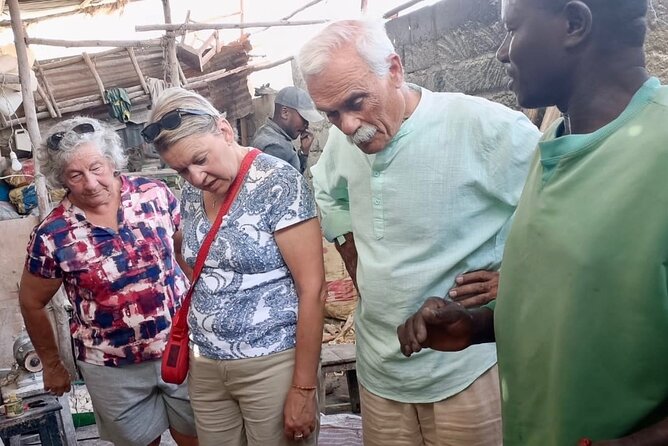
Wear practical clothing and shoes suited to walking. The route includes a market, neighborhood paths, a school, and the railway area, so comfort matters more than style.
Bring a respectful attitude and keep your phone or camera under control. Ask before photographing people, homes, businesses, or children. Your guide can tell you when photography is appropriate.
It is also wise to listen before forming conclusions. Conditions may be hard, but residents are not a single story. You will get more from the visit if you ask about work, education, family life, local projects, and hopes for the future, not only about poverty.
The experience requires good weather. If rain or other poor conditions cause cancellation, you can choose another date or receive a full refund. You can also cancel up to 24 hours before the start time for a full refund. Changes or cancellations inside that 24-hour window are not refunded.
The tour is near public transportation, and service animals are allowed. Most people can take part, although the supplied information does not promise a fully accessible route. If mobility is a concern, ask for route details before booking.
Who will appreciate this experience most
I would recommend the tour to you if you want direct contact with a Nairobi community and prefer local guides over a distant viewpoint. It suits curious adults, families who can discuss sensitive subjects respectfully, and visitors interested in education, community work, or small business.
It may also work well as a counterpoint to a safari or beach holiday. After seeing Kenya through wildlife and resort experiences, Kibera brings you back to the country’s urban, everyday life.
The tour is not ideal if you want a carefree outing with constant entertainment. Some parts may be emotionally difficult, and the close look at housing and poverty can make you uncomfortable. That discomfort is not a reason to avoid the visit, but you should be ready to think about what you see rather than consume it as spectacle.
I would also avoid booking it if your main aim is photography. You may take pictures where appropriate, but the purpose is learning and respectful contact.
Should you book the Kibera Chocolate City Tour?
Book it if you want to understand Kibera through people and local projects, not labels. Collins and the other guides bring personal knowledge of the community, while Toi Market, Victoria Bones Craftshop, Agape Hope school, and the railway give the visit a useful structure.
The strongest reasons to choose it are the local leadership, the support for children, and the modest $22 cost. The main caution is ethical: you must arrive prepared to behave like a respectful visitor in a real neighborhood.
If that sounds right for you, this is one of Nairobi’s more meaningful short excursions. Keep your expectations realistic, ask questions, and let the community be more than the stereotype you may have heard before.
FAQ
Where does the Kibera Chocolate City Tour begin?
The tour begins at Kibera Town Centre, at Kamukunji Grounds in Nairobi, Kenya.
Where does the tour finish?
The activity ends back at the meeting point in Kibera Town Centre.
How long does the tour last?
The experience lasts about two to three hours. The main route is described as taking two hours.
How much does the tour cost?
The listed price is $22 per person.
Which places are included in the route?
The route includes Toi Market, Victoria Bones Craftshop, the Agape Hope school and library, and the historic railway area.
Who are the guides?
Guides connected with the experience include Collins, Allan, and Rama. Collins is described as having grown up in Kibera.
Can I request a private tour?
Yes. The tour can be arranged privately, and you can request specific topics or places of interest.
How large can the group be?
The maximum group size is 30 people.
Is the tour available every day?
The stated opening hours are Monday through Sunday, from 8 a.m. to 6 p.m., for the period listed in the booking information.
What happens if the weather is poor?
The experience requires good weather. If it is canceled because of poor weather, you can choose another date or receive a full refund.
More Dessert Tours in Nairobi
- Nairobi: Chocolate City Kibera Slum Walking Tour
★ 4.9 · 13 reviews - A Visit To KIBERA The Chocolate City.
★ 4.9 · 12 reviews - Nairobi: Kibera Slum (The Chocolate city)Guided Walking Tour
★ 5.0 · 5 reviews - Visit kibera Slum the chocolate city
★ 4.8 · 3 reviews
Recently added around Nairobi
- Nairobi; City Walk Tour★ 4.5 · 3 reviews
- Private 3-Day Masai Mara Safari Adventure★ 5.0 · 3 reviews
- Kenya safari★ 5.0 · 3 reviews
- 2 Days Amboseli National Park Safari★ 3.5 · 3 reviews
- 11-Days Best of Kenya & Tanzania Big 5 Safari on a 4×4 Jeep★ 5.0 · 3 reviews
- Full Day, Small Group Guided Tour to Amboseli National Park★ 4.5 · 3 reviews
- 10-Days Explore Kenya Wildlife Private Safari★ 5.0 · 3 reviews
- Nairobi: Giraffe Center, Beads Factory & Bomas of Kenya Tour★ 4.5 · 3 reviews
Nairobi Tours, compared.

Nairobi National Park Half-Day Tour; Free Wi-Fi connection
Read our review →
National Park & Optional Elephants & Giraffe Center
Read our review →
NAI NAMI: Nairobi Storytelling Tour with Street Children
Read our review →




Elephant Orphanage and Giraffe Center Tour with Options
Read our review →Browse the lists this tour appears in