
Reviewed · NAIROBI TOURS
Visit Kibera The Largest Slum With a Local
Kibera is not a sightseeing backdrop. It is a working Nairobi community, and this three-hour walk with Jack Williams gives you a local introduction to its homes, markets, crafts, food, and daily routines. Jack was born and raised here, so he can explain the place from personal experience rather than from a guidebook.
I like two things right away: the price is remarkably low, and half of the booking fee goes toward school fees and supplies for orphans and vulnerable children. I also like the simple, human details, such as bargaining at a local market, eating street food, and having tea with mechanics. The main consideration is that this is a direct look at hardship, so you should come with respect and an open mind, not with the attitude of a spectator.
Key points to know
- Jack grew up in Kibera: He works as a social entrepreneur, social worker, and volunteer.
- Five stops fit into three hours: You visit the office, crafts center, open-air market, a local home, and a cafeteria.
- The fee has a clear community purpose: Fifty percent supports school fees and supplies for vulnerable children.
- The best moments are ordinary ones: Expect local shopping, food tasting, tea, and conversation.
- The tour begins and ends at Prestige Plaza: Meet in front of Java House on Ngong Road.
- The experience is flexible: The guides can adjust the walk to match your interests.
Meeting Jack at Prestige Plaza
Your meeting point is Prestige Plaza Shopping Mall on Ngong Road. Find the Java House inside the mall and meet in front of it. Jack or another member of his four-person guide team will welcome you there before taking you into Kibera.
The tour lasts about three hours and ends back at Prestige Plaza. Transportation is not included, so you need to arrange your own way to the starting point. One useful detail is that the guide team takes you back to the meeting point after the walk, so you are not left to find your own way out.
You can call or send a WhatsApp message to 0112011131. Since the guides are flexible, it is worth explaining your interests at the start. You might care most about crafts, local food, community projects, household life, or shopping. The more specific you are, the more useful the walk can become.
The guide language is English. The activity is listed as wheelchair accessible, although you should still tell the operator about your needs when booking so the route can be discussed clearly.
More community walks in Kibera:
- Nairobi: Explore Kibera Slum with Local Guides
★ 4.9 · 365 reviews - Kevins Kibera Slum Tours
★ 5.0 · 213 reviews - Nairobi: Kibera Slum storytelling tour with a Local
★ 5.0 · 185 reviews
The office gives you context before the walk
The first stop is the guides’ office. This is more than a quick check-in. Jack uses the office to introduce himself, explain the plan, and give you a basic sense of Kibera before you start walking.
The office is described as safe and very clean, which makes it a sensible place to begin a visit that can otherwise feel intense. It also gives you a chance to ask questions before entering the community. That matters here. A little context helps you see Kibera as a place where people work, raise children, trade, create products, and solve daily problems, rather than reducing it to a label.
Jack’s background adds weight to this introduction. He lost both parents at age nine and grew up as an orphan. His work now connects tourism, social enterprise, volunteer placements, and education support for vulnerable children. The tour is linked with OAC Kenya, a social enterprise involved in tours and crafts, and KCOOP, a community-based nonprofit.
You should not expect an academic lecture or a polished museum presentation. The value is personal explanation and direct access to someone who knows the area well. Recent bookings rated Jack highly for his clear answers, warm welcome, and careful attention to safety. One person who arrived late still received a friendly greeting, which tells you something about the tone Jack tries to set.
Recycling becomes jewelry at the crafts center
The second stop is a crafts center, where local people recycle materials into jewelry and other handmade items. This is one of the more constructive parts of the route because it shows skill and enterprise alongside the area’s economic difficulties.
Look closely at how discarded materials are turned into something saleable. The point is not simply to browse souvenirs. You get a look at how local makers create income from limited resources, and you can ask how the items are made or who produces them.
Buying something here can be a more meaningful purchase than picking up a generic gift in a shopping mall. Still, you should buy only what you genuinely want. A community-focused tour should not pressure you into spending more money, and the $10 booking fee already has a stated social purpose.
The craft stop also helps balance the visit. Kibera is often described only through poverty statistics. Handmade work shows another side: creativity, practical business, and people finding ways to support themselves.
The open-air market is the most practical stop

At the open-air market, you see where local people shop for second-hand items. This is a useful stop for understanding everyday buying habits and the role of reused goods in the local economy.
You are encouraged to bargain with the guide’s help and aim for a local price. That is a nice touch, particularly if you are not used to negotiating in Kenyan markets. Let the guide set the tone. Bargaining should remain friendly, and you should not turn a small purchase into a contest over the final coin.
This is also the place to keep your attention on the surroundings rather than rushing from stall to stall. You might find clothing, household goods, or other second-hand items, though the exact selection can change. The activity description does not promise a particular product, so treat the market as a chance to observe and interact rather than a guaranteed shopping stop.
If you want photographs, ask first. The experience includes a photo stop, but a market is also a workplace and a living community. A polite request is more appropriate than pointing a camera at people without permission.
A few more Nairobi days to weigh up
- Nairobi National Park Half-Day Tour; Free Wi-Fi connection
★ 5.0 · 878 reviews - Nairobi: National Park & Optional Elephants & Giraffe Center
★ 4.8 · 874 reviews - NAI NAMI: Nairobi Storytelling Tour with Street Children
★ 5.0 · 792 reviews - Nairobi National Park Half-Day Game Drive
★ 4.5 · 738 reviews
The home visit makes living conditions personal

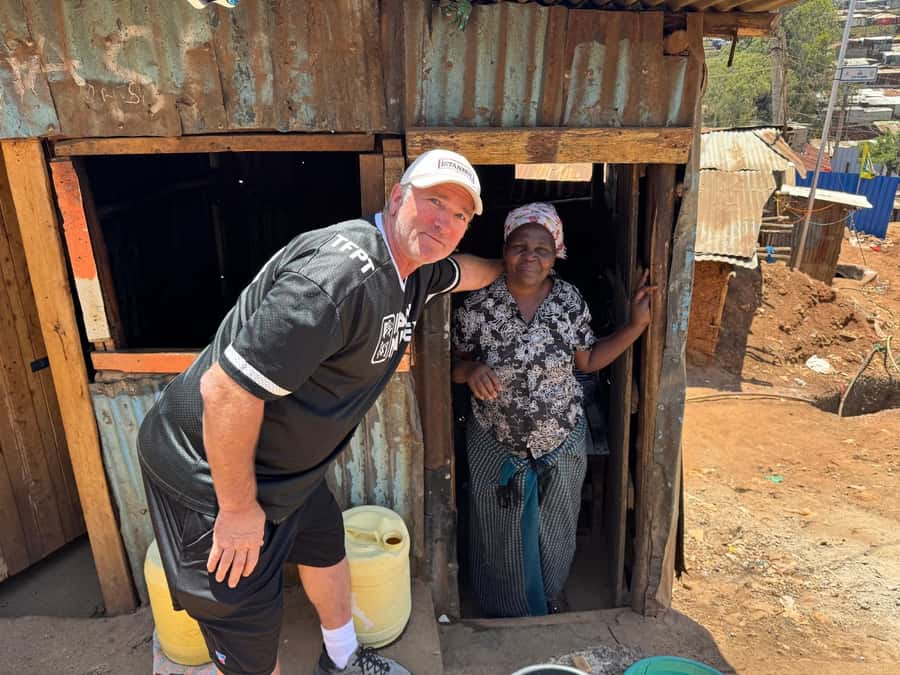
The fourth stop is a visit inside a local home. This can be the most revealing part of the walk because it moves the discussion from general descriptions to actual household living conditions.
A home visit needs a respectful approach. You are entering someone’s private space, not inspecting a display. Follow Jack’s lead, ask before taking photographs, and avoid treating the visit as entertainment. The point is to understand how people live, not to collect dramatic images.
This stop may be uncomfortable, and that is worth acknowledging. The experience deals directly with poverty and vulnerable families. If you prefer polished attractions with clear distance between you and local life, this may not be the right activity.
For the right person, the home visit can be one of the strongest reasons to book. It gives meaning to Jack’s education work and helps explain why the tour fee is directed toward school supplies and fees. It also places children and families at the center of the story, rather than leaving them as an abstract reason for charity.
Children encountered during the walk are described as joyous. Enjoy that warmth, but keep the relationship natural. You are visiting their neighborhood for a few hours. A smile, a greeting, and respectful conversation are better than making children perform for photographs.
Street food and tea add the human touch

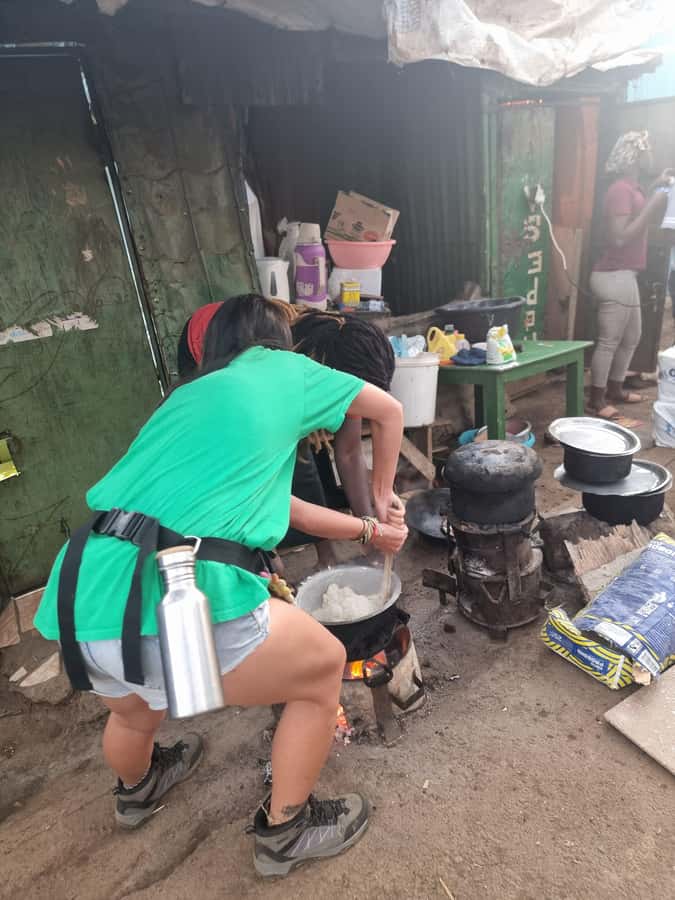
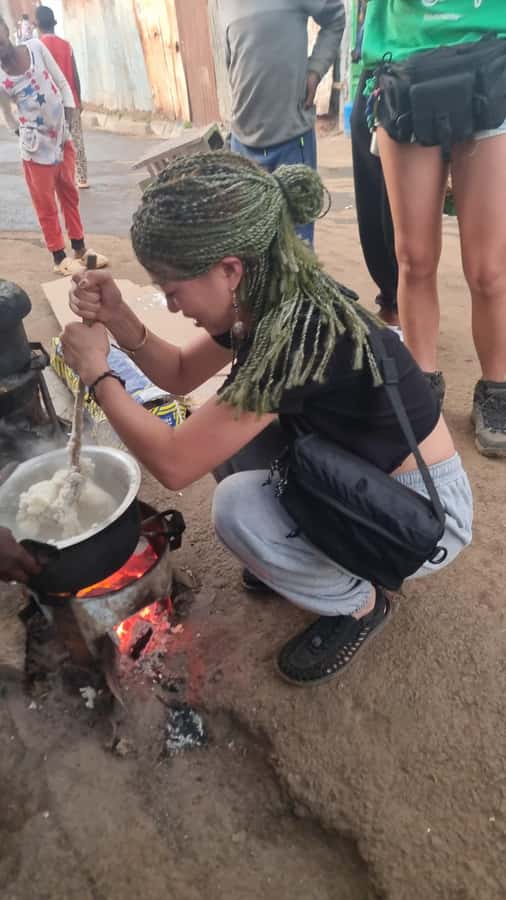
The final planned stop is a cafeteria, where you can rest with a soft drink or local food while Jack tells you more about life in Kibera. The wider walk may also include street food and tea with mechanics, two details that make this feel less like a formal tour and more like time spent around working people.
Food is often the quickest way to understand a place, but the information provided does not specify a fixed menu or guarantee a particular dish. Ask the guide what is available and what suits you. If you have allergies or dietary restrictions, explain them before eating.
Tea with mechanics is especially telling. It places you alongside people at work, rather than keeping you in a separate visitor bubble. You may hear about ordinary routines, jobs, and local concerns in a more relaxed setting. The tour’s best quality is this shift from looking at Kibera to talking with people who live and work there.
You should also keep your expectations realistic. This is not a food tour, and the cafeteria stop is described as a short rest. Food and drinks are not listed as included, so plan to pay for anything you choose to eat or drink.
What makes Jack’s approach different
Jack is not simply a guide who learned a route. He presents himself as a social entrepreneur, social worker, and volunteer, with a particular interest in education for orphans and vulnerable children.
His social enterprise links volunteers with charity schools and orphanages. The booking fee from this walk helps pay school fees and buy supplies for children in his community. Fifty percent of the fee goes back to the community, giving the tour a clear purpose beyond sightseeing.
At $10 per person, the value is strong even before you consider the social contribution. You receive three hours with an English-speaking guide, a planned route with five stops, food and market encounters, and an escort back to Prestige Plaza. Transportation, purchases, and refreshments are extra, but those exclusions are easy to understand at this price.
The low cost should not lead you to expect a luxury operation. This is a small social enterprise connected to local community work. The reward is access and context, not air-conditioned transport, a polished visitor center, or a carefully staged show.
A five-star rating from 22 reviews also gives the activity a useful track record. The strongest praise centers on Jack’s kindness, safety-conscious manner, clear explanations, and the feeling of seeing ordinary life rather than a staged version of Nairobi.
Safety, comfort, and the right attitude

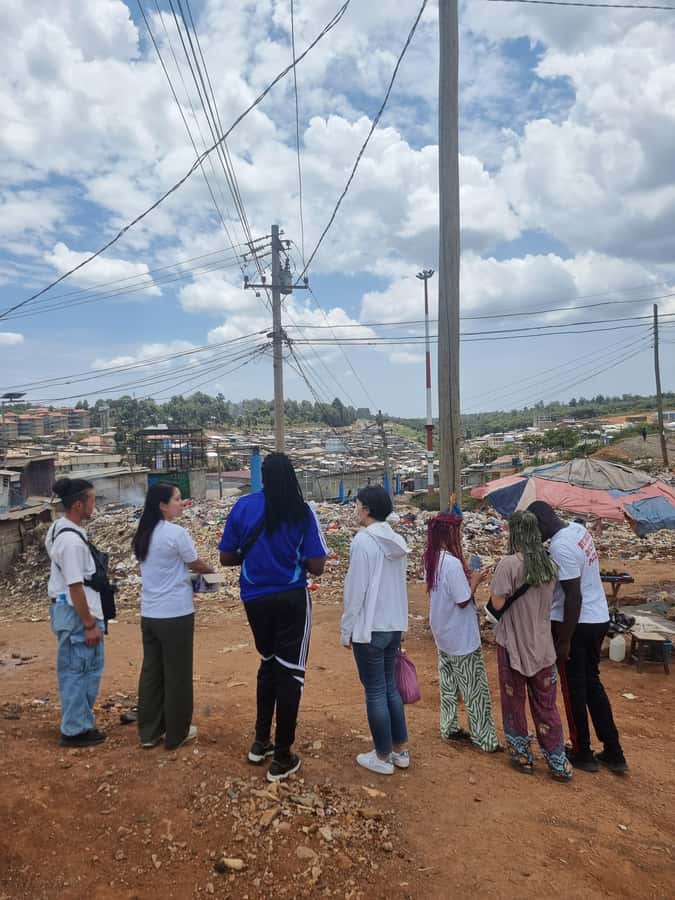
Several people who took the walk described it as safe, with Jack staying alongside them and answering questions throughout. The guides were born and raised in Kibera, which is important because local familiarity shapes how you move through the area and meet people.
That said, no urban walk is entirely predictable. Stay with your guide, listen to instructions, and keep your valuables secure as you would anywhere in Nairobi. The operator promises to be with you full time and to return you to the meeting point.
The walk includes sightseeing, a photo stop, market browsing, and food tasting. Wear clothing and shoes that suit a three-hour walk. The data does not specify the exact surface or route conditions, so ask about the route if mobility is a concern. The activity is marked wheelchair accessible, but advance communication is still sensible.
Your attitude matters as much as your footwear. Do not call people poor to their faces, make jokes about homes or clothing, or treat children as props. Ask thoughtful questions about work, education, housing, and community life. A good tour of a low-income area should leave you with greater understanding, not just a collection of striking photographs.
Who will get the most from this walk?

I would recommend it to anyone who wants a more direct view of Nairobi and is willing to meet people on their own terms. It suits visitors interested in social enterprise, community work, local markets, crafts, education, and everyday life.
It is also a good fit for budget-conscious visitors. At $10, you can spend three hours with a local guide and support a stated education project without committing to an expensive private excursion.
Families and volunteers may find the educational purpose especially relevant, though the operator does not provide a specific child age recommendation. People who want detailed answers will appreciate Jack’s willingness to explain how life works in the area.
I would hesitate to recommend it to someone seeking a relaxed sightseeing loop with no emotional weight. The home visit and poverty-related subject matter can be confronting. You also need to be comfortable with local food, market interaction, and walking through a dense urban community.
The tour is not suitable for people over 95 according to the activity information. It is offered in English and can be customized, so it may work well for visitors who want to shape the conversation around a particular interest.
Booking details that matter

The cost is $10 per person, and the duration is three hours. You meet at Prestige Plaza Shopping Mall, in front of Java House, and return there after the visit. Transportation to and from the meeting point is not included.
You can cancel up to 24 hours before the activity for a full refund. A reserve-now, pay-later option is also available, allowing you to hold a place without paying immediately.
Starting times depend on availability. Since the visit involves a community walk and a home stop, I would contact the operator ahead of time if you have mobility requirements, food restrictions, or a particular subject you want to discuss.
Should you book Visit Kibera with Jack?
Book it if you want a personal introduction to Kibera, not a distant view from a vehicle. Jack’s local background, the five-stop route, the market and food encounters, and the education work connected to the fee give this $10 activity real value.
Skip it if you want a polished attraction or feel uneasy about visiting homes and discussing poverty. For everyone else, this is a modestly priced, human-centered way to understand part of Nairobi that many people pass without seeing. The strongest reason to choose it is simple: you spend time with someone who grew up there, and your booking helps children who need school support.
FAQ
How much does the Kibera tour cost?
The activity costs $10 per person.
How long does the experience last?
The experience lasts three hours.
Where do I meet the guide?
Meet in front of Java House inside Prestige Plaza Shopping Mall on Ngong Road.
Where does the tour end?
The walk ends back at Prestige Plaza Shopping Mall, the meeting point.
Is transportation included?
No. Transportation is not included in the activity price.
What places do I visit during the tour?
The route includes the guide’s office, a crafts center, an open-air market, a local home, and a cafeteria.
What language is the tour offered in?
The live tour guide speaks English.
Can I cancel the booking?
Yes. You can cancel up to 24 hours in advance for a full refund.
Is the activity wheelchair accessible?
Yes. The activity is listed as wheelchair accessible. It is still sensible to contact the operator ahead of time to discuss your specific access needs.
Recently added around Nairobi
- Nairobi; City Walk Tour★ 4.5 · 3 reviews
- 2 Days Amboseli National Park Safari★ 3.5 · 3 reviews
- Private 3-Day Masai Mara Safari Adventure★ 5.0 · 3 reviews
- Kenya safari★ 5.0 · 3 reviews
- Full Day, Small Group Guided Tour to Amboseli National Park★ 4.5 · 3 reviews
- 11-Days Best of Kenya & Tanzania Big 5 Safari on a 4×4 Jeep★ 5.0 · 3 reviews
- 10-Days Explore Kenya Wildlife Private Safari★ 5.0 · 3 reviews
- Nairobi: Giraffe Center, Beads Factory & Bomas of Kenya Tour★ 4.5 · 3 reviews
Nairobi Tours, compared.
Nairobi National Park Half-Day Tour; Free Wi-Fi connection
Read our review →
National Park & Optional Elephants & Giraffe Center
Read our review →
NAI NAMI: Nairobi Storytelling Tour with Street Children
Read our review →



Elephant Orphanage and Giraffe Center Tour with Options
Read our review →Browse the lists this tour appears in