
Reviewed · NAIROBI TOURS
Private Tour in Kibera the Largest Slum
Kibera is not presented as a poverty show. This private, four-hour tour takes you into homes, schools, workshops, and community spaces, with local guide Rally explaining daily life and the ways people support one another. You may also ride a matatu, watch traditional dancing, and meet people working to build better options for children.
I like the small private format, which gives you room to ask questions and move at a human pace. I also like the direct support for Agape Hope for Kibera, a school for children facing challenges. The main consideration is that this is an intimate visit to a densely populated settlement, not a polished sightseeing outing, so you should come ready for basic conditions and follow local guidance about photography and personal space.
Key points to know before you go
- A local guide with community ties: Rally grew up in Kibera, became a teacher, and helps run a school for children with challenges.
- A genuine home visit: You can enter a local homestead and see the materials used in everyday housing.
- More than a walking tour: The route can include a matatu ride, football with a local team, school visits, and traditional dance.
- A low-cost private experience: At $15 per person, the price is unusually modest for a four-hour private activity.
- Flexible meeting arrangements: The listed start is Olympic Primary School, but pickup can be arranged flexibly between both parties.
- A practical finish: The tour ends at Toi Main Market, where you can see goods sold within the community.
Why this Kibera tour feels different

Many city tours keep you at the edge of a neighborhood. This one is designed to take you into the inner parts of Kibera, including a real household, a school, and small work spaces. That changes the tone. You are not simply looking at a place from a roadside. You are meeting people in settings connected to work, education, family life, and community activity.
The aim is to show resilience rather than turn hardship into a spectacle. That distinction matters. Kibera has serious economic challenges, but it is also home to families, teachers, athletes, artists, traders, and children with their own hopes and routines.
Rally is an important part of that approach. He grew up in the area, later became a teacher, and now helps with a school for children with challenges. His personal connection can give you context that a guide with no local ties could not easily provide.
I would approach the tour with respect and curiosity. Ask questions, listen carefully, and let your guide set the tone inside homes and community spaces. You will get more from the visit if you treat it as a meeting with a neighborhood, not as a checklist of unusual sights.
More community walks in Kibera:
- Nairobi: Explore Kibera Slum with Local Guides
★ 4.9 · 365 reviews - Kevins Kibera Slum Tours
★ 5.0 · 213 reviews - Nairobi: Kibera Slum storytelling tour with a Local
★ 5.0 · 185 reviews
Starting at Olympic Primary School
The listed starting point is Olympic Primary School in Nairobi. Pickup is offered, and the exact pickup point is described as flexible, so confirm the arrangement when you book. The meeting details matter here because you do not want to spend the morning guessing where the walking portion begins.
The tour lasts about four hours. That gives you enough time for several stops without reducing the visit to a quick pass through the area. Since this is a private activity, your group is the only group participating, which can make questions and personal conversations easier.
Bottled water is included. Coffee and tea are not, so plan accordingly if you like a hot drink before setting out. The tour operates near public transportation, and a matatu may form part of the experience later in the route.
Seeing the old railway
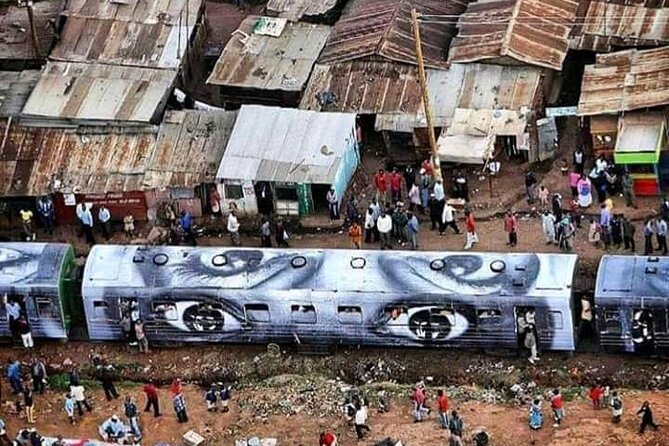
One of the first points of interest is the old railway. The tour describes it as the oldest railway brought by the British in 1805. It provides a clear opening for talking about Nairobi’s growth, transport, colonial-era construction, and the way infrastructure has shaped local communities.
This is not a museum stop with display cases or formal interpretation. Its value comes from seeing a working piece of the area’s past in its physical setting. Your guide can connect the railway to the neighborhood around it and explain what it means locally.
You should also keep your expectations practical. The railway is one stop within a community tour, not a separate historic attraction with a long presentation. The wider experience comes from how this point fits with the people and places you meet afterward.
Entering a Kibera homestead

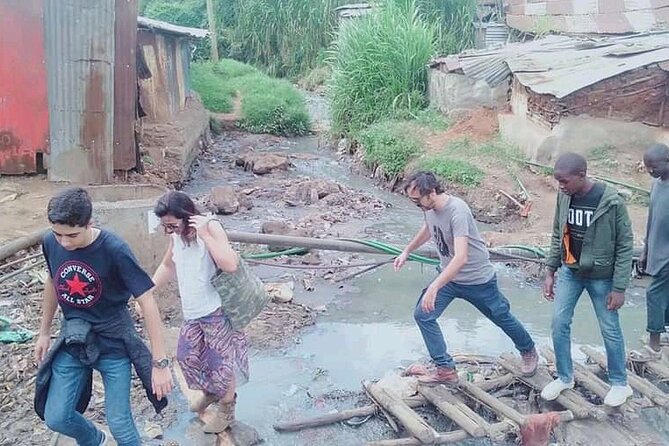
The homestead visit is likely to be one of the most personal parts of the morning. You can interact with local people in their house and learn about the materials used there. This offers a closer look at domestic life than you get from simply walking past rows of dwellings.
A home visit requires good manners. Let the guide introduce you, ask before taking photographs, and remember that you are entering someone’s private space. The purpose is to understand how people live, not to inspect a home as if it were an exhibit.
I like this stop because it brings the tour down to ordinary details. Housing materials, room use, family routines, and local choices can tell you more than a broad speech about poverty. At the same time, the setting may feel confronting if you are used to standard sightseeing. That is part of the reason to choose this tour only if you are comfortable with a direct and respectful encounter.
A few more Nairobi days to weigh up
- Nairobi National Park Half-Day Tour; Free Wi-Fi connection
★ 5.0 · 878 reviews - Nairobi: National Park & Optional Elephants & Giraffe Center
★ 4.8 · 874 reviews - NAI NAMI: Nairobi Storytelling Tour with Street Children
★ 5.0 · 792 reviews - Nairobi National Park Half-Day Game Drive
★ 4.5 · 738 reviews
Bone recycling and handmade work

At the bone-recycling stop, you can see bones being recycled into ornaments. The activity creates employment and shows how useful products can come from materials that might otherwise be discarded.
This is a small-scale working enterprise, not a factory tour. You may find the process more interesting than the finished souvenir because it shows skill, initiative, and a way to earn income with limited resources.
If you want to buy something, ask how purchases work and how the money supports the maker. The supplied details do not promise that souvenirs are included or that shopping is required, so think of this as an opportunity to learn first. The important point is that the stop presents local work and creativity rather than only focusing on need.
Meeting children at a school

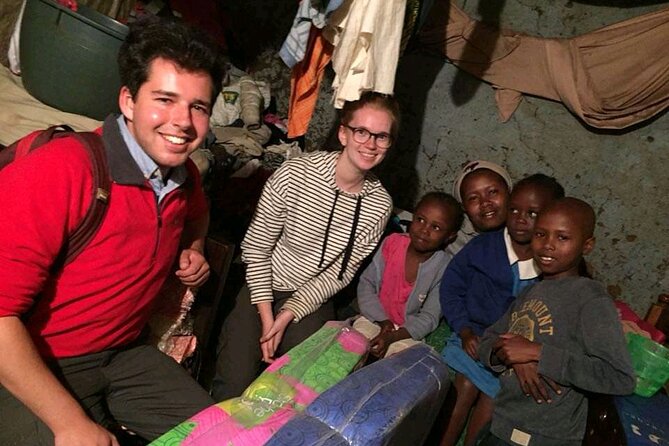
The itinerary includes a school for orphans, and the tour supports Agape Hope for Kibera. You can meet children while they are in school and learn about the role education plays in the community.
This part needs sensitivity. Children should not be treated as photo subjects or as proof of a charitable cause. Follow Rally’s instructions, ask before taking pictures, and keep your attention on the school’s work and the children’s dignity.
For families, the minimum stated child age is five years. Even so, parents should decide if their children are ready for a serious community visit. The tour can help young people understand that a neighborhood is made up of real families and institutions, but adults should prepare them to behave calmly and respectfully.
The school connection also gives the tour a practical purpose. You are not simply passing through Kibera and leaving with impressions. Your visit is linked to a local education project, which is one reason the $15 price can feel like good value beyond the sightseeing itself.
Playing football with a local team
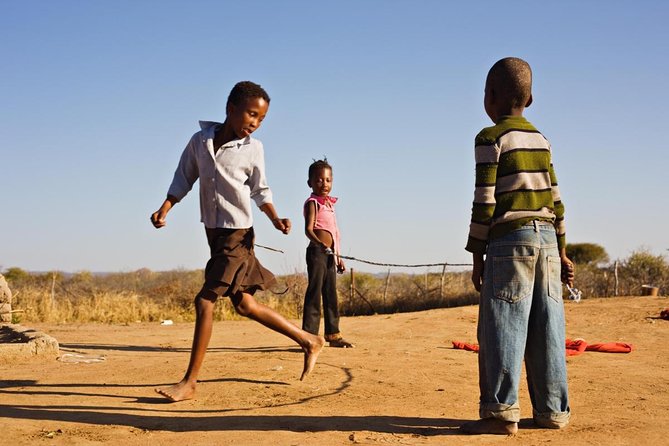
The football stop adds a welcome change of pace. You may have the chance to play with a local football team, turning the visit from a one-way observation into a shared activity.
You do not need to be a serious player for this to work. The point is participation and contact, not competition. If you prefer to watch, you can treat the match or practice as another way to see how sport brings people together.
This is also one reason the private format helps. A large group would make a casual game harder to arrange. With only your party involved, the activity can feel more personal, though the exact amount of play may depend on the local schedule and conditions.
Riding a matatu through Nairobi
Matatus are a familiar form of transport in Kenya, and the tour gives you the opportunity to use one. This adds an everyday Nairobi experience to the route. You are not just walking through the neighborhood, you are using a transport system that local people depend on.
The matatu portion is also a reminder that this is a living community, not a preserved attraction. You may find it busy or less predictable than a private vehicle. That is part of the point, but it also means you should listen closely to your guide and stay with your group.
The tour information does not state whether a separate matatu fare is included in the $15 price. Confirm that detail before departure. Bottled water is included, while coffee and tea are not.
Traditional dance and school edutainment
Traditional dancing is included as part of the educational entertainment program connected with the school. You can watch and, if invited, take part.
This is a lighter section after the more serious school and household visits. It gives you a chance to enjoy music, movement, and cultural expression rather than leaving Kibera with only difficult images in mind.
Participation should be voluntary and respectful. You do not need to perform perfectly. Follow the lead of the dancers and remember that the activity is a cultural exchange, not a staged show designed solely for tourists.
Ending at Toi Main Market
The tour finishes at Toi Main Market. This is a useful ending because it puts you in a working community market, where you can see goods sold locally and continue observing everyday commerce after the guided portion ends.
A market stop can also help you understand the neighborhood through ordinary activity. People are buying, selling, transporting, and preparing goods. You will see a different side of Kibera from the school and homestead visits.
The end point is not the same as the listed starting point. That is convenient if you want to continue exploring the market, but it means you should plan your onward transport. Ask the guide about the simplest next step for your plans in Nairobi.
What $15 buys you
At $15 per person, this is one of the least expensive private tours in Nairobi. The value is strong if you want direct local contact, a four-hour route, and several kinds of activity rather than a short walk and a general talk.
The price includes admission and bottled water. It does not include coffee or tea. The details do not list meals, private vehicle transport, or personal purchases, so budget separately for anything beyond the guided experience.
The low price should not lead you to expect luxury. This is a community-based visit with basic arrangements. Its value comes from the guide’s connection, the private format, the school support, and the range of stops. You are paying for access and local interpretation, not comfort or polished facilities.
The activity is also booked an average of 17 days in advance. That suggests you should reserve ahead if your Nairobi dates are fixed, especially because the tour is private and group capacity is limited to your party.
Who should book this experience
I would recommend it to you if you want to understand Nairobi through personal contact and can handle a tour that may feel emotionally serious. It suits adults, families with children aged five or older, students, and anyone interested in community projects, education, transport, local work, and culture.
It is especially suitable if you value small groups. You can ask Rally questions, spend time at the school, and take part in activities without being folded into a large crowd.
I would not choose it if you want a polished cultural show, a luxury vehicle, or a carefully controlled sightseeing route. The exact flow may depend on community activities, weather, and local conditions. You should also be comfortable with the possibility that the visit may challenge your assumptions about poverty and urban life.
Free cancellation is available if you cancel at least 24 hours before the start time. Changes or cancellations inside that period are not accepted for a refund. The tour requires good weather, and if poor weather cancels it, you are offered another date or a full refund.
Should you book the Kibera private tour?
Book this tour if you want a direct, community-led look at Kibera and are willing to meet the neighborhood on its own terms. The combination of Rally’s background, a home visit, the school connection, bone recycling, football, matatu transport, dance, and Toi Main Market gives you far more than a simple walk.
The strongest reason to book is the chance to support Agape Hope for Kibera while learning about the people who live and work in the area. The strongest reason to hesitate is the setting itself. This is not easy sightseeing, and you should approach it with humility.
For $15, a four-hour private visit offers unusually strong value. Confirm your pickup point, ask about any matatu costs, wear practical clothing, and allow the guide to manage introductions. If that sounds like the kind of Nairobi experience you want, this is a worthwhile choice.
FAQ
How long is the Kibera tour?
The tour lasts approximately four hours.
How much does the tour cost?
The listed price is $15 per person.
Is this a private tour?
Yes. Only your group participates in the activity.
Where does the tour start?
The listed starting point is Olympic Primary School in Nairobi.
Where does the tour end?
The tour ends at Toi Main Market in Nairobi.
Is pickup available?
Yes. Pickup is offered, and the pickup point can be arranged flexibly between both parties.
What is included in the price?
Bottled water and admission are included.
Are coffee and tea included?
No. Coffee and tea are not included.
Can children join the tour?
Children from five years old can participate.
What happens if bad weather cancels the tour?
You are offered a different date or a full refund if poor weather causes the tour to be canceled.
Recently added around Nairobi
- Nairobi; City Walk Tour★ 4.5 · 3 reviews
- 2 Days Amboseli National Park Safari★ 3.5 · 3 reviews
- Private 3-Day Masai Mara Safari Adventure★ 5.0 · 3 reviews
- Kenya safari★ 5.0 · 3 reviews
- Full Day, Small Group Guided Tour to Amboseli National Park★ 4.5 · 3 reviews
- 11-Days Best of Kenya & Tanzania Big 5 Safari on a 4×4 Jeep★ 5.0 · 3 reviews
- 10-Days Explore Kenya Wildlife Private Safari★ 5.0 · 3 reviews
- Nairobi: Giraffe Center, Beads Factory & Bomas of Kenya Tour★ 4.5 · 3 reviews
Nairobi Tours, compared.
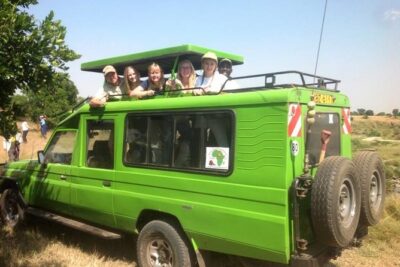
Nairobi National Park Half-Day Tour; Free Wi-Fi connection
Read our review →
National Park & Optional Elephants & Giraffe Center
Read our review →
NAI NAMI: Nairobi Storytelling Tour with Street Children
Read our review →
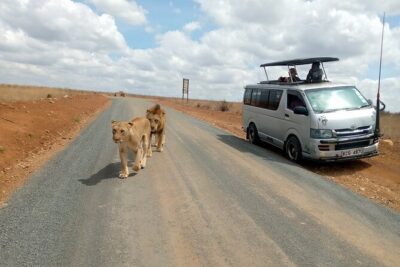


Elephant Orphanage and Giraffe Center Tour with Options
Read our review →Browse the lists this tour appears in