

Reviewed · NAIROBI TOURS
Nairobi: Kibera Slum Tour with Local Social Entrepreneurs
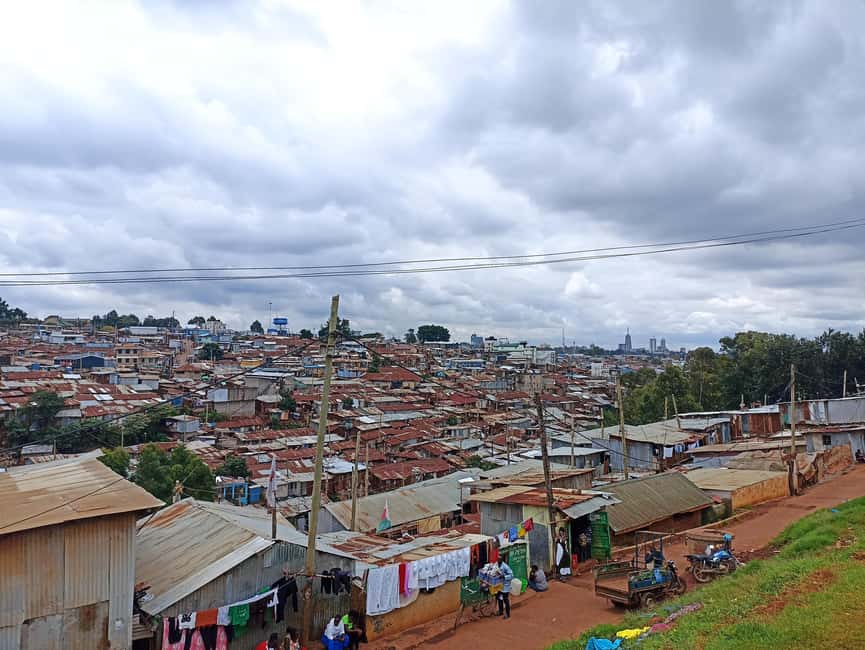
Kibera is not a backdrop for a quick poverty photo. It is a home to more than 300,000 people in roughly three square kilometers, and this three-hour walk lets you meet the people who work, study, create, and raise families here. Luke Kagz, who grew up in Kibera, leads the experience with personal stories and local connections.
I like two things right away: the route includes practical community projects, from a children’s home to a recycling workshop, and 30% of the tour revenue supports a children’s home and school. The main consideration is that this is an intimate walk through crowded streets and very modest homes, so you need humility, flexibility, and comfort with seeing difficult living conditions up close.
Key points at a glance
- Luke’s personal connection: Your guide was born and raised in Kibera and can explain daily life from firsthand experience.
- A useful three-hour route: The walk combines Toi Market, a school, a family home, a children’s home, an art center, a viewpoint, and a craft workshop.
- Community money stays local: Thirty percent of tour revenue helps provide food, shelter, education, stationery, and school supplies.
- More than hardship: You see artists, teachers, traders, craftspeople, and families building lives with limited resources.
- Flexible guiding: Luke can adjust the pace and, when possible, spend more time on places that interest you.
- Strong safety record: Direct feedback repeatedly praises Luke and his fellow guides for helping people feel safe and comfortable.
Why a Kibera walk belongs in your Nairobi plans
Nairobi is often treated as a gateway to Kenya’s parks, but the city itself deserves attention. Kibera offers a different way to understand Nairobi, not through monuments or museums, but through streets, homes, schools, small businesses, and local initiatives.
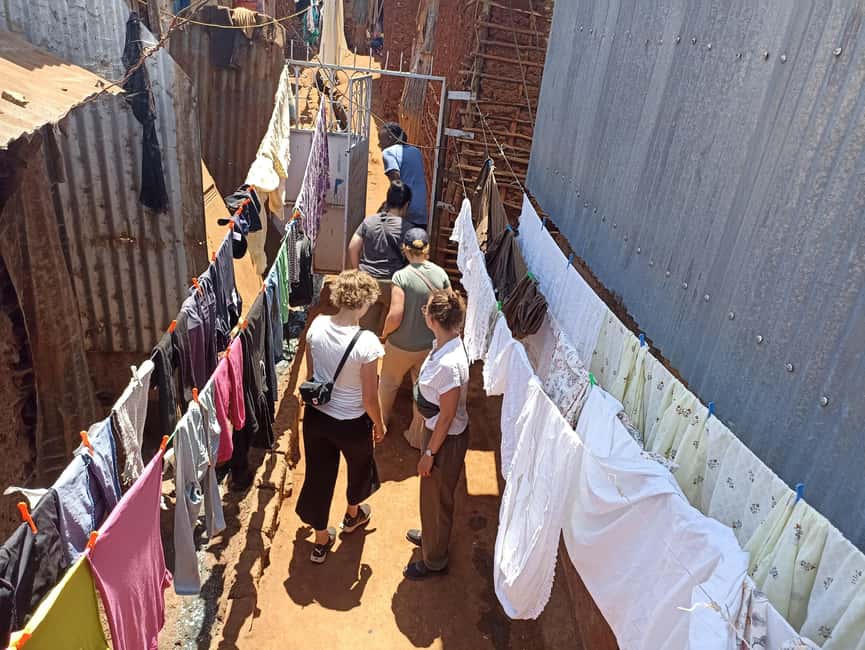
The word slum can flatten a complicated place into one sad image. This tour works best because it shows more than poverty. You see overcrowded housing and limited services, but you also see people earning money, supporting neighbors, educating children, and making art.
Luke’s background matters here. He grew up in Kibera and still has family and social ties in the area. That gives the tour a personal frame. Instead of hearing only general facts, you can ask what it was like to grow up there, how housing works, how water and electricity affect daily routines, and how residents deal with waste, health, unemployment, and education.
The experience is not polished in the way a museum visit is polished. Streets can be tight, noisy, muddy, or uneven. Plans may shift because this is a living neighborhood, not a staged attraction. I see that as part of the value, but you should arrive ready to listen rather than consume a spectacle.
More community walks in Kibera:
- Nairobi: Explore Kibera Slum with Local Guides
★ 4.9 · 365 reviews - Kevins Kibera Slum Tours
★ 5.0 · 213 reviews - Nairobi: Kibera Slum storytelling tour with a Local
★ 5.0 · 185 reviews
Meeting at Greenhouse Mall near Adams Arcade
The meeting point is the entrance of Greenhouse Mall, off Ngong Road at Adams Arcade. You contact Luke by WhatsApp and meet near the security checkpoint after entering the mall.
This is a practical starting point. You can meet in a recognizable public place, get oriented, buy anything you need, and make final arrangements with your guide before walking toward Kibera. Bottled water is included, but the mall can also help you prepare for the next few hours.
The walk generally lasts a maximum of three hours. The schedule is flexible, which is useful if you want more time at the art center or children’s home, or if you need a slower pace. Several visitors specifically appreciated Luke’s quick WhatsApp replies and his willingness to adjust the route.
The route information gives Olympic Estate as the last stop, where you can order an Uber or Bolt for your next destination. Another meeting-point note says the activity ends back at the starting point, so confirm the exact finish location with Luke before setting up transport.
Toi Market and Kibera’s working economy
Toi Market is one of the first major stops. It is described as Nairobi’s second-largest open-air market, with second-hand clothing sold mainly to local residents, including people from Kibera.
This stop helps you see Kibera as part of Nairobi’s wider economy. Clothing arrives from Europe, the United Kingdom, the United States, China, and other places, then enters a local chain of sellers and buyers. A market visit also gives you a practical look at how people shop for affordable goods.
You may be tempted to treat the market as a colorful photo stop, but its main value is economic. Ask Luke how the market serves local households and what role second-hand clothing plays in everyday life. If you want to buy something, purchases are not included in the tour price, so carry some Kenyan cash if you plan to shop.
Keep your belongings secure and follow Luke’s lead in crowded areas. The point is to observe and interact respectfully, not to block stalls or turn private moments into photographs.
A children’s home and the question of responsible visits

The children’s home supports needy and vulnerable children with food, shelter, and education. Some children are orphans, while others were rescued from the streets. This is likely to be the most emotional stop.
You may meet the children and the adults who care for them. Some visitors brought food such as maize flour, apples, or cookies, while others brought stationery. The tour itself already contributes to the cause, with 30% of revenue helping a children’s home and a local school.
That arrangement gives the visit more purpose than simply arriving with a camera. Still, you should let your guide or the home’s staff set the tone. Children’s homes are places where dignity matters. Listen carefully, ask before taking photographs, and avoid treating the children’s lives as entertainment.
One caregiver, Mama Paschalia, has been described as looking after about 18 orphans. Meeting someone responsible for that work can help you understand the daily effort behind food, shelter, and schooling. The visit is not easy, but it can be meaningful if you approach it with restraint.
A few more Nairobi days to weigh up
- Nairobi National Park Half-Day Tour; Free Wi-Fi connection
★ 5.0 · 878 reviews - Nairobi: National Park & Optional Elephants & Giraffe Center
★ 4.8 · 874 reviews - NAI NAMI: Nairobi Storytelling Tour with Street Children
★ 5.0 · 792 reviews - Nairobi National Park Half-Day Game Drive
★ 4.5 · 738 reviews
Uweza Art Gallery and local creative work

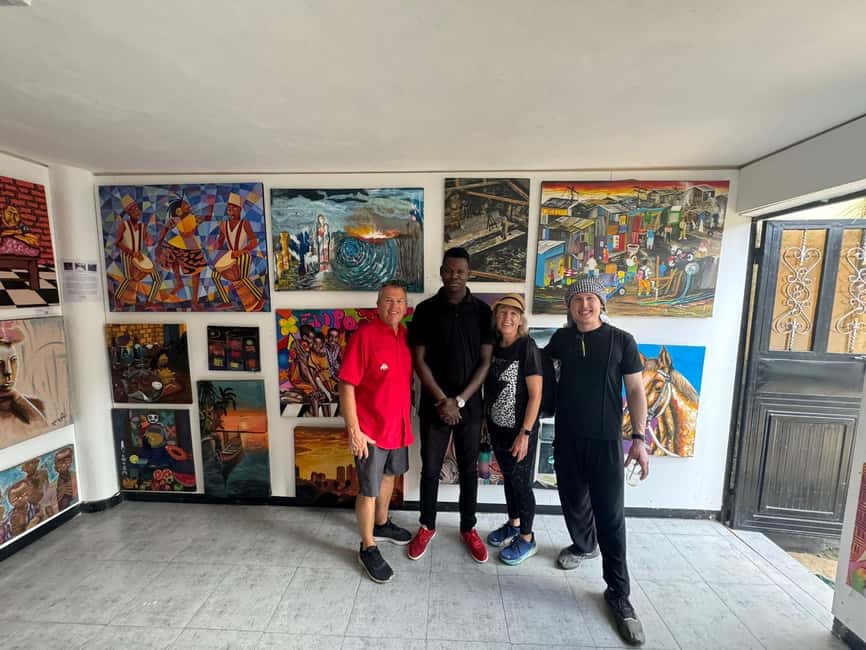
Uweza Art Gallery provides a platform for children and artists from Kibera. The gallery displays paintings and other works connected to local talent and experience.
I like this stop because it changes the rhythm of the tour. After hearing about limited services and hard choices, you see a space built around skill, imagination, and opportunity. The art is not an escape from Kibera so much as another way for residents to express how they see their community.
Luke can explain the meaning behind the pieces and the role of the art center. If a work interests you, ask about the artist and how the gallery supports young people. Products are not included in the tour cost, so buying art is optional, not an obligation.
Several people valued the art center because it showed that Kibera produces more than stories of hardship. It also produces artists who deserve attention and a fair chance to earn from their work.
The Kibera viewpoint near the old railway
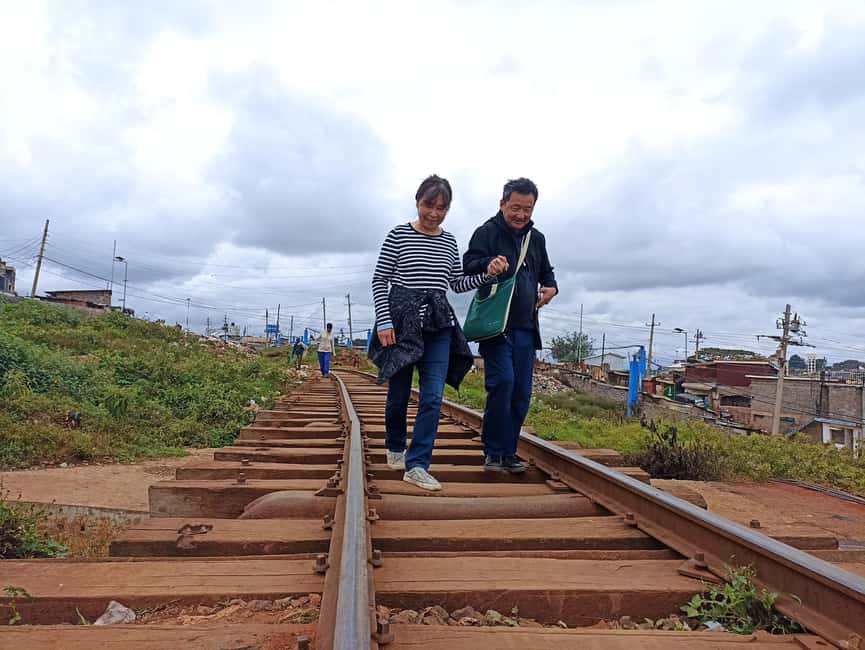
Near Kibera Town Centre, the route reaches an elevated viewpoint close to the old Kenya Uganda Railway line. From here, you see part of Kibera from above.
This view helps you understand the density of the settlement. Walking through narrow streets gives you close detail, but an elevated outlook lets you grasp the scale and layout of the area. Luke can add historical context about Kibera’s origins and its place within Nairobi.
Do not expect a grand city lookout with railings, signs, or a formal viewing platform. It is a local viewpoint along the route. Its strength is the perspective, not the facilities.
The stop is also a good point to ask questions. You can connect what you have seen on the ground, homes, markets, waste, schools, and businesses, with the larger pattern of the neighborhood.
Inside a 4-by-4-meter family home
The local house visit is one of the most personal parts of the experience. The homes are described as roughly four meters by four meters, and Luke may also invite you to meet members of his own family.
You get to see how a small living space is arranged and hear from a local family about daily life. That detail matters because statistics about population, land, and services can feel distant. A room of this size makes the pressure on housing much easier to understand.
At the same time, this is a private home, not a display. Enter quietly, ask permission before photographing, and remember that the family is sharing part of its life with you. Some people find this visit touching, while others may feel uncomfortable with the closeness. Both reactions are understandable.
Meeting Luke’s parents has been a special part of the route for some people. It adds another layer to his story and shows that he is not guiding from outside the community. He is introducing you to the place where his own life began.
Fairview Academy and education with limited resources

At Fairview Academy, you see children learning in Kibera despite difficult conditions and limited resources. The stop focuses on resilience, but it should not make hardship sound romantic.
Schools need practical support. The tour’s community contribution helps provide stationery and other school items, which gives the visit a clear connection to something useful. You can ask Luke how education fits into family life and what challenges local schools face.
The school also helps explain why education appears repeatedly throughout the tour. The children’s home provides schooling, the art center gives young people a creative outlet, and the school visit shows learning in practice. Together, these stops point to the same issue: opportunity depends on local institutions and the people who keep them going.
School visits can be sensitive, especially when children are present. Follow the school’s rules and avoid interrupting lessons.
Victorious Bone Craft and practical recycling
At Victorious Bone Craft Workshop, local artisans recycle cow bones, cow horns, used brass padlocks, and camel bone into ornaments. The work creates jobs while keeping materials out of the waste stream.
This is one of the tour’s most distinctive stops. You see a small business turning discarded material into something useful and saleable. It also gives you a chance to understand how craft skills can support household income.
The workshop is not only about souvenirs. It links employment, creativity, and environmental concerns. Kibera faces serious waste problems, and recycling is one way local workers respond to both pollution and the need for income.
You may purchase an ornament, but you do not have to. The tour price covers the workshop visit, not products. I prefer that arrangement because you can look, ask questions, and buy only if something genuinely appeals to you.
Safety, comfort, and the right attitude
Safety is the issue many people consider before booking. Direct feedback about Luke and his fellow guides, including Samuel, Sami, Victor, and Clement on some departures, repeatedly describes the walks as safe and well managed. Luke knows the streets, knows many residents, and can steer you away from unwanted attention.
That does not mean you should switch off your common sense. Stay with your guide, keep valuables secure, wear practical shoes, and dress in a way that shows respect for the neighborhood. The walk is active and may involve uneven streets, crowded passages, and simple facilities.
Solo women have also found the experience comfortable with Luke, but your own judgment still matters. If you feel unsure, speak up. A good local guide can adjust the pace or route.
The best attitude is curiosity without pity. Ask questions, listen to answers, and remember that the people you meet are residents first, not tour material. You may see hardship, but you should also notice humor, work, friendship, family life, and pride.
What $40 buys you
At $40 per person, the tour is not the cheapest way to spend three hours in Nairobi. Its value comes from access, interpretation, and community benefit rather than from expensive vehicles or formal attractions.
The price includes the guide fee, bottled water, Toi Market, the children’s home, a local house, Uweza Art Gallery, the viewpoint, Fairview Academy, and Victorious Bone Craft Workshop. You pay separately for anything you buy.
I consider the price fair if you want a guided, personal look at Kibera rather than a quick drive past it. Luke’s local background is important. Without a trusted guide, it would be much harder to understand what you are seeing or to meet people in a respectful way.
The 30% contribution also matters. It does not turn the visit into a substitute for broader social support, but it gives your booking a direct local purpose. If you want to help further, stationery or food may be appropriate, but ask Luke what is currently useful instead of guessing.
Who should book this experience
I would choose this tour if you want to understand Nairobi through local people and community projects. It suits adults, older children, students of development studies, and anyone who wants to go beyond the usual safari itinerary.
It is not suitable for children under seven, babies under one, or people over 95. The walk may also be a poor fit if you dislike close quarters, modest homes, emotional encounters, or unscripted street conditions.
English and Swahili are available. The flexible timing helps if you want a private or slower experience, though you should confirm the schedule and end point directly with Luke.
You can reserve now and pay later, and cancellation is allowed up to 24 hours in advance for a full refund. Those terms are useful if your Nairobi plans are still moving around.
Should you book the Kibera walk?
Book it if you are prepared to see Kibera as a real neighborhood, not a poverty attraction. The strongest reasons are Luke’s firsthand connection, the range of stops, the chance to meet local families and makers, and the fact that part of the fee supports children’s care and education.
Skip it if you want a relaxed sightseeing stroll with polished facilities and no difficult moments. This experience asks more from you than a standard city tour, but it can also give you a far more personal understanding of Nairobi.
For the best visit, contact Luke ahead of time, confirm who will guide your departure, clarify whether you finish at Olympic Estate or Greenhouse Mall, and arrive ready to listen. At $40, it is a solid choice for an honest, community-based introduction to Kibera.
FAQ
How long does the Kibera tour last?
The tour is scheduled for a maximum of three hours.
Where does the tour begin?
You meet at the entrance of Greenhouse Mall, off Ngong Road at Adams Arcade. After entering the mall, contact your guide by WhatsApp and meet near the security checkpoint.
Where does the tour end?
The route information gives Olympic Estate as the final stop, where you can order an Uber or Bolt. Another tour detail says the activity ends back at the meeting point, so confirm the exact end location with your guide.
Who guides the tour?
Luke Kagz is the main guide described for this experience. He was born and raised in Kibera, has a university degree, and works as a social entrepreneur. Other local guides, including Samuel, Sami, Victor, Clement, or Robert, may assist or lead some departures.
What languages are available?
The tour is available in English and Swahili.
What is included in the $40 price?
The price includes the guide fee, bottled water, Toi Market, the children’s home, a local house visit, Uweza Foundation Art Centre, Victorious Bone Craft Workshop, Fairview Academy, and a Kibera viewpoint.
Does the tour support the local community?
Yes. Thirty percent of the tour revenue supports a children’s home and a local school with items such as stationery and other school supplies.
Is the tour suitable for young children?
The tour is not suitable for children under seven or babies under one year old. It is also not suitable for people over 95.
Recently added around Nairobi
- Nairobi; City Walk Tour★ 4.5 · 3 reviews
- Private 3-Day Masai Mara Safari Adventure★ 5.0 · 3 reviews
- Kenya safari★ 5.0 · 3 reviews
- 2 Days Amboseli National Park Safari★ 3.5 · 3 reviews
- 11-Days Best of Kenya & Tanzania Big 5 Safari on a 4×4 Jeep★ 5.0 · 3 reviews
- Full Day, Small Group Guided Tour to Amboseli National Park★ 4.5 · 3 reviews
- 10-Days Explore Kenya Wildlife Private Safari★ 5.0 · 3 reviews
- Nairobi: Giraffe Center, Beads Factory & Bomas of Kenya Tour★ 4.5 · 3 reviews
Nairobi Tours, compared.
Nairobi National Park Half-Day Tour; Free Wi-Fi connection
Read our review →
National Park & Optional Elephants & Giraffe Center
Read our review →
NAI NAMI: Nairobi Storytelling Tour with Street Children
Read our review →


Elephant Orphanage and Giraffe Center Tour with Options
Read our review →Browse the lists this tour appears in