
Reviewed · NAIROBI TOURS
Nairobi Coffee Farm and Factory Tour
Kenyan coffee is not just a drink here. It is a crop, a skilled trade, and a major part of the country’s economy. At Fairview Coffee Estate, you walk among coffee trees, see beans being dried and processed, and follow the long trip from fruit on a branch to the brew in your cup. The tasting at the end gives the lesson a pleasant jolt.
I like the private format, since your own group can ask questions without being lost in a crowd. I also like the included hotel pickup, coffee, snacks, and bottled water. The main caution is that the published timing is not perfectly clear: the tour is described as two to three hours, while the estate itinerary lists four hours, and one booking note reports a separate $30 farm fee. Confirm the final duration and admission cost before you go.
Key points at a glance
- Fairview Coffee Estate: Reach a working coffee estate about 20 minutes from Nairobi’s city center.
- Farm-to-cup lesson: Follow coffee from growing and harvesting through grading, drying, processing, and roasting.
- Several tastings: The experience can include samples of different grades and roasts, with one detailed account describing four grades.
- Private outing: Only you and your party take part, with private transport included.
- Guides make the difference: Moses, Obed, Ann, Elvis, James, Alex, Tim, and others are named in feedback for clear explanations and friendly service.
- Check the fee details: The supplied information says admission is not included, and one person reports paying a $30 farm fee.
Why Fairview makes a good Nairobi half-day
Nairobi gives you plenty of city sights, but Fairview Coffee Estate offers a change of pace without a long drive. The estate sits in a green country setting about 20 minutes from the center, with fresh air and open views. That short transfer matters when you have only a free morning or afternoon.
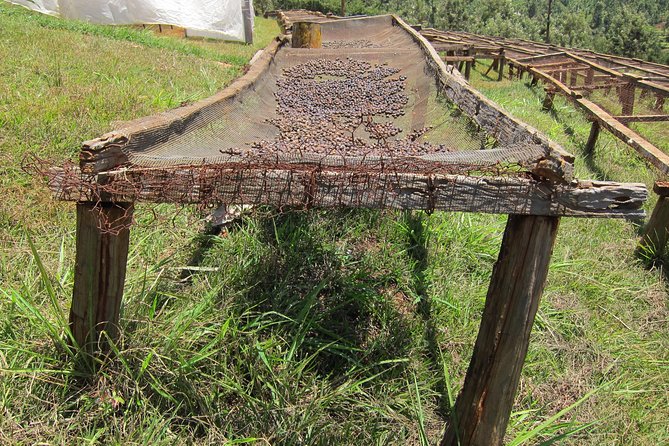
The appeal is not simply drinking Kenyan coffee. You see the work behind it. Coffee production involves far more than picking beans and putting them in a machine. The visit explains how coffee grows, how ripe fruit is harvested, how beans are graded, and how they are dried, processed, and roasted.
I find that kind of tour useful because it changes the way you taste the final cup. A dark roast is no longer just a strong drink. You begin to connect it with the trees, the sorting, the careful processing, and the decisions made before roasting.
The setting also gives you a look at an important Kenyan export. The tour presents coffee as Kenya’s black gold, a phrase that can sound grand, but here it points to a real source of income and work. You get a small, direct lesson in how a farm product moves into a global market.
More Coffee and Tea Farm Tours in Nairobi:
- Nairobi to Kiambethu Tea Farm Tour
★ 5.0 · 51 reviews - Coffee Farm Village & Factory Half Day Tour with Pick-Up
★ 5.0 · 33 reviews - Private Day Trip to Kiambethu Tea Farm in Limuru from Nairobi
★ 5.0 · 31 reviews
The drive from Nairobi to Fairview
Your experience begins with pickup at your Nairobi hotel and private transportation to the estate. The transfer is included, so you do not need to arrange a taxi or work out a route to the farm yourself. That is a real advantage in Nairobi, especially if you are visiting for a short stay or prefer a planned outing.
The drive is also part of the experience. One account specifically praised the driver for safe driving and informative conversation, while another highlighted how much the guide explained during the journey. Drivers and guides named in the feedback include Tim, Moses, Obed, and Alex.
Do not assume that a particular guide will be assigned. Still, the range of names gives you a useful idea of the service style to expect: a driver who may also explain the city and the countryside, followed by a local estate guide who handles the coffee portion.
Pickup and return make this an easy add-on to a Nairobi schedule. You can spend the rest of the day in town without dealing with parking or finding your way back from the estate. Ask for the exact pickup time when you book, since the published material does not give a fixed departure schedule.
Walking through the coffee estate
At Fairview, the tour starts with the coffee trees and the growing side of the business. You walk through the fields and learn about different types of coffee beans and the conditions needed to produce a good crop. The estate itself is part of the attraction, with a green setting that feels far removed from central Nairobi.
The walk is not presented as a long hike. It is a guided estate visit, but you should still wear comfortable shoes and bring simple protection from the sun. That is practical advice for any outdoor farm visit, even though the supplied details do not specify the walking distance or terrain.
The guide connects the plants to the work that follows. You may see coffee fruit at different stages, along with harvesting activity, depending on the season. One detailed account included seeing coffee trees and bean harvesting, while others described the farm walk as short but informative.
This is where the tour earns its value for people who usually buy coffee without thinking about its source. You see that production is labor-intensive. Picking, sorting, grading, drying, and processing all affect the final result. The guide can also explain why coffee is separated into grades rather than treated as one uniform crop.
If you are not a serious coffee drinker, the farm walk still has a purpose. It gives you a closer look at rural production near a capital city and shows one of Kenya’s best-known exports in its natural setting.
From harvested fruit to roasted beans
The factory portion follows the coffee after it leaves the field. The tour covers processing, drying, grading, and roasting, giving you a clear sequence rather than a single demonstration. This is the most educational part of the visit, since you can connect each stage to the cup you taste later.
The details provided do not promise that every machine will be operating during every visit. What you should expect is an explanation of the production process and a look at parts of the working operation. One account specifically described seeing beans drying, different grades, processing, and roasting.
Grading is especially useful to understand. It helps explain why coffees from the same general farm can have different qualities and flavors. The guide will likely use the beans in front of you to show how the product is sorted and prepared, rather than discussing coffee only in abstract terms.
The roasting stage brings the process closer to home. Green or partly processed beans become the fragrant brown coffee most people recognize. You can then taste different roasts and consider how roast level changes the drink.
The experience is strongest when you ask questions. Since the tour is private, you can stop the guide and ask about the coffee you normally drink, the grades being shown, or the difference between a lighter and darker roast. Guides named in the supplied feedback, including James, Moses, Obed, Ann, Elvis, and Alex, were repeatedly praised for clear explanations and an easy manner.
A few more Nairobi days to weigh up
- Nairobi: Coffee Factory and Farm Tour with Transfer
★ 4.5 · 60 reviews - Nairobi: Guided Coffee Farm Tour with Tastings
★ 5.0 · 24 reviews - Coffee farm tour, coffee roasting and tasting experience
★ 5.0 · 20 reviews - Private Half-Day Tour in Fairview Coffee Farm from Nairobi
★ 5.0 · 13 reviews
The tasting is the payoff
Coffee and snacks are included, and the tasting comes after the farm and factory lesson. This order works well. You first see what goes into production, then taste the result with a better sense of what you are trying.
The exact tasting lineup may vary. One account described four coffee grades, while other descriptions refer to different types of coffee and different roasts. You may get the chance to compare several samples rather than receiving one standard cup.
That comparison is the point. Try to notice the difference in strength, roast, aroma, and finish. The tasting does not need to be formal to be useful. It gives you a simple way to connect the explanations about grading and roasting with something you can judge yourself.
Fresh coffee is also a nice break during a morning or afternoon outing. Bottled water and snacks are included, so you do not need to plan a meal around the visit. The provided details do not specify the snack menu, so treat it as a small refreshment rather than a full lunch.
Packaged farm coffee is not included in the tour price. It may be available for purchase at the estate, and one person bought a dark roast to take home. If you want a souvenir that you will actually use, budget extra for a bag, but confirm the current price and payment options at the farm.
What the $98.50 price gets you
The listed price is $98.50 per person. That is not a low-cost museum visit, but the comparison changes when you count what is bundled: private transportation, hotel pickup and drop-off, the farm and factory experience, bottled water, coffee, snacks, and listed fees and taxes.
Private transport is the biggest part of the value. You are not just paying for entry to an estate. You are paying for a door-to-door outing in a private vehicle, with a driver and guide who can help put the visit in context.
The price makes more sense for a solo visitor, couple, or small group that values convenience and privacy. Group discounts are offered, which may improve the per-person cost when several people book together. Since only your party participates, the experience can also be adjusted through questions and conversation, even if the core route remains the same.
There is one important pricing issue to settle. The supplied information says admission is not included, despite also listing all fees and taxes among the inclusions. One person specifically reported a $30 farm fee and felt the wording was easy to misunderstand. Ask the provider whether the estate admission is included in your quoted total and whether the $30 charge still applies.
That check is worth making before payment. A clear final price lets you compare this tour fairly with other Nairobi coffee visits and prevents an awkward surprise at the gate.
Timing, private groups, and practical planning
The experience is generally described as lasting two to three hours, but the Fairview itinerary also lists four hours. The difference may reflect transfer time, a longer estate schedule, or inconsistent timing information. Plan on at least half a day, and confirm the exact schedule before booking another activity immediately afterward.
The tour is available with a mobile ticket, and confirmation is received at booking. Free cancellation is allowed up to 24 hours before the start time for a full refund. Changes or cancellations inside that 24-hour window are not accepted, with cut-off times based on local time.
Most people can participate, according to the provided information. No special accessibility details are supplied, so ask directly if you need information about the walking route, vehicle, or access to the factory.
The private setup is a strong point for families and friends. You can move at your group’s pace and ask basic questions without feeling rushed. It is also useful for coffee professionals or serious home brewers who want to spend more time on grading and roasting.
For the best visit, go with curiosity rather than expecting a luxury tasting room. This is a working estate visit with education, a farm walk, production explanations, and samples. The exact balance between outdoor time, factory viewing, and tasting may depend on the day’s operation.
Who will enjoy this coffee tour most
I would recommend it first to coffee drinkers who want to understand Kenyan coffee at its source. The farm, processing, and tasting work together, so you get more than a cafe stop.
It also suits anyone with a spare half-day in Nairobi. The short distance from the city and included transfers remove much of the effort. If you are staying in Nairobi and have already seen the main city sights, this gives you a different setting and a useful look at local production.
Families can benefit from the clear, hands-on sequence. Children may not care about coffee flavor, but the trees, drying beans, machinery, and tasting offer several points of interest. The private format lets you keep the pace comfortable.
You may want to skip it if you have no interest in coffee, farms, or production processes. The estate setting is pleasant, but the central purpose is learning how coffee is grown and prepared. Also think twice if your schedule is tight until you resolve the two to four-hour timing difference.
Should you book the Fairview Coffee Estate tour?
Book it if you want an easy Nairobi outing that combines rural scenery, Kenyan agriculture, and a proper coffee tasting. The strongest reasons are the private hotel transfers, the full farm-to-roast explanation, and the chance to compare several grades or roasts with guides such as Moses, Obed, Ann, or Elvis.
I would not book without confirming the admission charge and duration. Once those details are clear, the $98.50 price can be fair for a private half-day service, particularly for a small group sharing the transport.
For coffee fans, this is one of the most useful ways to spend a few hours near Nairobi. You leave with a better sense of the labor behind the cup, and you may leave with a bag of Kenyan coffee too, if you choose to buy one.
FAQ
Where is the Nairobi Coffee Farm and Factory Tour held?
The tour visits Fairview Coffee Estate, located about 20 minutes from Nairobi’s city center.
Does the tour include hotel pickup and drop-off?
Yes. Private transportation and pickup and drop-off at your Nairobi hotel are included.
How long does the tour last?
The experience is described as approximately two to three hours, while the Fairview itinerary lists four hours. Confirm the exact timing before booking other plans.
Is this a private tour?
Yes. Only you and your party participate in the private activity.
What happens during the estate visit?
You walk through the coffee fields and learn about growing, harvesting, grading, drying, processing, and roasting.
Is coffee included?
Yes. Coffee and snacks, along with bottled water, are included. The tasting may include several grades or roasts.
Is packaged farm coffee included?
No. Packaged coffee for taking home is not included, though it may be available to buy separately at the estate.
Can I cancel for a full refund?
Yes. You can cancel at least 24 hours before the experience start time for a full refund. Cancellations or changes made less than 24 hours before the start time are not accepted.
More farm visits around Nairobi
- Day Tour To Kiambethu Tea Farm in Limuru
★ 5.0 · 22 reviews - Nairobi: Tea Farm Day Trip with Lunch at kiambethu
★ 4.0 · 21 reviews - Nairobi: Purple Tea Farm Gatura Greens Day Trip
★ 4.9 · 16 reviews - Kaimbethu tea farm tour and lunch package
★ 4.8 · 14 reviews
Recently added around Nairobi
- Nairobi; City Walk Tour★ 4.5 · 3 reviews
- 2 Days Amboseli National Park Safari★ 3.5 · 3 reviews
- Private 3-Day Masai Mara Safari Adventure★ 5.0 · 3 reviews
- Kenya safari★ 5.0 · 3 reviews
- Full Day, Small Group Guided Tour to Amboseli National Park★ 4.5 · 3 reviews
- 11-Days Best of Kenya & Tanzania Big 5 Safari on a 4×4 Jeep★ 5.0 · 3 reviews
- 10-Days Explore Kenya Wildlife Private Safari★ 5.0 · 3 reviews
- Nairobi: Giraffe Center, Beads Factory & Bomas of Kenya Tour★ 4.5 · 3 reviews
Nairobi Tours, compared.
Nairobi National Park Half-Day Tour; Free Wi-Fi connection
Read our review →
National Park & Optional Elephants & Giraffe Center
Read our review →
NAI NAMI: Nairobi Storytelling Tour with Street Children
Read our review →


Elephant Orphanage and Giraffe Center Tour with Options
Read our review →Browse the lists this tour appears in