
Reviewed · NAIROBI TOURS
Kibera slum tour with Lucas
Kibera is best understood on foot, with a local guide who can explain what you are seeing without turning poverty into a sideshow. This $35 walking tour moves from Toi Market to a craft shop, a family home, and Hope and Shine Kibera Centre, a school supported by 30% of the fee.
I like two things right away: the guides, including Lucas, Effie, Peter, and Elijah, were born and raised in Kibera, and the money has a clear local purpose. I also like the chance to meet a family in its home and see a school that hosts more than 40 children.
The drawback is physical and emotional. Expect uneven or muddy paths, a lot of walking, and difficult scenes involving poverty, water, electricity, toilets, and crowded housing. Two craft-shop stops may also feel sales-focused if you do not want to buy anything.
Key points at a glance
- Toi Market shows Kibera as a working commercial center: You pass sections selling clothes, food, and hardware, then meet traders along the way.
- The guides offer lived experience: Lucas, Effie, Peter, and Elijah are from Kibera, so you can ask about daily life directly.
- 30% of the fee supports Hope and Shine Kibera Centre: The school hosts more than 40 children and is being developed with tour income.
- The home visit is personal: You enter a guide’s family home and meet relatives, rather than viewing the area only from the street.
- Animal bones become jewelry: Victorious Craft Shop shows how domestic animal bones are combined with brass to make ornaments and jewelry.
- The old railway line gives you a wider view: From a raised point, you can see the scale of Kibera and discuss its basic services and challenges.
Meeting Lucas at Greenhouse Mall

The tour begins at the entrance of Greenhouse Mall on Ngong Road. This is a useful meeting place because you start in a familiar public setting, with time for a briefing before heading into Kibera.
The team explains the route, the day’s expectations, and how the walk will work. Ask questions at this point, especially if you have concerns about pace, photographs, or the home visit. The operator says it can adjust the experience around individual interests.
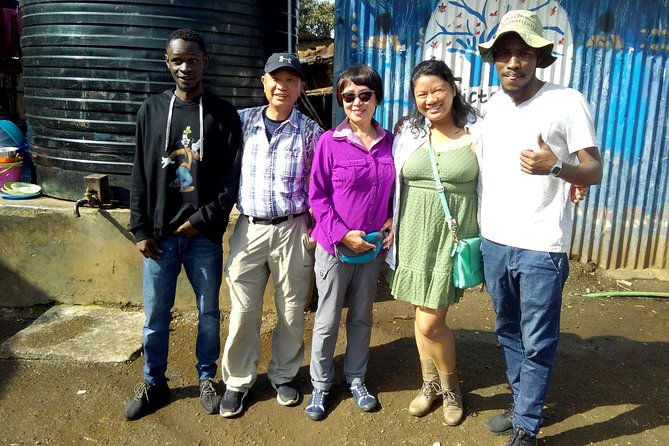
The named guides include Lucas, Effie, Peter, and Elijah. You may not know which guide will lead your walk until the day, but the important point is that the guides are from Kibera. That gives you a chance to hear local explanations of the area rather than a distant account built only from statistics.
I would arrive in comfortable shoes and keep your clothing practical. Bring a camera if you want pictures, but ask before photographing people, homes, children, or market stalls. A respectful question is often more useful than a quick snapshot.
More community walks in Kibera:
- Nairobi: Explore Kibera Slum with Local Guides
★ 4.9 · 365 reviews - Kevins Kibera Slum Tours
★ 5.0 · 213 reviews - Nairobi: Kibera Slum storytelling tour with a Local
★ 5.0 · 185 reviews
Toi Market, clothes, food, and hardware
Toi Market is the first major stop. It is described as Nairobi’s second-largest open-air market after Gikomba, and the walk takes you through its different sections.
You may see areas devoted to clothes, food, and hardware. The value here is not simply seeing a market. It is understanding that Kibera is also a place where people buy, sell, work, and solve daily problems through local trade.
Your guide can help explain how the market fits into community life. You can interact with traders, but keep the tone friendly and avoid treating the stalls as a display arranged for outsiders. If you want to shop, ask about prices clearly and decide in advance what you are comfortable buying.
The market is also where the tour begins to challenge the usual picture of Kibera. Poverty is visible, but so are enterprise and routine. People are not merely living in hardship. They are running shops, finding customers, and making a living.
A creative stop at Victorious Craft Shop

At Victorious Craft Shop, you see domestic animal bones recycled into jewelry and ornaments, often combined with brass. This is one of the tour’s more unusual details because it links local craft, reuse, and income in a single stop.
The process gives you something specific to look at and discuss. Instead of hearing only broad statements about hardship, you see a practical skill and a finished product. If you buy something, you support the craft business directly, but you should feel free to browse without purchasing.
There is another craft stop connected with women who educate young girls about HIV/AIDS. This adds a different side to the visit. The emphasis is not just on making goods, but on women working to protect and inform young people in the community.
Here is where I would keep your expectations clear. The tour includes shopping opportunities, and one account of the experience found the jewelry stops uncomfortable because of possible pressure to buy. Ask for prices before deciding, and remember that looking is enough. A good local tour should leave room for a no.
Seeing life inside a Kibera home
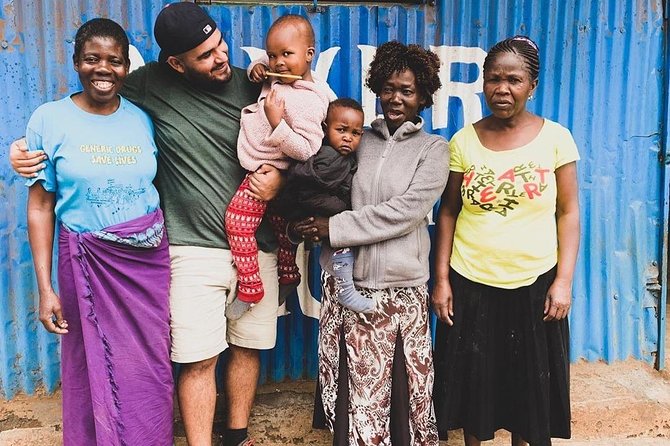
The home visit is the most personal part of the walk. You enter one of the guides’ family homes and meet relatives, sometimes including the guide’s mother or other family members.
This stop can make the tour feel less abstract. A home is not just a place to observe from outside. It is where people rest, cook, raise children, and manage daily life. Meeting a family also gives you a chance to speak with people connected to your guide, rather than passing through without human contact.
At the same time, this is a moment that calls for care. You are being welcomed into someone’s private space. Keep questions polite, ask before taking photographs, and do not treat the visit as a photo opportunity. The strongest part of the experience is the conversation and welcome, not collecting proof that you entered a home.
The path to and from the home may be uneven. One older participant, aged 83, needed help on dirt trails and occasional wet paths, and Lucas provided support. That suggests the guides can be attentive, but this remains a walking tour, not an accessible sightseeing route.
A few more Nairobi days to weigh up
- Nairobi National Park Half-Day Tour; Free Wi-Fi connection
★ 5.0 · 878 reviews - Nairobi: National Park & Optional Elephants & Giraffe Center
★ 4.8 · 874 reviews - NAI NAMI: Nairobi Storytelling Tour with Street Children
★ 5.0 · 792 reviews - Nairobi National Park Half-Day Game Drive
★ 4.5 · 738 reviews
The railway viewpoint and Kibera’s daily challenges

Near the old colonial railway line, the route reaches a raised point with a wider view over Kibera. This is a useful pause because it helps you grasp the area’s scale instead of seeing only the narrow path directly in front of you.
The exact figures used to describe Kibera can vary, so your guide’s local explanation matters more than trying to memorize a headline statistic. The point of the viewpoint is to connect the physical size of the settlement with the number of people living and working there.
The walk also covers practical issues such as water supplies, electricity, washing areas, and toilet systems. These details may be uncomfortable, but they are important. They show how ordinary tasks become harder when basic services are limited or shared.
You will also have time for photographs and scenic views on the way. Use the raised viewpoint for a wide picture, then be more cautious in close community areas. Ask your guide where photography is welcome.
Hope and Shine Kibera Centre
The school visit comes near the end of the tour, before departure from Equity Bank Kibera. Hope and Shine Kibera Centre hosts more than 40 children, and 30% of the tour fee goes toward supporting it.
This gives the $35 price a clearer value than a standard sightseeing walk. You are paying for a guide, local organization, and several hours of walking, but part of the fee also supports a specific project. The school is being developed and renovated with income connected to these tours.
You may meet children and see the school’s work firsthand. If you want to bring useful items, one participant donated books, coloring pens, and T-shirts. The supplied information does not promise that donations are required or that every item is currently needed, so ask the team first instead of bringing random supplies.
For me, the school helps the tour avoid ending with problems alone. You see difficult conditions, but you also see a local effort aimed at education. The tour does not pretend that one visit solves Kibera’s challenges. It shows you one practical project and lets your fee contribute in a modest, direct way.
Walking conditions, safety, and comfort
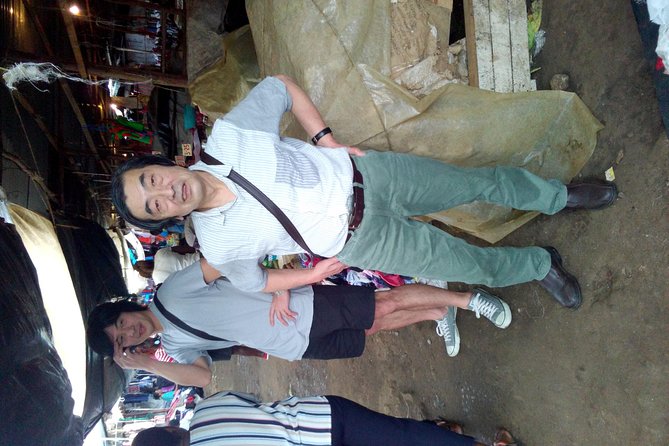
Plan for a real walk. The route includes dirt paths, uneven ground, occasional mud, and climbs up and down. Comfortable shoes are essential, especially during or after wet weather.
The activity is not suitable for wheelchair users. The information also says it is not suitable for people over 95, while the experience with an 83-year-old shows that age alone does not decide suitability. Your balance, stamina, and ability to manage uneven paths matter more. Tell the team about mobility concerns before starting.
Safety is part of the service, and the guides accompany you throughout the walk. A solo woman reported feeling safe, and Lucas helped an older participant arrange an Uber safely at the end. Those details are encouraging, but you should still follow the guide’s instructions and keep valuables secure.
The tour is in English. If your English is limited, you may miss some explanations, but the route still includes visible activities such as the market, home, craft work, and school. Ask the guide to repeat important points.
Is $35 good value?
At $35 per person, this is not the cheapest way to take a walk around Nairobi, but price alone misses the point. The fee covers a local guide, entry, safety support, and access to places you would not understand well by wandering on your own.
The strongest value comes from the guide’s connection to Kibera and the 30% contribution to the school. You are not simply paying for a viewpoint and a few photographs. You are paying for explanation, introductions, and a local project that benefits from your booking.
The price is less appealing if you want a quick photo stop or a polished sightseeing route. The walk can be muddy, the subject matter is hard, and the craft shops may make you feel that buying is expected. I would book it for learning and human contact, not comfort.
The operator offers free cancellation up to 24 hours before the activity and allows you to reserve now and pay later. Starting times depend on availability. Confirm the exact start time and guide when you book.
Who should book this walk?

I would recommend it to you if you want to understand Nairobi beyond its better-known attractions. It suits people who can walk for several hours, ask respectful questions, and accept that the experience may be uncomfortable.
It is especially suitable for:
- Solo visitors who want a local guide and a structured route
- Couples and families with older children who can handle the walking
- People interested in community projects and local education
- Photographers who are willing to ask permission and put people first
- Visitors who want to shop for locally made crafts
I would think twice if you need step-free access, dislike muddy paths, or want complete privacy from sales stops. I would also avoid booking it if you are likely to photograph people without permission or expect poverty to be presented as entertainment.
My final call on the Kibera tour
I would book this tour if my aim were to learn how people live, work, and organize in Kibera. The best parts are the local guides, the family home, the school visit, and the clear contribution to Hope and Shine Kibera Centre.
Go with sturdy shoes, modest expectations, and an open mind. Expect a demanding walk and moments that may stay with you. If you can accept that balance, this is a worthwhile three-hour introduction to a part of Nairobi that many visitors never see.
FAQ
Where does the Kibera tour begin?
The meeting point is at the entrance of Greenhouse Mall on Ngong Road.
How long does the experience last?
The stated duration is three hours. The route includes walking, a break, photography, shopping, and scenic views on the way.
What language is the tour in?
The live tour guide speaks English.
Who leads the tour?
The guides include Lucas, Effie, Peter, and Elijah. The guides are born and raised in Kibera.
What places will I visit?
You will visit sections of Toi Market, a craft shop, the Power Women shop, a guide’s family home, Hope and Shine Kibera Centre, and a raised viewpoint near the old railway line.
How does the tour support a school?
Thirty percent of the tour fee supports Hope and Shine Kibera Centre, which hosts more than 40 children.
What should I bring?
Bring comfortable shoes and a camera if you want to take photographs. Ask permission before photographing people, homes, or children.
Is the tour suitable for wheelchair users?
No. The tour is not suitable for wheelchair users because the route includes uneven and sometimes muddy paths.
Recently added around Nairobi
- Nairobi; City Walk Tour★ 4.5 · 3 reviews
- Private 3-Day Masai Mara Safari Adventure★ 5.0 · 3 reviews
- Kenya safari★ 5.0 · 3 reviews
- 2 Days Amboseli National Park Safari★ 3.5 · 3 reviews
- 11-Days Best of Kenya & Tanzania Big 5 Safari on a 4×4 Jeep★ 5.0 · 3 reviews
- Full Day, Small Group Guided Tour to Amboseli National Park★ 4.5 · 3 reviews
- 10-Days Explore Kenya Wildlife Private Safari★ 5.0 · 3 reviews
- Nairobi: Giraffe Center, Beads Factory & Bomas of Kenya Tour★ 4.5 · 3 reviews
Nairobi Tours, compared.
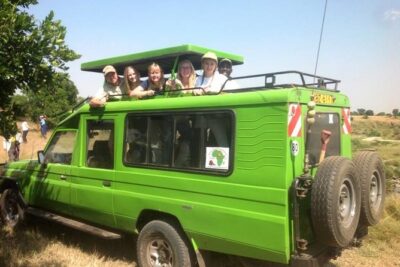
Nairobi National Park Half-Day Tour; Free Wi-Fi connection
Read our review →
National Park & Optional Elephants & Giraffe Center
Read our review →
NAI NAMI: Nairobi Storytelling Tour with Street Children
Read our review →

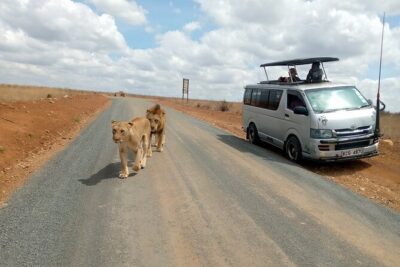


Elephant Orphanage and Giraffe Center Tour with Options
Read our review →Browse the lists this tour appears in