
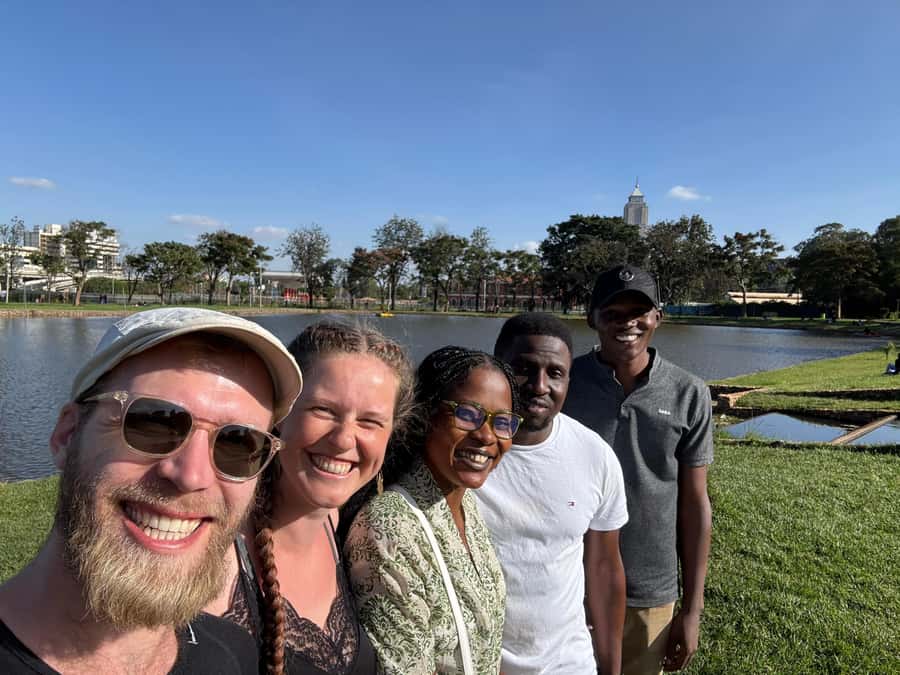
Reviewed · WALKING TOURS
Nairobi Walking tour:Explore History Culture and Traditions
Nairobi’s city center makes more sense when someone who lives there connects the sights. This three-hour walking tour links mosques, memorials, markets, parks, government buildings, and city viewpoints, giving you a quick but meaningful introduction to Kenya’s capital.
I like the pickup service within 10 kilometers of Nairobi Municipality, and I like the way the guides adjust the pace. Edwin, John, Sam, Dennis, and Pierre are among the guides named by visitors, with Edwin especially praised for his storytelling, humor, and clear explanations. The main drawback is simple: this is a lot of ground on foot, and some stops may be brief or closed on an evening tour.
Key points at a glance

- A strong first-day orientation: See central Nairobi’s main sights without spending your first hours sorting out directions.
- History mixed with ordinary city life: Move from war memorials and churches to City Market, cafés, street scenes, and craft stalls.
- Kenyan coffee break: Stop at a local café for coffee, with the drink optional and not included in the price.
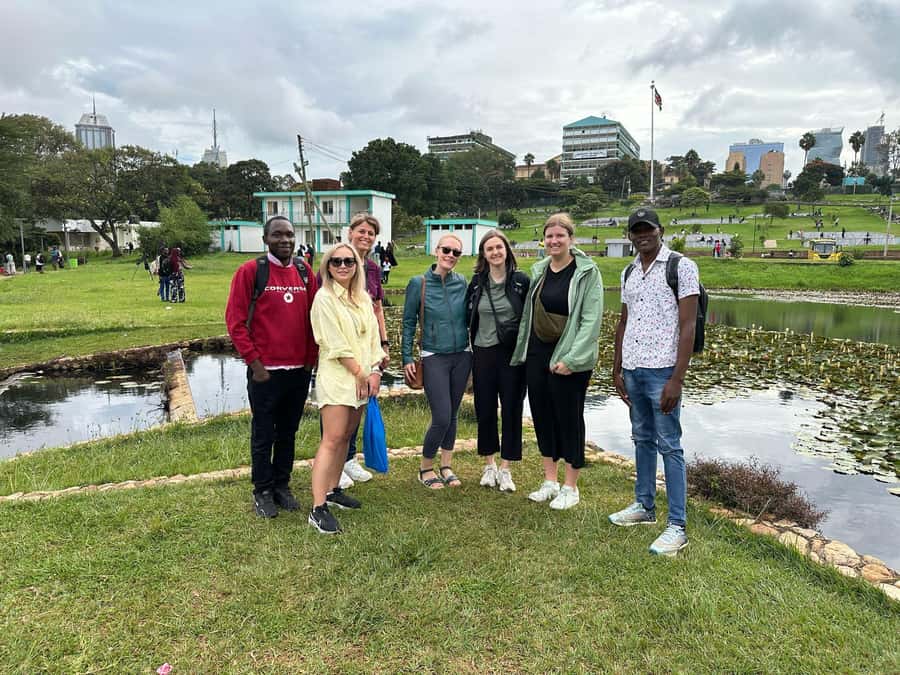
- Uhuru Park gives the walk breathing room: Sit on the grass, rest from the sun, and enjoy one of the city’s most pleasant green spaces.
- KICC offers the big city view: The rooftop or helipad viewpoint is a highlight, but the helipad fee is extra.
- Good guide-to-guest flexibility: The pace can be adapted, and some tours run longer when time allows.
Why this walk is a smart introduction to Nairobi

At $22 per person, this is a low-cost way to get your bearings in Nairobi’s central business district. You are paying mainly for a local guide who can explain what you are seeing, keep the route moving, and help you feel more at ease in a busy city.
I would not treat this as a museum tour with long indoor visits. It is better understood as a city orientation walk with several short stops. You will see landmarks, hear about Kenya’s politics and culture, learn how Nairobi has changed, and get a feel for how people use the center today.
The tour has a published duration of three hours, though the pace is not rigid. One evening outing lasted a little over two hours because the group was small and some places were closed. Another nearly reached four hours because the guide had extra time and the group wanted to continue. Plan around three hours, but do not be surprised if the exact length shifts.
The current rating is 4.8 from 222 reviews, with especially strong praise for guide quality, safety, storytelling, and value. Those are the areas I would consider most important here, since the same streets would be much less rewarding without context.
More history days around Kenya:
- Nairobi: Historic and Modern Highlights Walking Tour
★ 4.8 · 703 reviews - Nairobi Historical Walking City Tour
★ 5.0 · 258 reviews - Full Day Nairobi Cultural and Historical Tour
★ 5.0 · 153 reviews
Starting beside the Supreme Court
Pickup is available from listed hotels, apartments, hostels, and Jomo Kenyatta International Airport. If your accommodation is within 10 kilometers of Nairobi Municipality and is not listed, you can send the location by WhatsApp. The ride takes you to the starting point at the Carrefour entrance beside the Supreme Court building.
The tour begins with a short safety briefing. That is useful in a downtown setting, where you need to pay attention to traffic, crowds, and your belongings. The guide then helps you read the city rather than simply pointing out buildings.
The Supreme Court area places you close to several important civic landmarks. Nairobi’s center is a mix of older buildings, newer commercial blocks, religious sites, public gardens, and government offices. The appeal comes from seeing these elements together, not from any single monument.
Wear comfortable shoes from the start. The route includes regular walking, standing, and outdoor sightseeing, so sandals with poor support are a bad choice. A hat, sunscreen, and water are also sensible because shade and weather can change during the afternoon.
Monuments, the McMilan Library, and Jamia Mosque
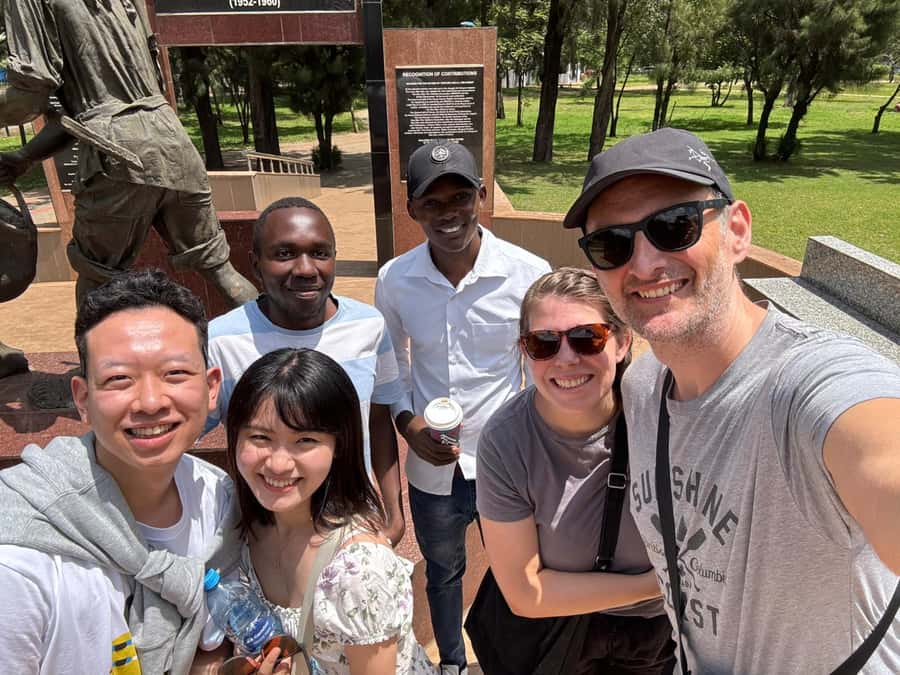
The early part of the walk introduces Nairobi’s public memory. The War Monuments and McMilan Memorial Library offer a useful contrast between remembrance and civic learning. Your guide explains why these places matter, and this is where the tour’s storytelling earns its fee.
Entry to the McMilan Memorial Library is included. It is one of the more distinctive stops because it adds an indoor historical setting to a route that otherwise moves through streets and open spaces. The visit is not designed as a long research session, but it gives you a better sense of Nairobi’s older civic institutions.
Jamia Mosque brings another part of the city into view. You visit the mosque respectfully, and the stop helps show the religious and cultural variety of central Nairobi. Dress and behavior should be considerate, and your guide can help you understand how to approach the site properly.
A monastery is also listed among the sightseeing stops. The exact time spent there may depend on the day’s route and access, but it adds another religious landmark to the walk. This variety is one of the tour’s strengths: Nairobi is presented through several communities and traditions rather than one simplified story.
City Market and Jevanjee Garden
City Market changes the mood. After monuments and formal buildings, you get a closer look at commerce, local products, and the practical side of downtown life. The tour may pass through or pause for shopping, so bring modest expectations about the time available.
The market is also one of the places where a guide can help. If you decide to buy souvenirs, John and other guides have assisted with bargaining and finding better prices. That does not mean you must shop, but having local help can make the experience less awkward.
Jevanjee Garden provides another change of pace. It is a public green space in the middle of the city, and the walk between the market and garden gives you time to watch daily activity rather than rush from one famous building to the next.
Keep personal spending separate from the tour price. Crafts, souvenirs, food, and drinks are not included. You will get more from the market if you decide in advance what you want to buy and how much you want to spend.
More Walking Tours in Kenya:
- Walking Tour Through Old Town Mombasa and Fort Jesus
★ 5.0 · 393 reviews - Nairobi Downtown Walking Tour
★ 4.7 · 208 reviews - Nairobi City Walking Tour with Traditional Kenyan Lunch
★ 5.0 · 106 reviews - Mombasa: Guided Nature Walk Amongst Giraffes
★ 4.8 · 48 reviews
The coffee stop and a lesson in local life
The café break is a small detail, but it improves the rhythm of the morning or afternoon. You can use the washroom, rest your feet, and try Kenyan coffee. The coffee is optional and costs extra, as do other meals and drinks.
The break also creates space for conversation. Past outings have covered politics, sport, geography, food, language, and everyday life in Kenya. That open question-and-answer style is more useful than a memorized speech, especially if you want to understand how Nairobi works beyond its tourist sites.
Edwin is repeatedly praised for making history easy to follow and keeping the mood light. Sam, also known as Kayler, has been described as funny and kind. Pierre guides in French and Spanish and has also been praised for teaching Swahili phrases. English, Spanish, and French are available, though you should confirm the language when booking.
One practical point: the café stop is not a full meal. If you are hungry, eat before the walk or plan food afterward. A three-hour route with sun and city traffic is more comfortable when you start hydrated and properly fed.
Uhuru Park and the Holy Family Basilica

Uhuru Park is one of the walk’s best pauses. The route takes you into the park for greenery, open space, and time to rest. Some outings have included sitting on the grass away from the sun, which makes this more than a quick photo stop.
I like this part because it prevents the tour from becoming a hard march through concrete streets. You can pause, ask questions, and absorb the city at a calmer speed. If you are sensitive to heat, this is also a welcome chance to recover.
The Cathedral Basilica of the Holy Family adds a major religious landmark nearby. The visit helps you compare different faith communities within a compact part of Nairobi. As with the mosque and monastery, the value is in the explanation and respectful access, not just in taking a picture outside.
The route includes sightseeing and walking at both stops, but the exact time can vary. If you want a longer visit inside a religious building, tell your guide early. The tour is designed to cover many places, so extended visits may mean shortening another stop.
KICC and the best city view
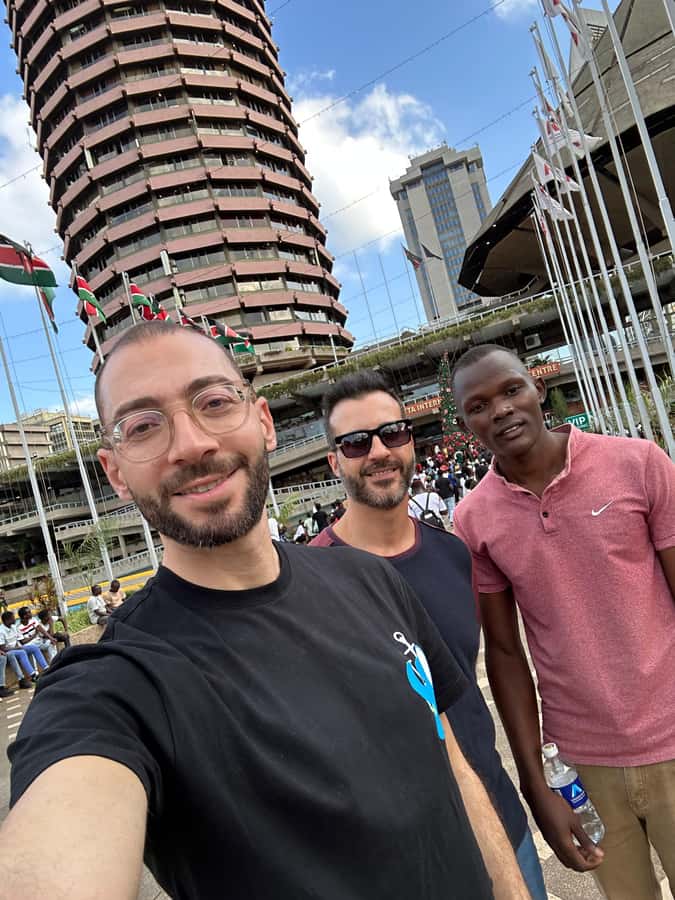
The Kenyatta International Convention Centre is the route’s big architectural landmark. Its tower and surrounding government buildings give you a clear sense of Nairobi’s civic center, while the higher viewpoint provides a broad look across the city.
The helipad or rooftop view is an optional highlight. The fee is not included, so check the current cost before you go. Several people have considered the view worth adding, but you should treat it as an extra rather than part of the advertised $22.
This stop works best when the weather is clear. Bring your camera, but allow time to simply look. From above, the streets, parks, offices, and older buildings fit together in a way that is hard to grasp at ground level.
Photography is allowed. Still, listen to your guide about where photos are appropriate, especially around government buildings and memorials. A good city walk balances curiosity with respect.
Masai Market, railway history, and remembrance
The Masai Market is included as a stop for local crafts and cultural shopping. Its exact setup can vary, and markets may operate differently depending on the day and time. If buying is your main goal, ask when the market will be reached so you can manage your time and budget.
The Kenya Railway Museum adds transport history to the route. The itinerary describes this as a visit or pass-by stop, so do not assume you will receive a long museum session or a full indoor tour. It is still a useful reminder that railways played an important role in Nairobi’s growth.
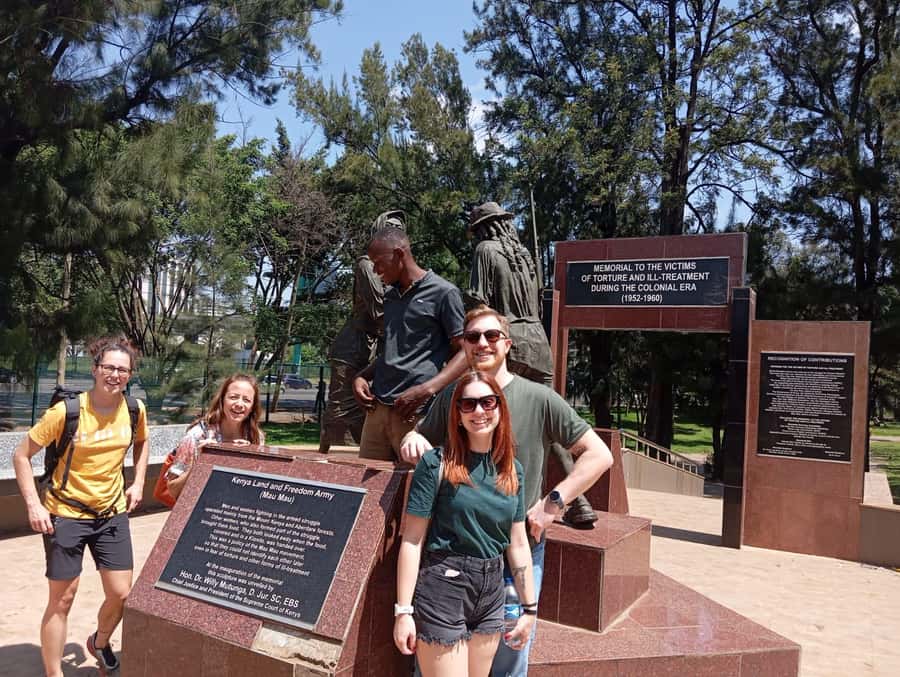
The final visit to Bomb Blast Memorial Park is quieter and more serious. This is a place for remembrance, not casual sightseeing. Your guide provides context, but you should allow the mood of the site to guide your behavior and photography.
The combination of crafts, rail history, and memorial space gives the final part of the walk a broad range. You move from shopping and city identity to the difficult events that remain part of Nairobi’s public memory.
Safety, pace, and what the guides add
Safety is one of the most important reasons to book a guided walk rather than attempt the same route alone. The route crosses central streets and busy public areas, and a local guide helps with direction, timing, and awareness.
I would still use ordinary city habits. Keep valuables secure, stay with the group, and follow instructions around traffic and public buildings. The tour does not remove every city risk, but it gives you an organized route and a local person to ask when something feels unclear.
The strongest part of the experience is the guide’s ability to adapt. Edwin has adjusted routes to suit interests and walking speed. Other guides have allowed time for questions, photos, rests, or a shorter outing. This matters if you are traveling with mixed fitness levels or want conversation rather than a fast checklist.
The published language choices are English, Spanish, and French. Pierre has been especially noted for fluent French and Spanish, while several guides are praised for clear English. Confirm your preferred language and starting time before arrival.
The tour is listed as wheelchair accessible, but the route includes outdoor walking, public spaces, and city streets. If you use a wheelchair, contact the operator in advance to discuss the exact route and any access needs.
Is $22 good value?
Yes, for most first-time visitors to Nairobi, the price is strong. The fee includes the guide, pickup to the starting point, entry to the McMilan Memorial Library, and entry to Uhuru Park. It also covers a broad route through central Nairobi that would be hard to organize efficiently on your own.
You will still need money for coffee, food, crafts, personal purchases, and the KICC helipad fee. Those extras are easy to control, so the basic tour remains affordable even if you skip them.
The value is highest when you want context. If you only want a quiet walk or a single museum, this may feel too busy. If you want to understand the city’s public spaces, religions, civic buildings, markets, and daily rhythms in one half-day, it makes good sense.
Free cancellation up to 24 hours before the tour and reserve-now, pay-later booking make it easier to fit into a changing itinerary. Starting times depend on availability, so check the schedule rather than assuming every hour is offered.
Who should book this Nairobi walking tour?
I would recommend it to first-time visitors, solo travelers who want a more comfortable introduction to the center, couples, and anyone with a half-day before a safari or flight. It also suits curious travelers who enjoy asking questions about culture, politics, architecture, food, and ordinary life.
It is a good choice after arriving in Nairobi because it gives you a mental map for later exploring. The airport pickup option can also help if you are using the tour to begin your stay, though you should allow enough time for traffic and your wider plans.
You may want a different experience if you dislike walking, want long museum visits, or prefer a tightly timed sightseeing program. The route covers many sites, and some stops are short. Evening departures can also mean that certain buildings or markets are closed.
Should you book it?
Book this tour if you want a friendly local introduction to central Nairobi, with history, culture, public spaces, shopping, and city views in one affordable outing. Edwin is a strong choice if available, while John, Sam, Dennis, and Pierre have also been praised for clear explanations and a relaxed manner.
Bring water, sun protection, comfortable shoes, and a little extra cash. If you want the KICC helipad view or coffee, budget for those separately. For $22, this is a practical way to meet Nairobi on foot and understand more than you would from a car window.
FAQ
How long does the Nairobi walking tour last?
The advertised duration is three hours. The exact length can vary, with some tours lasting a little over two hours and others extending close to four hours depending on the route, group size, and guide availability.
What is the meeting point?
The tour starts at the Carrefour entrance beside the Supreme Court building in central Nairobi.
Is hotel pickup included?
Yes. Pickup is available from the entrance of hotels, apartments, or hostels within 10 kilometers of Nairobi Municipality. If your accommodation is not listed, you can send your location by WhatsApp.
Which languages are available?
The tour is offered in English, Spanish, and French.
Is the tour wheelchair accessible?
Yes, the activity is listed as wheelchair accessible. Because the route includes city streets and outdoor walking, contact the operator in advance to discuss your specific needs.
Is coffee included in the price?
No. Coffee at the local café is optional and costs extra. Meals and other drinks are also not included.
Is the KICC helipad fee included?
No. The KICC helipad fee is not included in the tour price.
What should I bring?
Wear comfortable walking shoes and bring water, a hat, and sunscreen. You should also prepare for changing weather conditions.
Can I take photographs?
Yes, photography is allowed. Follow the guide’s advice around memorials, religious sites, and government buildings.
Can I cancel the booking for a refund?
You can cancel up to 24 hours in advance for a full refund. Reserve-now, pay-later booking is also available.
Recently added around Kenya
- Nairobi; City Walk Tour★ 4.5 · 3 reviews
- 2 Days Amboseli National Park Safari★ 3.5 · 3 reviews
- Private 3-Day Masai Mara Safari Adventure★ 5.0 · 3 reviews
- Kenya safari★ 5.0 · 3 reviews
- 11-Days Best of Kenya & Tanzania Big 5 Safari on a 4×4 Jeep★ 5.0 · 3 reviews
- Full Day, Small Group Guided Tour to Amboseli National Park★ 4.5 · 3 reviews
- 1-Day Tsavo East Safari From Mombasa★ 5.0 · 3 reviews
- 10-Days Explore Kenya Wildlife Private Safari★ 5.0 · 3 reviews
Walking Tours, compared.

Walking Tour Through Old Town Mombasa and Fort Jesus
Read our review →

Nairobi City Walking Tour with Traditional Kenyan Lunch
Read our review →



Day tour to Hells Gate, Lake Naivasha and Crescent Island Walk
Read our review →Browse the lists this tour appears in