

Reviewed · NAIROBI TOURS
Nairobi: Explore Kibera Slum with Local Guides
Kibera is not a backdrop for a quick photo. It is home to a large, active community, and this three-hour walk with local guides gives you a direct look at daily life through people who were born and raised there. Benta, Erick, Samuel, and Jack are part of the guide team, while other tours have been led by Emmanuel, Kevin, Zack, Clyde, and Oscar.
I like two things right away: the guides live in Kibera, and the $15 fee helps fund KCOOP Organization’s education, food, arts, sports, and community programs. The home visit and visit to the children’s center also give the tour more substance than a simple walk through poor neighborhoods.
The main consideration is emotional. You will see difficult living conditions, crowded paths, limited sanitation, and children who may approach you. Bring an open mind, ask before taking photographs, and remember that this is a community visit, not a spectacle.
Key points to know before you go

- Local guides lead the walk: The guide team comes from Kibera and explains the community from personal experience.
- A home visit shows practical details: You learn about water, electricity, bathrooms, and the size of a typical home.
- Your $15 supports local work: Booking income helps KCOOP Organization run programs for children and families.
- The craft stop has a social purpose: Local makers recycle and reuse materials to create jewelry and other goods.
- The meeting point is easy to find: Meet in front of Java House inside Prestige Plaza Shopping Mall on Ngong Road.
- Bring useful items only if you want to: Snacks, school supplies, clothes, hygiene products, and sports or art supplies are optional.
Why this Kibera tour feels different

Kibera lies about 6.6 kilometers, or 4.1 miles, from Nairobi’s city center. The short distance does not mean it feels like a standard city excursion. You move from a familiar shopping mall meeting point into a neighborhood with its own streets, businesses, homes, schools, workshops, churches, and community groups.
That change is the point. The tour helps you see Kibera as a place where people live and work, not simply as a symbol of poverty. Your guide can explain how the area functions and answer questions about ordinary matters such as water, power, housing, schooling, and local enterprise.
The strongest part is the human connection. Guides such as Benta and Emmanuel have been praised for making visitors feel safe while explaining difficult subjects with humor, patience, and personal detail. Several guides are founders or active workers with KCOOP, so the organization’s work is not an extra talking point. It is part of the visit.
Still, you should set the right expectations. This is not a polished attraction with tidy paths and formal displays. The walk takes place in a dense neighborhood, and conditions can be confronting. You may feel uncomfortable, especially during the home visit or when seeing children living with very few resources. That discomfort can be useful if you treat it as a reason to listen rather than judge.
More community walks in Kibera:
- Kevins Kibera Slum Tours
★ 5.0 · 213 reviews - Nairobi: Kibera Slum storytelling tour with a Local
★ 5.0 · 185 reviews - Kibera Slum Tour with Lucas
★ 5.0 · 119 reviews
Starting at Prestige Plaza on Ngong Road
The meeting point is in front of Java House inside Prestige Plaza Shopping Mall. This is a practical place to meet because you can find the café and shopping mall before the walk begins. Arrive ready for a three-hour outing, with comfortable shoes, water, sunscreen, and hand sanitizer or tissues.
After meeting your guide, you travel by car to the KCOOP office in Kibera. The listed outing ends at Kibera Town Centre, so do not assume you will return to Prestige Plaza at the end. Plan your next stop from Kibera Town Centre, especially if you have another Nairobi booking afterward.
The transport portion is brief, but it helps the group move from the mall to the neighborhood without making you find the office on your own. The exact start time depends on availability, and the route can be made shorter, longer, or adjusted to suit your interests.
Stop one: the KCOOP office

The office is your base for a short briefing. You can use the free Wi-Fi and clean washrooms before continuing, a small but welcome detail in a three-hour walking tour.
This introduction also gives you a chance to ask how the organization works. KCOOP was founded and registered in 2022, and its programs include education, child hunger support, arts and sports, economic empowerment, and environmental conservation. The tour fee helps support these efforts in Kibera and rural parts of Kenya.
The office visit matters because it gives context to the money you spend. You are not simply paying for a guide to show you around. The activity supports a community-based organization with several ongoing areas of work.
That said, the tour does not promise a full audit of the charity’s finances or a detailed project presentation. If you want to understand KCOOP’s current programs in depth, ask your guide questions at the office and consult the organization’s website or social media updates.
Stop two: a panoramic view of Kibera

The panoramic viewpoint gives you a chance to pause and take in the wider neighborhood. After walking through narrow local paths, a higher viewpoint helps you understand the size and layout of Kibera.
Use this stop to ask practical questions. Your guide can connect what you see from above with what you have already noticed at street level. The view is useful, but it should not become the main event. The value lies in the explanation and the shift in perspective.
Photography needs care here and throughout the walk. Ask your guide before taking pictures of people, homes, shops, or children. A clear view does not mean every person in it has agreed to be photographed.
A few more Nairobi days to weigh up
- Nairobi National Park Half-Day Tour; Free Wi-Fi connection
★ 5.0 · 878 reviews - Nairobi: National Park & Optional Elephants & Giraffe Center
★ 4.8 · 874 reviews - NAI NAMI: Nairobi Storytelling Tour with Street Children
★ 5.0 · 792 reviews - Nairobi National Park Half-Day Game Drive
★ 4.5 · 738 reviews
Stop three: inside a local home

The home visit is the most revealing stop for many people. You are welcomed into a residential house and shown details of daily life, including how residents obtain water, use electricity, manage bathrooms, and fit their lives into a typical home.
This is where broad ideas about poverty become concrete. You begin to understand the practical work involved in getting through an ordinary day. The visit also creates a more personal connection because you are entering someone’s living space rather than looking at housing from a path.
Treat the invitation with respect. Keep your questions polite and avoid turning the home into a photo set. The resident is offering access to a private place, and that deserves quiet attention.
The home visit can also be emotionally heavy. Some visitors leave with a stronger appreciation for their own circumstances, while others may find the contrast difficult. I consider that a fair trade for an honest experience, as long as you do not expect poverty to be presented in a comfortable or entertaining way.
Stop four: Kibera Handicrafts Centre

At the handicrafts center, you see local makers recycle and upcycle materials into jewelry and other handmade items. This stop adds an important layer to the tour because it shows skill, creativity, and income generation alongside hardship.
It is easy to look at Kibera only through its shortages. The craft workshop shows people using available materials to create products for sale. Ask how an item was made, what materials were reused, and how purchasing supports the maker.
You may find this stop especially useful if you prefer to contribute through a purchase rather than handing out items. It gives your money a direct, practical purpose and lets you take home something made in the community.
Stop five: the KCOOP Community Centre

The KCOOP Community Centre serves people in need and connects the walking tour with the organization’s wider work. Depending on the day’s activities, you may see or hear about children’s programs and other support efforts.
The center is also where many visitors encounter children from the community. Several people have brought school supplies, snacks, clothes, hygiene products, toys, crayons, books, or sports equipment. These gifts are optional, and you should not feel obliged to arrive with donations.
If you do bring items, plan carefully. The children’s center may have about 50 children, with roughly 10 more outside at the same time. A small number of sweets for a few children can create an awkward situation when others receive nothing. School supplies for the center, shared games, books, or other items that can be distributed fairly may be more sensible.
Do not hand out money. Ask your guide how to give any supplies in an orderly way. The best aim is to support the center without turning children into part of the attraction.
Stop six: a fixed-price souvenir shop
The final stop is a small curio and souvenir shop run for the community. It offers handmade African crafts, with clear price tags and fixed prices. There is no bargaining and no inflated starting price.
I like this arrangement. You know what you are paying, and you can browse without the usual market pressure. The shop gives you another way to support local work, particularly if you want a useful keepsake rather than a charitable donation.
The selection may be modest, and this is not a large commercial craft market. That is part of its appeal. Take your time, ask which items were made locally, and carry some cash if you would like to buy something.
Safety, comfort, and respectful conduct

Safety is a common concern when people first consider a Kibera tour. The strongest practical point here is that the guides live in the community and know the routes and people. Solo women and families have reported feeling comfortable with guides such as Zack, Benta, and Emmanuel.
That does not mean you should ignore normal city precautions. Keep valuables secure, stay with your guide, follow instructions, and avoid wandering away to take photographs. Wear shoes that can handle uneven walking surfaces, and carry only what you need.
The social rules matter as much as physical safety. Ask before photographing anyone, especially children. Do not point a camera into homes or make jokes about living conditions. Speak to residents as people, not as examples of poverty.
The tour is not suitable for wheelchair users. The walking route and local conditions make that limitation important. People with mobility concerns should ask KCOOP directly before booking rather than relying on a standard city-tour assumption.
What the $15 price really covers
At $15 per person, this is one of Nairobi’s lower-cost guided experiences. The value is not in luxury transport or a long list of attractions. It is in access, interpretation, and the community contribution attached to the fee.
The price includes an English-speaking live guide. Meals and drinks are not included, so eat beforehand and bring water. The office has washrooms, but you should not expect café service or a full meal stop during the walk.
The community benefit improves the value, but keep your expectations precise. The fee helps KCOOP run its programs. It does not mean every dollar goes directly to a household or child you meet. If that distinction matters to you, ask how current proceeds are being used.
You can cancel up to 24 hours in advance for a full refund, and you can reserve now and pay later. Those terms are useful if your Nairobi schedule may change. The tour lasts about three hours, but KCOOP can adjust the length and focus around your interests.
Who should book this experience
I would choose this tour if you want to understand Nairobi beyond the main museums, restaurants, and city sights. It suits visitors who are willing to listen, ask thoughtful questions, and accept a direct look at difficult living conditions.
It can work for families and teenagers, provided adults prepare children beforehand. Explain that people’s homes and lives are not a show, and that photographs require permission. The walk may be meaningful for children old enough to discuss fairness, housing, and community support, but it may be too intense for very young children.
It also suits solo visitors. The local guide structure offers reassurance, and the route provides a social setting without requiring you to join a large group. If you are interested in development work, education, or community projects, the KCOOP center and office add useful context.
You may want to skip it if you dislike walking on uneven paths, cannot manage an emotionally demanding visit, or are mainly looking for entertainment. This is not a cheerful sightseeing loop. It has warm human moments, but it also asks you to face inequality without easy answers.
Practical tips for a better visit
- Meet in front of Java House inside Prestige Plaza, not simply somewhere on Ngong Road.
- Wear comfortable shoes and use sunscreen.
- Bring drinking water and hand sanitizer or tissues.
- Carry cash only if you want to buy local crafts.
- Ask before taking photographs.
- If bringing gifts, choose items that can be shared fairly.
- Consider school supplies, books, crayons, games, hygiene products, clothes, or sports equipment instead of handing out sweets one by one.
- Keep your questions open and respectful.
- Expect the tour to finish at Kibera Town Centre.
- Ask about extending or shortening the walk if you have a particular interest.
Should you book the Kibera community walk?
Book it if you want an honest, locally guided look at Kibera and you are comfortable with the responsibility that comes with entering a residential community. The guides’ personal ties, the home visit, the craft workshop, and the KCOOP programs give the experience real purpose.
I especially recommend it for visitors who want their $15 to do more than pay for sightseeing. Just bring respect, not a camera-first attitude, and understand that the strongest moments may also be the hardest ones. If that sounds right for you, this is a worthwhile use of three hours in Nairobi.
FAQ
Where does the Kibera tour meet?
Meet in front of Java House inside Prestige Plaza Shopping Mall on Ngong Road.
How long does the experience last?
The standard tour lasts three hours. The route can be made longer or shorter depending on your interests.
Where does the tour finish?
The itinerary finishes at Kibera Town Centre.
Who leads the tour?
The listed local guide team includes Erick, Samuel, Benta, and Jack. Other guides named in tour details include Emmanuel, Kevin, Zack, Clyde, and Oscar.
What is included in the price?
An English-speaking live guide is included. Meals and drinks are not included.
What should I bring?
Bring comfortable shoes, sunscreen, water, and hand sanitizer or tissues. Cash is optional if you want to buy souvenirs.
Can I bring gifts for children or local residents?
Yes, but this is optional. Suggested items include snacks, school supplies, used clothes, sports supplies, art materials, indoor games, hygiene products, rice, and sugar. Ask your guide how to distribute anything you bring fairly.
Recently added around Nairobi
- Nairobi; City Walk Tour★ 4.5 · 3 reviews
- 2 Days Amboseli National Park Safari★ 3.5 · 3 reviews
- Private 3-Day Masai Mara Safari Adventure★ 5.0 · 3 reviews
- Kenya safari★ 5.0 · 3 reviews
- Full Day, Small Group Guided Tour to Amboseli National Park★ 4.5 · 3 reviews
- 11-Days Best of Kenya & Tanzania Big 5 Safari on a 4×4 Jeep★ 5.0 · 3 reviews
- 10-Days Explore Kenya Wildlife Private Safari★ 5.0 · 3 reviews
- Nairobi: Giraffe Center, Beads Factory & Bomas of Kenya Tour★ 4.5 · 3 reviews
Nairobi Tours, compared.
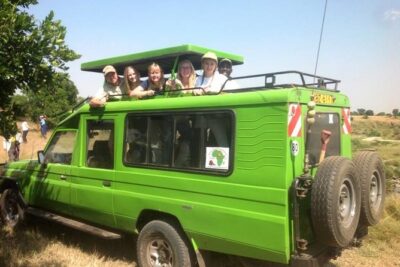
Nairobi National Park Half-Day Tour; Free Wi-Fi connection
Read our review →
National Park & Optional Elephants & Giraffe Center
Read our review →
NAI NAMI: Nairobi Storytelling Tour with Street Children
Read our review →

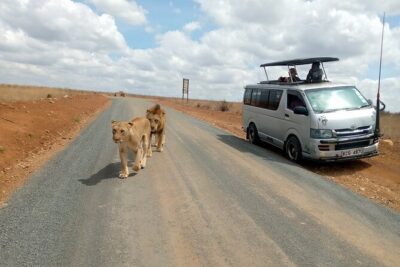


Elephant Orphanage and Giraffe Center Tour with Options
Read our review →Browse the lists this tour appears in