
Reviewed · NAIROBI TOURS
Kibera Slum Tour with a Local
Kibera is not a backdrop for this tour. It is home to the four local guides who lead you through their community, including Erick and Sammy, who speak openly about daily life, local work, and the challenges families face. The tour also puts 50% of its booking fee toward school fees for needy children.
I like two things right away: you meet people who are known in the community, and you see useful local work rather than just walking past homes. The crafts center shows how discarded materials become jewelry and other goods, while the office gives you a clean, secure place to begin. The main consideration is that this is an emotionally weighty visit, and a home visit calls for humility, permission, and careful attention to local customs.
Key points at a glance

- Guides who live in Kibera: The four guides were born and raised in the community, and still live there.
- Five clear stops: The route includes the local office, a crafts center, a meeting with children, a home visit, and a cafeteria.
- A direct social purpose: Half of the booking fee helps pay school fees for needy children in Kibera.
- A small-group option with room to grow: The maximum group size is 30, so the feel may range from personal to fairly social.
- Practical starting point: Meet at Prestige Plaza Shopping Mall on Ngong Road, then return there at the end.
- Low price, meaningful return: At $25 per person, the tour combines a guided visit with a stated contribution to community work.
Meeting Kibera through people who call it home

The strongest reason to choose this experience is the background of the guides. The team of four local leaders was born, raised, and still lives in Kibera. That matters because you are not being shown the area by someone passing through Nairobi for work. You are walking with people who can explain the community from personal experience.
Erick and Sammy are among the guides associated with the tour. They have been praised for answering questions in detail and speaking frankly about the struggles faced by families in Kibera. At the same time, the tone is not only about hardship. The route also shows local work, community ties, creativity, and the ways people earn money and support one another.
You should expect a candid introduction to life in Kibera, not a polished attraction with a fixed script. The guides can also customize the experience to match your interests. That flexibility is useful if you want to focus more on crafts, local income, children’s support, or the broader story of the neighborhood.
More community walks in Kibera:
- Nairobi: Explore Kibera Slum with Local Guides
★ 4.9 · 365 reviews - Kevins Kibera Slum Tours
★ 5.0 · 213 reviews - Nairobi: Kibera Slum storytelling tour with a Local
★ 5.0 · 185 reviews
The office: a practical start in the community
The first stop is the OAC Kenya Tours office. You begin with introductions and a briefing about the three-hour experience. This is where you can ask questions, understand how the visit will work, and get a sense of the purpose behind the tour.
The office has free Wi-Fi and clean washrooms, which is a practical detail worth noting. A clean place to use the facilities before walking is especially helpful when you are spending several hours in an unfamiliar urban setting.
There is also a secure guest room for people interested in exploring Kibera at night and possibly spending a night there for an extra cost. That is not part of the $25 tour, so treat it as a separate option rather than an included feature. The room gives the organization a base for longer community contact, but you should ask directly about availability, cost, and arrangements before making plans.
The office also introduces the wider work behind the visit. OAC Kenya Tours operates alongside OAC Kenya Crafts, and the KCOOP Organization, a nonprofit formally established and registered in 2022. KCOOP works in Kibera and in rural parts of Kenya, with a focus on helping needy children and other community needs.
Crafts made from materials that might otherwise be wasted

At the crafts center, you see local makers recycle materials into jewelry and other handmade goods. This stop adds a useful economic angle to the walk. You are not only seeing where people live. You are learning how skill, reuse, and small-scale enterprise can create income.
I like this part because it gives you something concrete to look at and discuss. The craft work can lead to questions about materials, pricing, production, and how local businesses function. It also helps avoid reducing Kibera to a story of poverty alone.
If you want to buy something, ask what is available and how the money reaches the maker or the related enterprise. The supplied information confirms that OAC Kenya operates OAC Kenya Crafts, but it does not provide a price list or purchasing rules. Bring an open mind rather than expecting a large shopping stop.
Meeting children with care and good manners

The third stop is a meeting with children. This can be one of the most memorable parts of the morning, but it is also the point where your behavior matters most.
The guides are known locally, and children may greet them warmly or walk along for part of the visit. One practical tip is to ask your guide before handing out anything. A small treat, such as a lollipop, has made children happy in the past, but gifts can also create awkwardness or unequal attention if given without guidance.
I would let the local team set the tone. Do not assume that every child wants a photograph, a conversation, or a gift. If you want to bring something, check first with the organization. The purpose of the stop is to learn about community life and support children through a structured program, not to turn children into photo subjects.
The school-fee program gives this part of the experience a clear purpose. Half of the booking fee goes toward paying school fees for needy children in the community. That does not solve every problem, but it makes your payment more than a sightseeing expense.
A few more Nairobi days to weigh up
- Nairobi National Park Half-Day Tour; Free Wi-Fi connection
★ 5.0 · 878 reviews - Nairobi: National Park & Optional Elephants & Giraffe Center
★ 4.8 · 874 reviews - NAI NAMI: Nairobi Storytelling Tour with Street Children
★ 5.0 · 792 reviews - Nairobi National Park Half-Day Game Drive
★ 4.5 · 738 reviews
A home visit that asks for respect

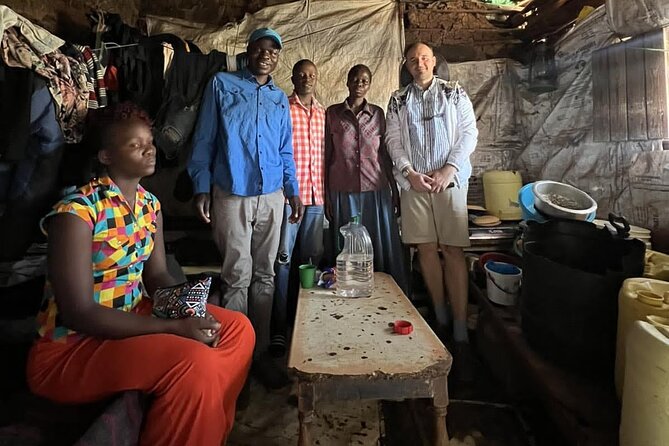
The home visit gives you a closer look at domestic life in Kibera. You are welcomed into one local house and can learn more about how people live in a setting that most short Nairobi visits do not show.
This is likely to be the most personal stop. A home is not a museum, so follow the guide’s instructions about where to stand, what to touch, and when to take photographs. Ask before making images of people or interiors, and remember that you are entering someone’s private space as part of a paid community experience.
The value here is direct human contact. You can ask about daily routines and income, but avoid treating the family as a case study. The guides can help you frame useful questions and explain context that may not be obvious during a brief visit.
Some people may find this stop moving or uncomfortable. That is not a reason to dismiss it, but it is a reason to arrive prepared. You will get more from the visit if you listen carefully and avoid comparisons that make the host family feel judged.
A cafeteria stop for conversation and a breather

The final stop is a cafeteria, where you can rest, have a soft drink or local food, and hear more about Kibera. Bottled water or soda is provided as part of the experience, and the tour includes fees and taxes.
This pause helps the visit end on a conversational note. After seeing craft work, meeting children, and entering a home, you have time to ask follow-up questions in a less hurried setting. You might ask how the organization chooses children for school-fee support, how local enterprises work, or what visitors most often misunderstand about Kibera.
The information does not specify which dishes are served or whether food is included beyond the stated water or soda. If you want local food, ask what is available and what it costs. The cafeteria is best understood as a short rest and discussion stop rather than a full meal experience.
What the $25 price really covers

At $25 per person, this is inexpensive for a three-hour guided experience in Nairobi. The fee covers the local guide service, the five-stop visit, bottled water or soda, and all fees and taxes. The more important value is the stated community contribution: 50% of booking fees helps pay school fees for needy children.
You should not judge the price only by the number of stops. The local connection is the central product. You are paying for access, explanation, and guidance from people who live in Kibera, along with a direct contribution to community work.
The operator also runs a nonprofit and two social enterprises. If you want to understand exactly how funds are handled, ask for current details or follow KCOOP Organization through its website or Instagram account, @kcoop.organization. That is a sensible step for anyone who wants to make informed social-impact choices.
A maximum of 30 people is allowed. A smaller group should feel more personal, especially during the home visit. With a larger booking, it may be harder to ask every question or spend much time at each stop. If group size matters to you, confirm it before booking.
Getting there and managing the three hours

The meeting point is Prestige Plaza Shopping Mall on Ngong Road, Nairobi. The activity ends back at the same meeting point, which makes planning simpler if you have another appointment afterward.
The experience lasts about three hours. Allow enough time to reach the meeting point and avoid scheduling a tight connection immediately afterward. The tour is near public transportation, and confirmation is provided when you book.
Most people can participate, and service animals are allowed. The supplied information does not give a detailed accessibility description, so ask the provider about walking conditions or any specific mobility needs before you go.
Wear practical clothes and comfortable shoes. The operator does not provide a detailed dress code, but respectful, modest clothing is the sensible choice for a community walk and home visit. Keep valuables secure and follow the guides’ instructions.
Who will get the most from this visit
I would recommend this tour to you if you want a personal introduction to Nairobi that goes beyond major sights. It suits people who value direct conversation, local enterprise, and community-led tourism.
It is also a good fit if you want your spending to have a stated social purpose. The school-fee contribution gives you a clear reason to choose this operator over a standard sightseeing walk, although you should still ask questions if you need detailed financial reporting.
Families may appreciate the child-support focus, but adults should prepare children for respectful behavior. Explain that the people they meet are residents, not performers, and that asking permission before photographs or gifts is important.
This may not suit you if you want a relaxed, polished attraction with no difficult subjects. Kibera’s realities are part of the visit. The tour aims to show daily life honestly, and that can be confronting.
It is also not ideal for anyone who dislikes entering private homes or discussing poverty and unequal access to education. You can ask whether the home visit can be adjusted, since the operator says the experience is flexible, but do not assume every element can be removed.
Booking advice and cancellation terms
The experience is often booked about 12 days ahead, so reserving early is sensible if your Nairobi dates are fixed. You receive a mobile ticket and confirmation at the time of booking.
You can cancel for a full refund if you do so at least 24 hours before the start time. Cancellations or changes made within 24 hours are not refunded or accepted. The tour depends on good weather. If poor weather causes cancellation, you are offered another date or a full refund.
That policy is fairly clear, but check the local start time when calculating the deadline. A weather cancellation is handled differently from a late personal cancellation.
Should you book the Kibera Slum Tour with a Local?
Book it if you want to meet Kibera-born guides, hear about daily life from people who still live there, and support a program that directs half of its booking fees to school costs for needy children.
The best parts are the local access, the crafts center, and the chance to ask honest questions in a community setting. Erick, Sammy, and the wider team bring personal knowledge and local trust, which are difficult to replace with a generic city tour.
Go with respect, not curiosity alone. Be ready for serious subjects, ask before taking photographs or giving gifts, and allow the three hours to unfold at a human pace. At $25, it offers strong value for a direct and socially focused introduction to Kibera.
FAQ
How long does the Kibera Slum Tour with a Local last?
The experience lasts approximately three hours.
How much does the tour cost?
The listed price is $25 per person.
Where does the tour start?
The meeting point is Prestige Plaza Shopping Mall on Ngong Road in Nairobi, Kenya.
Where does the tour end?
The activity ends back at the same meeting point.
Who leads the tour?
The tour is led by a team of four local guides who were born, raised, and still live in Kibera. Erick and Sammy are among the guides associated with the experience.
What stops are included?
The five stops are the local office, a crafts center, a meeting with children, a local home visit, and a cafeteria.
Is anything provided during the tour?
Bottled water or soda is provided. All fees and taxes are included.
How many people can join the tour?
The maximum group size is 30 people.
Can I cancel for a refund?
You can receive a full refund if you cancel at least 24 hours before the experience starts. Cancellations or changes made less than 24 hours before the start time are not refunded or accepted. If poor weather causes the operator to cancel, you can choose another date or receive a full refund.
Recently added around Nairobi
- Nairobi; City Walk Tour★ 4.5 · 3 reviews
- Private 3-Day Masai Mara Safari Adventure★ 5.0 · 3 reviews
- Kenya safari★ 5.0 · 3 reviews
- 2 Days Amboseli National Park Safari★ 3.5 · 3 reviews
- 11-Days Best of Kenya & Tanzania Big 5 Safari on a 4×4 Jeep★ 5.0 · 3 reviews
- Full Day, Small Group Guided Tour to Amboseli National Park★ 4.5 · 3 reviews
- 10-Days Explore Kenya Wildlife Private Safari★ 5.0 · 3 reviews
- Nairobi: Giraffe Center, Beads Factory & Bomas of Kenya Tour★ 4.5 · 3 reviews
Nairobi Tours, compared.

Nairobi National Park Half-Day Tour; Free Wi-Fi connection
Read our review →
National Park & Optional Elephants & Giraffe Center
Read our review →
NAI NAMI: Nairobi Storytelling Tour with Street Children
Read our review →




Elephant Orphanage and Giraffe Center Tour with Options
Read our review →Browse the lists this tour appears in