

Reviewed · NAIROBI TOURS
Maasai Village Experience Day Tour
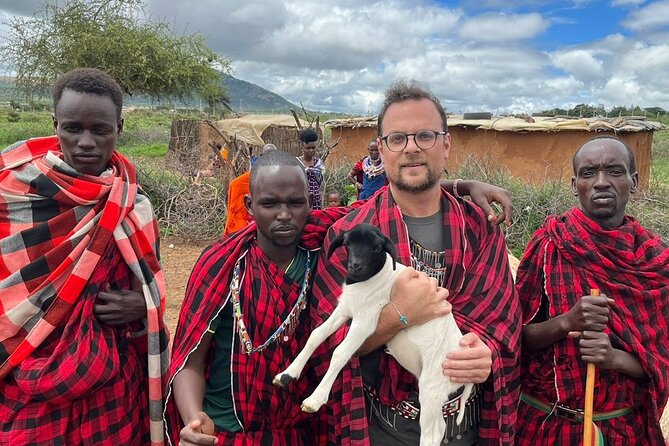
The most memorable part of this day is not watching Maasai life from a safari vehicle. It is being invited to take part: milk a goat, cook ugali, make beadwork, and join village songs. The visit is based near Bisil, about 2.5 hours from Nairobi, with wide Kajiado scenery along the way.
I like the chance to visit on a Monday or Friday, when Bisil’s livestock market adds real local activity. I also like the guides, especially Simon, Sharon, and Dennis, who help explain customs, teach useful words, arrange comfort stops, and often take photos for you. The main drawback is the long drive and the simple village setting, which may be smaller than you expect.
Key points to know before booking
- The drive takes about 2.5 hours each way, so this is a full day out of Nairobi rather than a quick nearby visit.
- Monday and Friday are the best days for the livestock market, with goats, cattle, Maasai beadwork, herbs, and clothing for sale.
- You take part in daily tasks, including goat milking, basic cooking, beadwork, herding, fire making, singing, and dancing.
- The village has no bathroom, but the route includes two planned stops for toilets, snacks, coffee, lunch, or an ATM.
- Airport and hotel pickup are offered, with an air-conditioned vehicle, bottled water, and onboard Wi-Fi.
- Dress modestly and wear closed shoes, and bring money for souvenirs or optional donations.
What this Maasai day actually offers

This is a cultural day trip from Nairobi to the Maasai-inhabited parts of Kajiado County. You leave the capital in the morning, ride south through open country, stop in Bisil, visit a Maasai village, and return through Kitengela and Ilbisil.
The village portion lasts about three hours. That is enough time to do several hands-on activities without turning the visit into a quick photo stop. You may learn a few Maasai words, see how a manyatta is arranged, milk a goat, help prepare a simple meal, make a small beaded item, and join music and dancing.
The experience is presented as a meeting with a host family or small village group. One useful thing to understand is that this is not a large cultural center with staged performances on a fixed indoor schedule. The setting can be quite modest, sometimes involving only one or two families. That simplicity is part of its appeal, but it also means you should arrive ready for a real rural visit rather than a polished attraction.
Guides make a big difference here. Simon is frequently praised for his clear explanations, friendly manner, and ability to answer questions about Maasai and Kenyan life. Sharon has helped solo visitors feel at ease, while Dennis is described as lively, warm, and especially good at building a friendly connection between the local hosts and visitors.
More Maasai Village Visits in Nairobi:
- Nairobi: Day Tour to Amboseli National Park & Maasai Village
★ 4.5 · 310 reviews - Masai village Day Tour Experience
★ 5.0 · 284 reviews - From Nairobi: Maasai Village Experience Day Tour
★ 4.9 · 70 reviews
The road from Nairobi to Kajiado
Pickup begins at about 8 a.m. from your Nairobi hotel or the airport. The vehicle is air-conditioned, and bottled water and Wi-Fi are included. Those details matter on a long road day, especially if you are arriving in Kenya and want a direct way to start seeing the country beyond the capital.
The drive to the village takes roughly 2.5 hours one way. Traffic can affect the schedule, so the advertised six to eight hours should be treated as an estimate. The operator aims to return to Nairobi before 4 p.m., but group size, traffic, bathroom stops, and food breaks can push the timing later.
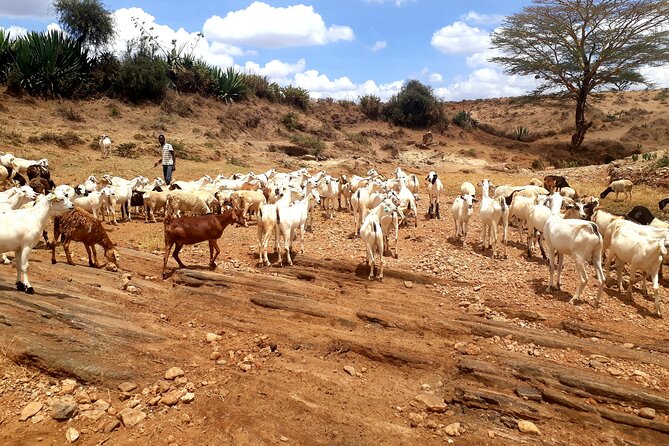
The ride is also part of the day. As you leave the Nairobi Metropolitan area, the scenery opens into the broad plains of Kajiado, with hills, vegetation, and herds of goats, donkeys, and cattle. You may see Maasai herders moving animals in search of pasture and women carrying firewood.
At the same time, this is not a wildlife safari. The animals you see are mainly livestock, and the purpose of the trip is cultural contact rather than game viewing. If you want a short, tightly timed excursion, the road length may frustrate you. If you want to see how the capital connects with rural communities, the journey gives useful context.
Bisil on a Monday or Friday
Bisil is the first major town outside the Nairobi Metropolitan area on this route and is predominantly inhabited by Maasai people. You see ordinary town life here, including trade, transport, shops, and people moving livestock. It is a useful reminder that Maasai culture is not limited to remote manyattas or safari lodge performances.
Try to schedule the trip for Monday or Friday. On those days, the livestock market can become one of the most interesting parts of the outing. Goats and cattle are brought in for sale, and Maasai beadwork, herbs, clothing, and other goods are traded nearby.
The market is not necessarily a huge, all-purpose town market. It may be more focused on livestock than you expect, with only a few other vendors. That is precisely why it can feel useful and specific. You get to watch buying and selling tied to daily life, rather than simply browsing a souvenir stall.
Bring a camera or phone, but use it with care. The market offers strong photo opportunities, yet people and animals are not props. Ask before photographing individuals, and follow your guide’s lead. Professional cameras and commercial photography are not permitted, so this is intended for personal snapshots only.
You also have the chance to buy souvenirs. Beadwork, clothing, and small handmade items can help support local sellers, but purchases are optional. Carry Kenyan currency or another accepted form of payment if you plan to shop. The tour price does not include souvenirs.
Three hours with a Maasai host community
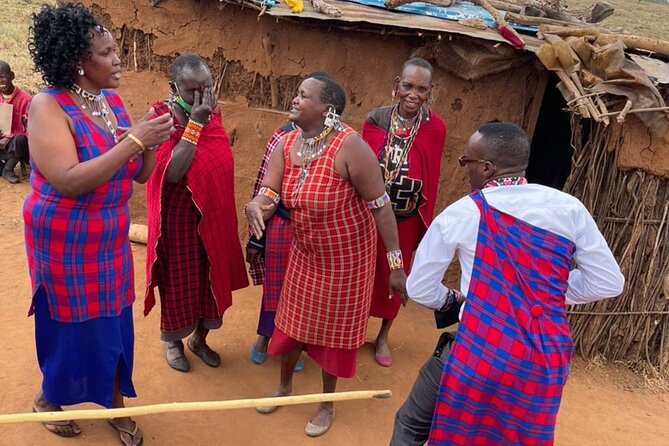
The village visit is the heart of the day. After arriving, you are welcomed by community members and introduced to aspects of Maasai daily life. Your guide helps set the tone and explains what is happening, which is especially helpful if you are unfamiliar with local customs.
You might begin by learning a few Maasai words. This is a small gesture, but it changes the quality of the encounter. Saying hello and showing an effort to communicate makes the visit feel less like an observation from the outside.
A manyatta is one of the main points of interest. You can enter and learn more about the traditional home setting. The structures are simple, and the experience is hands-on rather than museum-like. Be prepared for a basic environment, uneven ground, and limited facilities.
The activities may include milking a goat, handling young goats, herding, making a fire, and helping prepare food. Cooking ugali gives you a practical link to a familiar part of Kenyan food culture. Do not expect a full lunch from the activity, however. Lunch is not included, and the schedule may not provide a formal meal break.
Beadwork is another popular activity. You can try making your own small piece while learning how the craft fits into Maasai dress and trade. The finished item may be simple, but the value is in understanding the work behind the objects you see at the market.
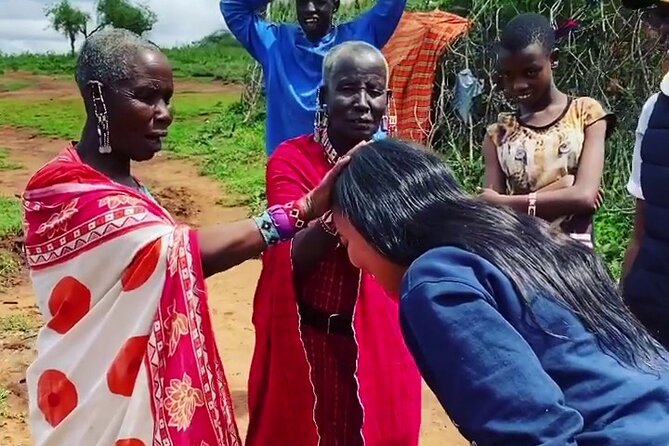
Music and dancing usually bring the visit together. You are invited to join village members rather than simply watch from the side. The singing and dancing are often described as a highlight, but participation is voluntary. You do not need to be an accomplished dancer. A willing attitude matters more than perfect steps.
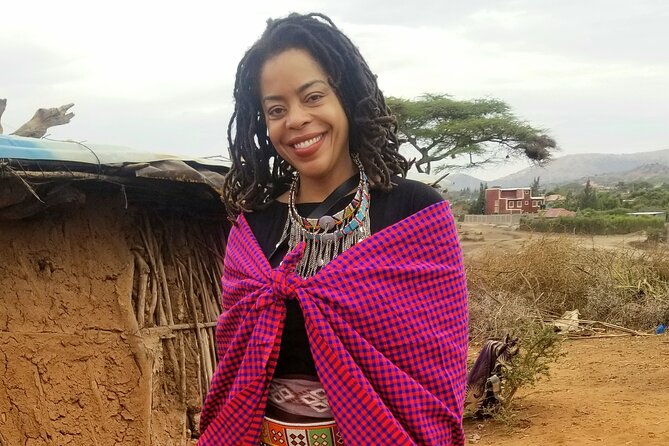
The visit can feel personal and warm, but it is still important to respect the people hosting you. Dress modestly, listen when your guide explains local etiquette, and ask before entering spaces or taking photographs. The operator specifically requests covered clothing, preferably pants for all genders.
A few more Nairobi days to weigh up
- Nairobi National Park Half-Day Tour; Free Wi-Fi connection
★ 5.0 · 878 reviews - Nairobi: National Park & Optional Elephants & Giraffe Center
★ 4.8 · 874 reviews - NAI NAMI: Nairobi Storytelling Tour with Street Children
★ 5.0 · 792 reviews - Nairobi National Park Half-Day Game Drive
★ 4.5 · 738 reviews
What the simple setting means for you
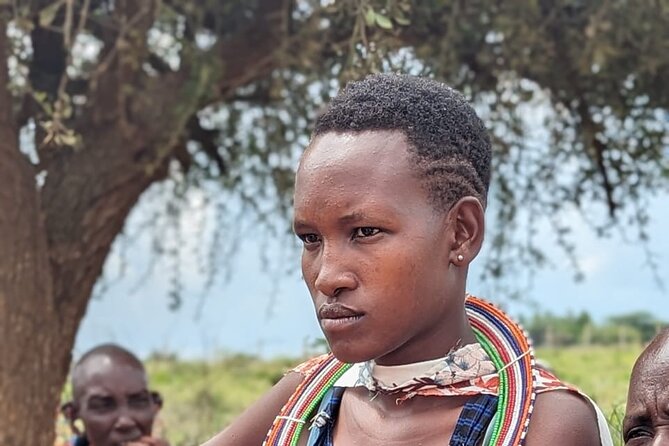
The word village can create an image of a large settlement with many families and a long list of attractions. Here, the setting may be smaller, involving one or two families. That can make the exchange more direct, but it may surprise anyone expecting a large-scale cultural show.
I see this as a good fit for people who value conversation and participation over spectacle. You get time to ask questions and repeat an activity rather than rushing through a string of displays. The guide can explain the background, but the local hosts provide the setting and the welcome.
The experience also raises the usual questions about cultural tourism. A respectful visit should involve consent, fair payment, and care with photography. The tour does not provide a detailed breakdown of how the village fee is distributed, so you may want to ask your guide how purchases and donations support the community.
Donations are allowed. Useful items include clothes, school supplies, toys, teaching aids, food items such as cooking oil, maize flour, and dry grains, and other goods that may help a needy community. If you bring something, choose practical items and give them through the guide or the appropriate community contact rather than handing out treats directly to children.
A stop at Kitengela Mall
After the village, the route includes a 20-minute stop at Kitengela Mall. This is a practical pause, not a major sightseeing stop. You can use the bathroom, buy tea, coffee, snacks, or lunch, or visit an ATM.
This stop matters because there is no bathroom at the village. The tour includes two bathroom breaks along the route, and Kitengela is one of them. If you know you will need a proper meal, plan to buy it here or bring a snack from Nairobi.
The stop can also help you manage the day’s spending. You can withdraw cash for souvenirs or donations if needed. Since the timing is short, decide what you need before getting out of the vehicle.
Ilbisil primary school and the return drive
The final listed stop is in Ilbisil, where you pass by a local primary school and see school activities. Visitors may also drop off donations. This adds another view of community life beyond the village household and livestock market.
The school visit is brief, about 20 minutes, so it is not an organized classroom tour or teaching session. You are seeing the school from the outside and supporting it with useful donations if you choose to bring them.
After Ilbisil, you continue back toward Nairobi. Keep some flexibility in your plans for the evening. The target is to be back before 4 p.m., but traffic and group delays can change that. I would not book a tightly timed flight, dinner reservation, or separate afternoon activity immediately afterward.
Is the $100 price fair?
At $100 per person, the price is reasonable if you value private transport and a full cultural day outside Nairobi. It includes an air-conditioned vehicle, bottled water, Wi-Fi, entry charges, pickup, and a guide. You are also paying for a long round trip, not just three hours at the village.
The price is less attractive if you are comparing it with a short city tour or a simple transfer. Lunch and alcohol are not included, and souvenirs and donations cost extra. The village itself has no bathroom, so the comfort breaks are useful but not a luxury feature.
Group size can reach 50 people. That is a fairly large possible group for a personal cultural visit. A small departure may feel more relaxed, while a full vehicle could make the village activities less intimate. If group size matters strongly to you, ask about the expected number at booking.
The 97 percent recommendation rate and 4.9 rating suggest that the guides and hands-on activities deliver strong value for most people. I would put the greatest weight on the guide. Simon, Sharon, and Dennis are repeatedly singled out for clear explanations, energy, patience, and good photo help. A strong guide can make the long drive feel worthwhile and help you behave respectfully in the village.
Practical advice for a better day
Wear closed shoes. The village, market, and roadside stops may involve dirt, dust, uneven ground, or animal areas, and open sandals are not the best choice.
Choose modest clothing, with covered shoulders and legs. Pants are preferred for all genders. This is both a practical request from the operator and a simple way to show respect to the host community.
Bring a snack and water, even though bottled water is supplied. Lunch is not included, and one five-star account specifically advises bringing food because there may be no lunch break before Kitengela.
Keep cash with you for beadwork, other souvenirs, donations, or the ATM stop. You do not need to buy anything, but having money available gives you options.
Ask before taking close-up photos. Personal photography is allowed, but professional cameras and commercial photography are not. Your guide may take photos and videos for you, which is helpful if you are traveling alone.
Expect a flexible schedule. The operator sends pickup details the night before, and most people can participate, but the day depends on traffic, group timing, and road stops. If bad weather cancels the tour, you can receive a different date or a full refund. For other cancellations, cancel at least 24 hours before the start time for a full refund.
Who should book this experience?
I would choose this tour if you want to meet Maasai community members in a setting where you can ask questions and try daily tasks yourself. It suits solo visitors, couples, families, and first-time visitors to Kenya who want more than a quick photograph during a safari.
It is especially good for photographers using a phone or ordinary personal camera, people curious about food and crafts, and anyone who enjoys learning through doing. Solo women can also feel comfortable with the guide support and organized transport described for this experience.
I would think twice if you dislike long drives, need a guaranteed lunch, expect a large market every time, or want a highly polished cultural performance. The village may be small, the market may be modest, and the schedule can stretch.
Should you book the Maasai Village Experience Day Tour?
Book it if the thought of milking a goat, making beadwork, cooking ugali, entering a manyatta, and singing with a host community sounds more appealing than another quick sightseeing stop. Schedule Monday or Friday if the livestock market is important to you, and leave your afternoon open for traffic.
Skip it if your Nairobi stay is very short or if you cannot spare five hours of driving. For most people seeking a direct, hands-on introduction to Maasai life, the combination of a helpful guide, rural scenery, village activities, and the option of a market visit makes the $100 a fair use of a day.
FAQ
How long does the Maasai Village Experience Day Tour last?
The tour lasts approximately six to eight hours. It starts at about 8 a.m., and the operator aims to return to Nairobi before 4 p.m., although traffic and stops can affect the timing.
How far is the village from Nairobi?
The drive to the village takes about 2.5 hours each way.
Is hotel or airport pickup available?
Yes. Pickup is offered from Nairobi hotels or the airport. Exact pickup details are sent the night before the tour.
What activities can I do at the Maasai village?
You can learn Maasai words, milk a goat, enter a manyatta, cook a basic meal including ugali, try beadwork, herd goats, watch fire making, and join singing and dancing.
Which days include the livestock market?
The livestock market takes place on Mondays and Fridays. Those visits can include goats, cattle, Maasai beadwork, herbs, and clothing for sale.
Is lunch included?
No. Lunch is not included. You can buy food at the Kitengela Mall stop, which also has bathrooms, snacks, tea, coffee, and an ATM.
What should I wear and bring?
Wear closed shoes and modest clothing, with pants preferred for all genders. Bring money for souvenirs or donations, and consider carrying a snack. The village has no bathroom, but the route includes two bathroom stops.
Recently added around Nairobi
- Nairobi; City Walk Tour★ 4.5 · 3 reviews
- Private 3-Day Masai Mara Safari Adventure★ 5.0 · 3 reviews
- Kenya safari★ 5.0 · 3 reviews
- 2 Days Amboseli National Park Safari★ 3.5 · 3 reviews
- 11-Days Best of Kenya & Tanzania Big 5 Safari on a 4×4 Jeep★ 5.0 · 3 reviews
- Full Day, Small Group Guided Tour to Amboseli National Park★ 4.5 · 3 reviews
- 10-Days Explore Kenya Wildlife Private Safari★ 5.0 · 3 reviews
- Nairobi: Giraffe Center, Beads Factory & Bomas of Kenya Tour★ 4.5 · 3 reviews
Nairobi Tours, compared.
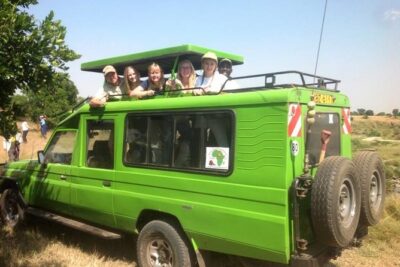
Nairobi National Park Half-Day Tour; Free Wi-Fi connection
Read our review →
National Park & Optional Elephants & Giraffe Center
Read our review →
NAI NAMI: Nairobi Storytelling Tour with Street Children
Read our review →

Elephant Orphanage and Giraffe Center Tour with Options
Read our review →Browse the lists this tour appears in