

Reviewed · NAIROBI TOURS
Nairobi Cultural and Historical City Tour with a Local
Nairobi’s story comes together in an unusually varied day: ancient fossils and Kenyan art at the Nairobi National Museum, city views from the top of KICC, handmade beads from a women-run workshop, and traditional performances at Bomas of Kenya. You move from downtown streets to the leafy Karen and Langata area without having to arrange separate taxis or tickets.
I like the personal transport and the way the tour joins major sights with places that support local makers. I also like the chance to spend time with guides such as Kelvin, Denish, Dennis, or Faith, who have been praised for clear explanations, punctual pickups, and warm company. The main caution is pace: six stops in about eight hours can feel hurried, especially at Bomas or the museum.
Key points at a glance
- Ahmed the elephant and Kenya’s national story: See the famous elephant preserved at the Nairobi National Museum, along with cultural and natural exhibits.
- 360-degree views from KICC: Ride up to the rooftop for a broad look across central Nairobi and its surrounding districts.
- A women-run bead workshop: Watch pottery and bead production at Kobe Tough Beads & Leather, a center supporting single mothers.
- Crafts inside a converted Kikuyu house: Browse 18 small shops at Utamaduni Craft Centre, then pause in the garden restaurant.
- Traditional dances and homesteads: Spend up to three hours at Bomas of Kenya, including performances linked to more than 30 ethnic communities.
- Private transport with hotel pickup: Your group travels together, with bottled water and admission to the museum, KICC, and Bomas included.
A full Nairobi introduction in one long day
This is not a leisurely walk through one neighborhood. It is a broad sampler of Nairobi, built for someone who wants to understand the city’s past, see its center from above, and encounter several forms of Kenyan cultural expression before dinner.
The tour lasts about eight hours and is private, so you do not share the vehicle with unrelated groups. That matters in Nairobi, where traffic can affect the timing of every stop. Pickup and drop-off at your hotel or residence are included, along with private transport and bottled drinking water.
The price is $95 per person. That is a fair amount if you value a driver, a private vehicle, several admission tickets, and a guide who can connect the sights. It is less appealing if you mainly want a museum visit and a short city drive, since you are paying for a full day with many components.
The strongest guides appear to be the difference between a good day and an average one. Kelvin has been praised for being prompt, personable, and able to explain both Nairobi and Kenyan customs. Denish or Dennis has also been described as courteous and attentive, while Faith has been noted for punctuality and helpfulness. Still, the experience can vary by guide and by how much time is allowed at each location.
More City Tours in Nairobi
- Nairobi Historical Walking City Tour
★ 5.0 · 258 reviews - Nairobi City Walking Tour with Traditional Kenyan Lunch
★ 5.0 · 106 reviews - Nairobi: Private 4-Hour City Tour
★ 4.5 · 68 reviews
Museum Hill and Kenya’s national collection
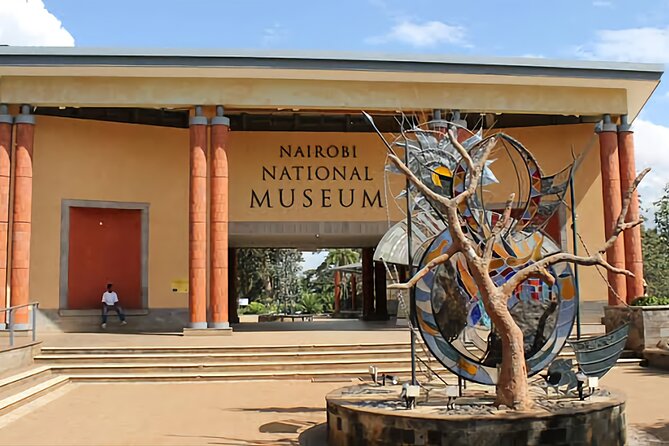
The Nairobi National Museum is the right place to begin. It gives you a framework for the rest of the day, moving beyond postcard images of Kenya and showing the country’s natural world, peoples, art, and past.
The museum sits on Museum Hill, close to the city center. Plan on about two hours here. Admission is included, and the permanent displays cover both cultural and natural subjects. You may see fossils, ethnological material, art, and objects tied to the country’s many communities.
One of the memorable objects is Ahmed, a huge elephant preserved at the museum. During the poaching crisis of the 1980s, Ahmed became a national symbol and received round-the-clock protection by order of President Jomo Kenyatta. His presence gives the museum a clear conservation message, not just a display of wildlife.
Look for the Kalenjin cloak made from Sykes monkey skins and the map of Kenya assembled from butterflies. These unusual pieces are useful reminders that museum collections can raise questions as well as provide pretty objects. Your guide can help explain what you are seeing, but the level of interpretation may vary.
One practical point deserves attention. At least one visitor found the museum portion too dependent on reading labels, with a site guide who repeated the placards rather than adding much context. If you want more from this stop, ask your main guide to explain the objects, connect them to modern Kenya, and allow enough time for questions.
The museum is also one of the day’s more educational stops, so it can feel demanding after an early pickup. I would rather see it first than last, when fatigue and traffic delays might reduce your time.
KICC rooftop views and Nairobi’s central streets
From Museum Hill, the tour moves into central Nairobi and to the Kenyatta International Conference Center, usually called KICC. The 28-storey building on Harambee Avenue is one of the city’s best-known landmarks.
The main reward is the rooftop. From above, you get a 360-degree view of the city center and the districts beyond it. The height helps you understand Nairobi’s shape in a way that is hard to grasp from a vehicle. You can see the dense central area, open public spaces, and the spread of the capital toward the horizon.
Admission to KICC is included, and the stop lasts about 30 minutes. That is enough for photographs and a short explanation, though not enough for a long architectural visit. The viewpoint has been one of the most consistently praised parts of the day, so try to protect this stop if traffic forces a change in timing.
The tour then takes you toward Uhuru Park, where your guide explains its role in Kenya’s national story. From there, you may walk through or near the Central Business District while hearing about Nairobi before independence and the growth of the modern capital.
This section is brief, but it is important. A skyline view alone can make a city seem abstract. The walk and commentary give the buildings a political and historical setting. You may also notice that this part depends heavily on your guide. A strong guide, such as Kelvin, can point out places and explain how the city developed. A less active guide may simply point from the vehicle, leaving you with little time to look.
August 7th Memorial Park and the cost of remembrance
The August 7th Memorial Park is an optional stop, and its admission is not included. It occupies the former site of the United States Embassy, where the bombing of August 7, 1998, killed and injured many people.
The memorial includes a museum and tells the stories of those who died and those who survived. The setting focuses on peace and remembrance rather than sightseeing. For that reason, I would treat it as a serious choice, not a box to tick.
You get about 30 minutes here. That is enough for a short visit, but it may feel tight if you want to read the displays carefully. Since the entrance fee is extra, ask your guide about the current cost and available time before deciding.
This stop also changes the mood of the day. After the museum and KICC, the tour has been largely about national identity, city growth, and culture. The memorial asks you to pause over a painful event in Nairobi’s recent past. Some people will find it essential; others may prefer to use the time for a longer museum visit or a slower lunch.
More history days around Nairobi:
- Nairobi: Historic and Modern Highlights Walking Tour
★ 4.8 · 703 reviews - Full Day Nairobi Cultural and Historical Tour
★ 5.0 · 153 reviews - Nairobi souvenir Shopping and Historical Half day Tour
★ 5.0 · 61 reviews - Nairobi History and Modern Culture 3 Hours Tour
★ 4.5 · 31 reviews
Meeting makers at Kobe Tough Beads & Leather
The visit to Kobe Tough Beads & Leather adds a useful economic and human side to the tour. This is a pottery and bead workshop where you can see the process from the early stages through the finished pieces.
The center was started by women who had previously worked at the Kazuri bead factory after it closed during the pandemic. It now provides work for single mothers from a poorer neighborhood, helping them support their families. That background gives the stop more meaning than a standard souvenir shop.
You may see how ceramic pieces are formed, prepared, decorated, and turned into beads or other objects. One particularly interesting detail is the use of ceramic balls in the production process, which several people have found worth watching.
The visit lasts about 30 minutes and admission is free. You will likely have the chance to buy finished work. I would approach this as a chance to meet artisans and support a local enterprise, not as a guaranteed private workshop where you make a full item yourself. The supplied schedule promises a firsthand look at the stages, but it does not promise hands-on participation.
The stop is also a good counterweight to the larger institutions earlier in the day. At the museum, you see objects already collected and labeled. Here, you see work being made for present-day use and income.
Utamaduni Craft Centre in Karen and Langata
Utamaduni Craft Centre is a shopping stop, but it has more character than a simple mall. The center occupies a converted Kikuyu house and contains 18 separate shops offering African crafts, antiques, and art.
You get about an hour here. That gives you enough time to browse without making the entire day about shopping. Staff can help pack purchases or arrange shipping, which is useful if you find a larger carved object, fragile pottery, or artwork you do not want to carry through the rest of your trip.
The center sits in Nairobi’s green Karen and Langata area, known for links to the writer Karen Blixen and views toward the Ngong Hills. The tour does not list a visit to the Karen Blixen house, so do not expect that attraction to be part of the day. Utamaduni is the actual destination.
A garden restaurant provides a place for refreshments, and lunch may be purchased here or elsewhere. Lunch is not included in the $95 price. I would ask your guide about the timing and menu before ordering, especially because the day’s schedule can become crowded.
This is the stop where you need to manage your own spending. The craft selection may tempt you, but buying is optional. If you are not shopping, you can still enjoy the house, gardens, and a break from the vehicle. If you are looking for gifts made in Kenya, this is one of the more useful places in the program.
Bomas of Kenya and the final cultural performance
Bomas of Kenya receives the longest allocation, about three hours, and it is the day’s main cultural presentation. The center preserves and presents customs from Kenya’s 53 ethnic communities through traditional dances, music, folklore, and reconstructed homesteads.
The performances include more than 30 traditional dances. Samburu and Maasai warriors are among the most prominent presentations, and the dancing gives the program energy after a long day of museum rooms, traffic, and shopping.
You can also visit different homesteads and see how the center presents everyday life among several communities. This helps you compare building styles and domestic arrangements, though you should remember that Bomas is a cultural presentation designed for the public. It is not the same as visiting a family home or attending a community event by chance.
The schedule allows three hours, including the optional lunch period beforehand. That should be enough for the main performance and the homestead area, but timing matters. One person found the village portion rushed, and that is a useful warning. Tell your guide if you would rather spend more time at the homesteads and less time elsewhere.
Bomas is at its best when you treat the performances as an introduction. Use them to identify music, clothing, dance, and building traditions you want to learn more about later. The show is engaging, but it cannot explain every community in depth during one afternoon.
What the private format changes
A private tour gives you more control than a fixed group outing. Only your own party participates, and the driver can adjust the flow around your interests, within the limits of opening hours and traffic.
That flexibility is especially helpful at the craft stops. You can browse without waiting for a large group, ask to stop for refreshments, or tell the guide that you want to focus on the workshop rather than buying souvenirs.
The format also puts more responsibility on you. Speak up if the pace is too fast. Several stops have short scheduled visits, and one complaint about the experience centered on being moved along too quickly. A private booking should make it easier to request a little more time at the museum, memorial, or Bomas homesteads.
Transportation is practical rather than luxurious. You receive private transport and bottled water, but no special vehicle details are provided. Pickup and drop-off are included, which removes the need to navigate Nairobi’s roads on your own.
Who will get the most from this day
I would choose this tour if you have one free day in Nairobi and want a first look at several sides of the capital. It works well for couples, families, and small groups who prefer a private vehicle and a guide rather than arranging individual admissions and taxis.
It also suits people who want more than wildlife. Nairobi is often treated as a gateway to a safari, but this day gives you museums, politics, conservation, crafts, music, dance, and city life.
You may want another plan if you prefer slow travel. The schedule is ambitious, and you will spend time in the vehicle between central Nairobi and the Karen or Langata area. It is also not ideal if your main interest is contemporary city life, since the cultural focus leans toward museums, heritage displays, traditional performance, and crafts.
The tour has a 4.9 rating from 67 reviews and a 97 percent recommendation rate. Those figures point to a strong overall experience, but they should not hide the variables: the guide, the traffic, the amount of time at each site, and your willingness to speak up all matter.
Price, planning, and small practical details
At $95 per person, the value is strongest when you use the full day. Included admissions cover the Nairobi National Museum, KICC, and Bomas of Kenya. Private transport, hotel or residence pickup, drop-off, and bottled water are also included.
The August 7th Memorial Park is optional and not included. Lunch is available for purchase, but you pay separately. Tips and gratuities are not included either, so plan for those if your guide and driver provide good service.
The tour is often booked about 33 days ahead, which suggests you should reserve early if your Nairobi dates are fixed. Confirmation is provided when you book, and most people can participate. The activity requires good weather, so poor conditions may lead to a different date or a full refund.
Free cancellation is available up to 24 hours before the start time. Cancellations or changes made within 24 hours are not refunded or accepted, and the cut-off follows local time.
Should you book the Nairobi cultural and historical tour?
Book it if you want an efficient first day with a private guide, a city viewpoint, a serious museum, local craft production, and a large traditional performance. The best parts are the KICC rooftop, the museum’s unusual objects, the women-run bead workshop, and the Bomas program.
Before you go, tell your guide your priorities. Ask for clear explanations at the museum, protect enough time for Bomas, and decide in advance if the memorial is worth the extra fee and shorter schedule. If you do that, the $95 price buys a useful introduction to Nairobi rather than just a string of photo stops.
FAQ
How long does the Nairobi Cultural and Historical City Tour last?
The tour lasts approximately eight hours, with about two hours at the Nairobi National Museum, 30 minutes at KICC and the central city area, 30 minutes at the memorial if selected, 30 minutes at Kobe Tough Beads & Leather, one hour at Utamaduni Craft Centre, and three hours at Bomas of Kenya.
Is hotel pickup and drop-off included?
Yes. Pickup and drop-off at your hotel or residence are included.
Is this a private tour?
Yes. Only your group participates in the private activity.
Which admissions are included in the price?
Admission to the Nairobi National Museum, KICC, and Bomas of Kenya is included. Admission to August 7th Memorial Park is not included because that visit is optional.
Is lunch included?
No. Lunch is available for purchase and is not included in the tour price.
What is the cancellation policy?
You can cancel up to 24 hours before the local start time for a full refund. Cancellations or changes made less than 24 hours before the start time are not accepted or refunded. If poor weather cancels the tour, you will be offered another date or a full refund.
Recently added around Nairobi
- Nairobi; City Walk Tour★ 4.5 · 3 reviews
- Private 3-Day Masai Mara Safari Adventure★ 5.0 · 3 reviews
- Kenya safari★ 5.0 · 3 reviews
- 2 Days Amboseli National Park Safari★ 3.5 · 3 reviews
- 11-Days Best of Kenya & Tanzania Big 5 Safari on a 4×4 Jeep★ 5.0 · 3 reviews
- Full Day, Small Group Guided Tour to Amboseli National Park★ 4.5 · 3 reviews
- 10-Days Explore Kenya Wildlife Private Safari★ 5.0 · 3 reviews
- Nairobi: Giraffe Center, Beads Factory & Bomas of Kenya Tour★ 4.5 · 3 reviews
Nairobi Tours, compared.

Nairobi National Park Half-Day Tour; Free Wi-Fi connection
Read our review →
National Park & Optional Elephants & Giraffe Center
Read our review →
NAI NAMI: Nairobi Storytelling Tour with Street Children
Read our review →




Elephant Orphanage and Giraffe Center Tour with Options
Read our review →Browse the lists this tour appears in