
Reviewed · NAIROBI TOURS
Nairobi: Horseback Riding Tour Through Maize Plantation
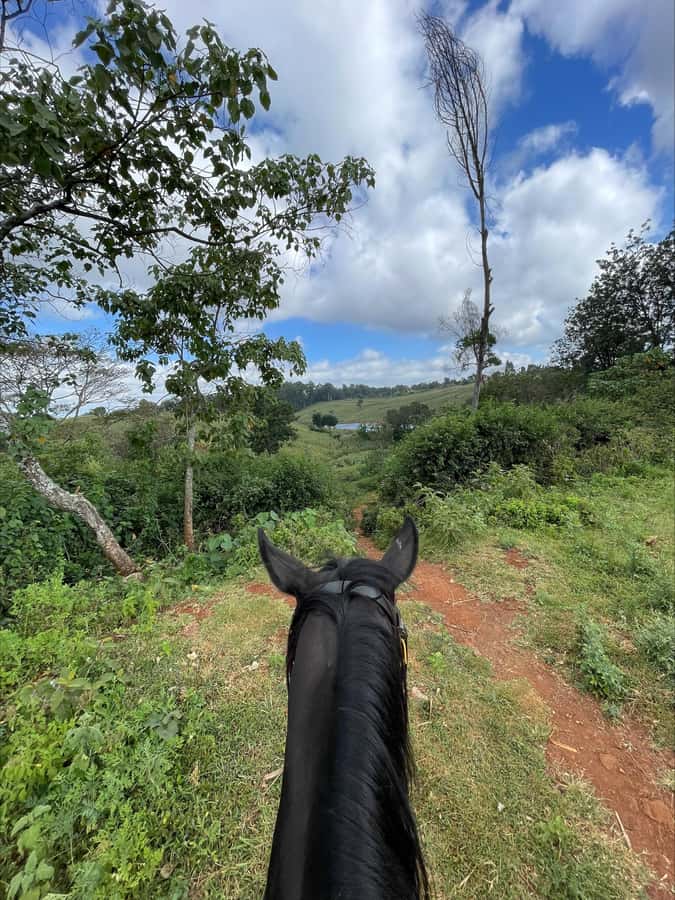
The most unusual part of this Nairobi outing is the route: you ride from a stable into a maize plantation, then pass through forest, a natural dam, and a village on the city’s outskirts. It feels more connected to everyday Central Kenya than a fenced riding arena.
I like the flexible pace and the careful beginner support. I also like that experienced riders get selected patches for cantering or galloping instead of being kept at a walk. The main consideration is the price: at $90 for 90 minutes, this is a special outing rather than a cheap casual ride, and transport, food, and drinks cost extra.
Key points at a glance
- Maize fields and village paths: The route gives you more than an arena ride, with farmland, forest, water, and local settlement views in one short outing.
- Good for first-time riders: A guide can hold the horse and take beginners on a similar but shorter route.
- Room for experienced riders: Cantering or galloping is possible on specific patches when conditions and ability allow.
- Small group size: Groups are limited to 10, which leaves more room for individual help than a large riding line.
- Flexible timing: The stable can adjust the schedule, a useful feature if your Nairobi plans shift.
- Named local staff: Maina, who also uses the English name David, guides rides, while Beatrice welcomes riders at the stable.
From New Muthaiga to the first stretch of farmland
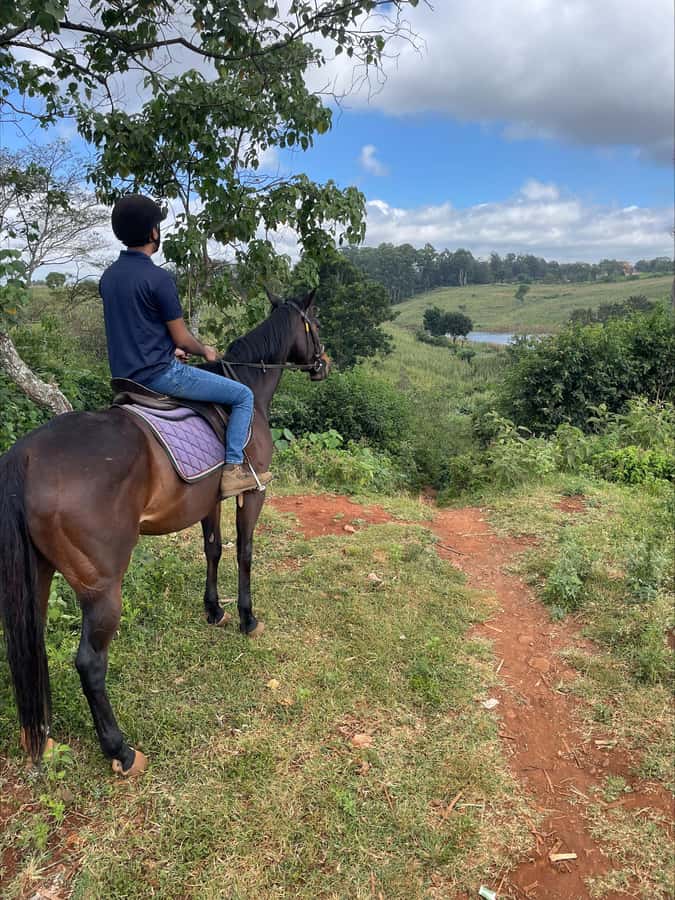
Your ride begins at New Muthaiga riding stables, at the end of the road. The stable is close enough to Nairobi’s city centre for one rider to reach it easily by Uber, though the tour does not include transportation, so you need to arrange your own ride there and back.
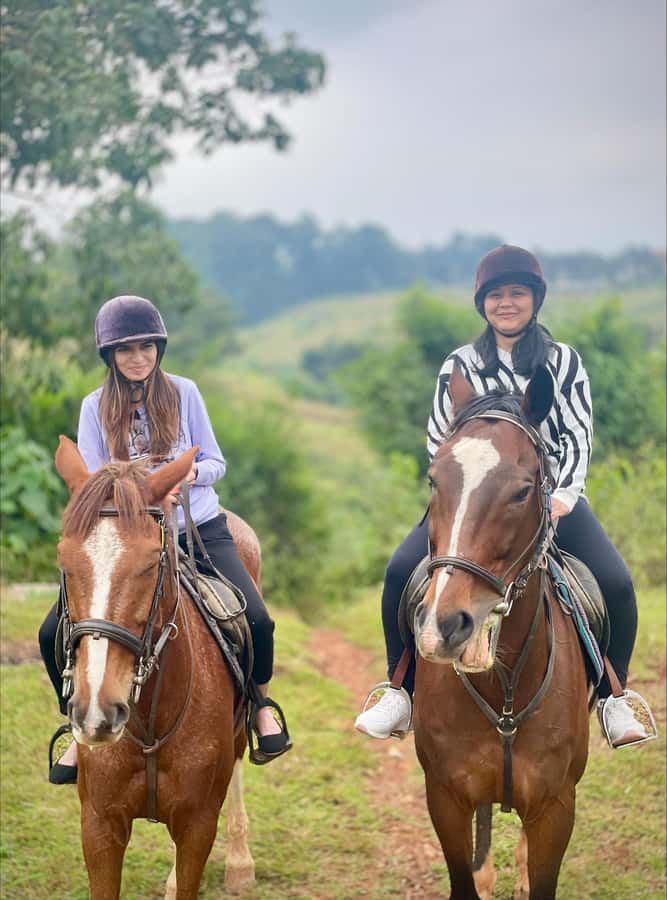
At the stable, you meet your guide, get matched with a horse, and put on the provided helmet. This first meeting matters, especially if you have never ridden before. A good horse match can make the difference between spending the ride worrying about the animal and spending it looking around.
Maina, also known as David, is one of the guides connected with the ride. He speaks English and Swahili, and his calm manner with the horses is useful for beginners. Beatrice handles the welcome at the stable and can help with the practical start of the visit.
The tour is listed as 90 minutes, with the actual riding time described as one to one and a half hours. That gives you a fairly compact outing, easy to fit around a Nairobi morning or afternoon. Timings can be customized, but you should confirm the start time when booking because availability changes.
Before mounting, wear comfortable clothes and shoes suitable for riding. Bring water. Food and drinks are not included, and there is no promise of a meal or refreshment stop along the route, so arrive prepared.
A few more Nairobi days to weigh up
- Nairobi: Karura Forest Horseback Riding Tour
★ 4.8 · 11 reviews - From Nairobi: Horseback Wildlife Safari with Transfer & Meal
★ 4.6 · 7 reviews
Riding through the maize plantation
The first major part of the route takes you through a maize plantation. This is a useful change from a standard riding school circuit because the plants, tracks, and open farm views give the ride a clear sense of place.
You are not simply looking at scenery from a vehicle. On horseback, your pace is slower and your attention moves between the horse, the path, the crops, and the guide’s instructions. That makes this part best for people who want a quiet outdoor activity rather than a sightseeing checklist.
The plantation also offers a natural setting for a beginner’s first ride. The guide can keep the horse at a manageable speed and help you focus on posture, steering, and comfort. You can choose a slower ride, which is the sensible option if you are unsure about your balance or have not handled a horse before.
The drawback is that a farm route is not a formal riding track. The surface may feel less predictable than an arena, and the ride’s appeal depends partly on your interest in rural scenery. If you want a long, fast trail ride with advanced instruction, 90 minutes may feel short.
Still, I like this section because it places horseback riding within ordinary Kenyan life. The maize plantation is not presented as a staged attraction. It is part of the route, and that makes the short ride feel more local.
Forest shade and the natural dam
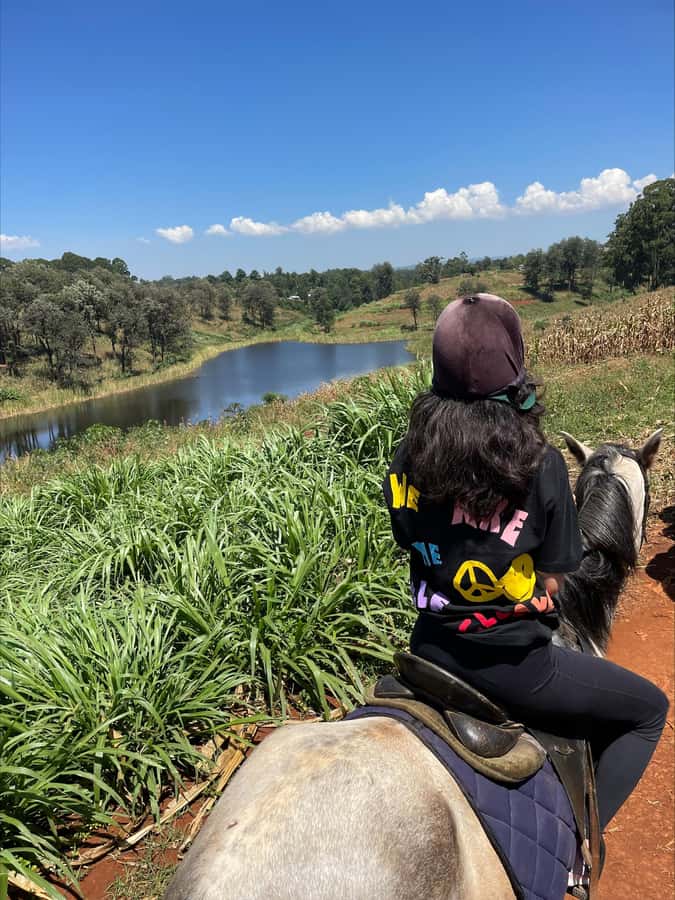
From the farmland, the route continues into a forest area and passes a natural dam. These two features break up the ride and give you a change of light, footing, and scenery.
The forest section should appeal to riders who prefer a quieter setting. Trees provide shade and make the ride feel less exposed than the open plantation. At a slower pace, you have time to settle into the rhythm of the horse and notice the surroundings without rushing.
The natural dam is another small but worthwhile stop along the route. It gives the ride a clear visual marker and adds water to an outing otherwise focused on fields and woodland. The information provided does not promise a formal stop, wildlife sightings, or time for swimming, so think of the dam as a scenic part of the ride rather than a separate attraction.
You may find that the forest and dam are most enjoyable when you let the guide set a steady pace. This is not a self-guided ride. You follow the guide, and the guide helps shape the route according to ability and preference.
For a first-time rider, that structure is reassuring. You do not need to know how to read a trail or control a horse alone. For a confident rider, it is worth asking where the faster sections fit before setting off, since cantering and galloping are allowed only on specific patches.
A village on Nairobi’s outskirts
The ride also passes through a village on the outskirts. This is the part that gives the route its strongest connection to local daily life, although the visit is a pass-through rather than a guided cultural tour.
You should not expect a long village walk, craft market, meal, or formal meeting with residents. None of those are included. Instead, you ride along the route and see a settlement as part of the surrounding area.
That distinction helps set the right expectation. The tour offers a look at the transition between stable, farmland, forest, and village. It does not claim to explain local culture in depth. I see that as a strength for a short riding trip, since the focus stays on being outdoors and handling the horse.
It also means you should behave thoughtfully. Keep your clothing practical, follow the guide’s instructions, and avoid treating the village as a photo backdrop. The route is a shared local environment, not a performance arranged for visitors.
The village section may be more interesting to you than a polished equestrian centre because it shows how the ride fits into its surroundings. If you are mainly seeking fast riding, this part will naturally feel slower.
A different kind of day from the same base:
- Nairobi National Park Half-Day Tour; Free Wi-Fi connection
★ 5.0 · 878 reviews - Nairobi: National Park & Optional Elephants & Giraffe Center
★ 4.8 · 874 reviews - NAI NAMI: Nairobi Storytelling Tour with Street Children
★ 5.0 · 792 reviews - Nairobi National Park Half-Day Game Drive
★ 4.5 · 738 reviews
Choosing between a quiet walk and a faster ride
The tour lets you choose between a slower ride and a faster pace. Experienced riders can canter or gallop on certain patches of the route. That option gives the outing more flexibility than a ride where every participant must stay in one line at walking speed.
You should be honest about your ability. Cantering and galloping require balance, control, and confidence, and the guide decides where those movements are suitable. Do not assume that paying for the tour guarantees a fast ride throughout.
For an inexperienced rider, the arrangement is more protective. A guide can hold the horse and take you on a similar but shorter route. This is not the same as riding the full course independently, but it gives you a way to take part without pretending you already have the necessary skills.
The beginner setup was especially well suited to one first-time rider, who found the horse Summer a calm companion and felt reassured by Maina’s patient handling. That detail is useful because it points to the practical value of the guide, not just the presence of a guide on paper.
I would choose the slow option if you are nervous, wearing unfamiliar riding clothes, or unsure how your body will respond. You can still enjoy the maize, trees, dam, and village without adding speed. If you ride regularly, ask about the fast patches before departure and make sure your expectations match the route.
Horses, helmets, and the stable team
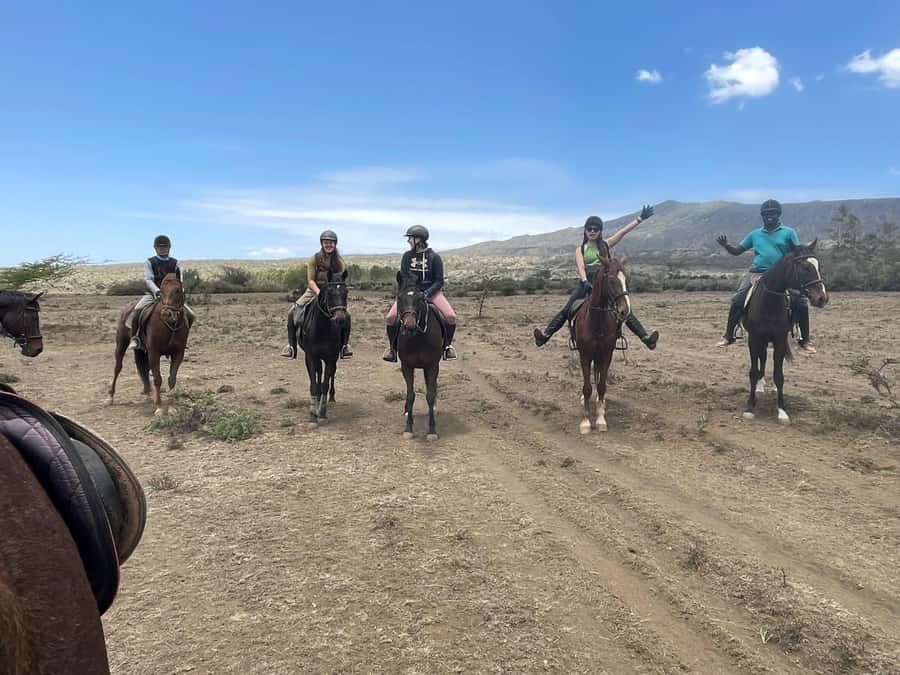
A helmet is included, so you do not need to bring your own protective headgear. You do need comfortable footwear and clothes that allow you to sit securely and move with the horse.
The horses are described as well kept, with options for experienced riders as well as suitable mounts for beginners. Summer was a particularly good match for a first-time rider, but you should not assume you will receive that same horse. The stable assigns horses according to the rider and the available animals.
The staff are a major part of the value here. Maina, or David, is noted for speaking calmly to the horse and rider. That sort of steady communication can help you relax, especially during mounting, the first few minutes on the trail, and any change in pace.
Beatrice is the person who welcomes you at the stable. A warm, organized arrival makes the start easier, since you have to handle transport, check in, meet the horse, and prepare for the ride in a short period.
The stable also conducts regular training sessions for people who want to continue riding. Those sessions are not part of the $90 tour, but they could interest you if this outing is a first step toward a longer riding plan.
What $90 buys you in practical terms
The price is $90 per person. For a 90-minute activity, that is not a budget ride, especially because transportation, food, and drinks are separate. You are paying for a guided outdoor route, a horse, a helmet, access to varied scenery, and support matched to your riding level.
The value improves if you want several settings in one trip. In a short period, you pass through a maize plantation, forest, a natural dam, and a village. You also have the option of a slower beginner route or faster sections for experienced riders.
The value is weaker if you want a long lesson, a full-day trail outing, or a meal included at the stable. This is a compact leisure activity, not a complete equestrian course or a day excursion.
A small group limit of 10 helps justify the cost. It does not guarantee private attention for every minute, but it gives the guide a manageable number of riders. Beginners benefit most from this arrangement because the guide can offer closer help than a large group usually permits.
The flexible timing adds practical value. One rider’s flight delay was accommodated by changing the schedule, though you should contact the stable rather than count on last-minute changes. Free cancellation up to 24 hours before the activity and the reserve-now, pay-later option also reduce the risk of committing too early.
Who should book this ride
I would recommend this tour to a first-time rider who wants support and scenery without giving up a sense of adventure. The shorter beginner route, guide-held horse, and slower pace make it less intimidating than an independent trail ride.
It also suits an experienced rider who wants a brief chance to canter or gallop outside an arena. Ask about the permitted patches and conditions, since the route does not offer unrestricted fast riding.
This is a good choice for a weekend activity in Nairobi, particularly if you want something active and outdoors rather than another indoor stop. It can also fit into a larger Central Kenya visit because the ride lasts about 90 minutes.
You may want to skip it if you dislike riding, need a fully accessible vehicle-based activity, or want detailed cultural interpretation of the village. The provided information does not describe accessibility arrangements, so ask the stable directly if you have mobility or other access needs.
A simple plan for the day
Arrange your own transport to New Muthaiga riding stables, located at the end of the road. An Uber worked well for one rider, but allow enough time to find the stable and arrive ready for the scheduled start.
Wear comfortable clothing and riding-friendly shoes. Bring water, since food and drinks are not included.
At the stable, meet the team, receive a horse and helmet, and discuss your riding level. Tell the guide plainly if you are a beginner or if you want the chance to canter.
The route then moves through the maize plantation, forest, past the natural dam, and through the village area. Beginners may take a similar but shorter course with the guide holding the horse.
After roughly 90 minutes, you return to the stables. If you want to continue riding, ask about the regular training sessions before you leave.
Should you book the Nairobi horseback ride?
Book it if you want a small-group outdoor activity with a local route and strong support for first-time riders. The combination of farmland, forest, water, and village scenery gives you more variety than a basic arena session, while the guide-led format keeps the ride approachable.
I would be more cautious if your priority is value measured only by minutes in the saddle. At $90, this is a premium short activity, and you still pay for transport and refreshments yourself.
For beginners, the patient handling from Maina and the option of a guide-held horse make the price easier to defend. For experienced riders, the chance to canter or gallop on approved patches adds appeal, but do not book expecting a full-speed ride for the entire route.
If you have a flexible Nairobi schedule, want a break from city sightseeing, and like the idea of seeing Central Kenya at horse pace, this is a sensible choice. Pack water, confirm your timing, and be clear about your riding level. That will give you the best chance of getting the right horse and the right pace.
FAQ
Where does the horseback riding tour begin?
The tour begins at New Muthaiga riding stables at the end of the road.
How long does the horseback riding activity last?
The activity lasts about 90 minutes. The included horseback tour is described as lasting one to one and a half hours.
What will I see during the ride?
You will ride through a maize plantation, a forest area, past a natural dam, and through a village on the outskirts.
Is the tour suitable for beginners?
Yes. The activity is suitable for inexperienced riders. A guide can hold the horse and take beginners on a similar but shorter route.
Can experienced riders canter or gallop?
Yes. Experienced riders can canter or gallop on specific patches of the route.
Which languages does the guide speak?
The live guide service is available in English and Swahili.
What should I bring?
Bring comfortable shoes, water, and comfortable clothing suitable for riding.
Is transportation included?
No. Transportation to and from New Muthaiga riding stables is not included. Food and drinks are also not included.
Recently added around Nairobi
- Nairobi; City Walk Tour★ 4.5 · 3 reviews
- 2 Days Amboseli National Park Safari★ 3.5 · 3 reviews
- Private 3-Day Masai Mara Safari Adventure★ 5.0 · 3 reviews
- Kenya safari★ 5.0 · 3 reviews
- 11-Days Best of Kenya & Tanzania Big 5 Safari on a 4×4 Jeep★ 5.0 · 3 reviews
- Full Day, Small Group Guided Tour to Amboseli National Park★ 4.5 · 3 reviews
- 10-Days Explore Kenya Wildlife Private Safari★ 5.0 · 3 reviews
- Nairobi: Giraffe Center, Beads Factory & Bomas of Kenya Tour★ 4.5 · 3 reviews
Nairobi Tours, compared.

Nairobi National Park Half-Day Tour; Free Wi-Fi connection
Read our review →
National Park & Optional Elephants & Giraffe Center
Read our review →
NAI NAMI: Nairobi Storytelling Tour with Street Children
Read our review →



