
Reviewed · NAIROBI TOURS
Nairobi City Walk Tour
Nairobi reveals itself on foot: a mosque, old library, open-air markets, parks, government buildings, and colonial-era railway history all sit within one city-center route. For $20 per person, John or Samson gives you a useful first look at how modern Nairobi grew around its public institutions, faiths, trade, and transport links.
I like the mix of major landmarks and ordinary city life, especially the chance to browse Maasai crafts at City Market and the Maasai Market. I also like the local focus: John is praised for clear explanations, friendly energy, and excellent navigation, while the tour can be given in English or Spanish. The main drawback is the pace. You walk for nearly three hours, and the 12 stops leave limited time at each one.
Key points to know before you book

- Twelve central Nairobi stops: The route covers religious buildings, markets, parks, museums, government sites, and the university.
- A strong first-day choice: The walk helps you get your bearings and understand how Nairobi developed.
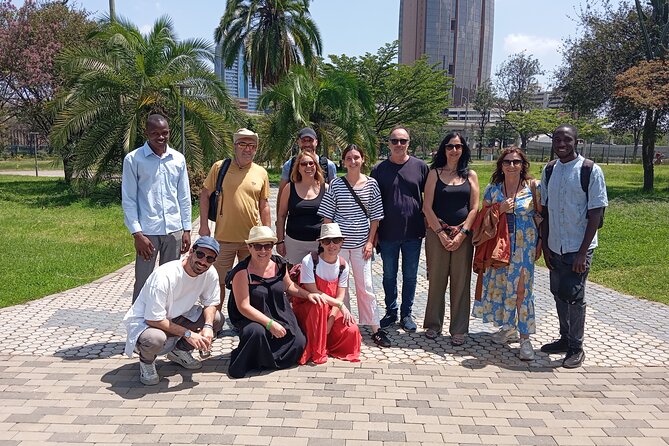
- Local guides John and Samson: Expect city history, practical orientation, and answers to questions about life in Kenya.
- Shopping is built into the route: City Market and the Maasai Market offer places to look for traditional Kenyan items.
- KICC rooftop access costs extra: The tower view is part of the route, but admission is not included.
- Plan for a long walk: The advertised duration is about 2 hours and 40 minutes, though one Spanish-language outing lasted around 3.5 hours.
Why this walking tour works as a Nairobi introduction

Nairobi can feel like several cities joined together. You have green public parks beside high-rise offices, churches and mosques near government buildings, and markets selling handmade goods close to grand institutions. This walk gives you that broad picture without asking you to arrange several separate visits.
The route is also useful if you have only one free day in Nairobi or want to understand the central district before heading to other sights. I would use it early in a stay, since the information about streets, landmarks, and city layout can help you make better choices afterward.
The experience is not built around long indoor visits. Most stops last between 10 and 20 minutes, so you should think of it as a guided orientation walk rather than a series of museum tours. You see the outside of many places, hear why they matter, and pause for a closer look.
That format suits me when I want context without spending a whole day in one building. If you prefer extended museum time, quiet photography, or a slow café break, this route may feel brisk.
More City Tours in Nairobi
- Nairobi Historical Walking City Tour
★ 5.0 · 258 reviews - Nairobi City Walking Tour with Traditional Kenyan Lunch
★ 5.0 · 106 reviews - Nairobi: Private 4-Hour City Tour
★ 4.5 · 68 reviews
Starting at Jamia Mosque and McMillan Library
The meeting point is Carrefour St. Ellis on Wabera Street, near public transportation. From there, the first stop is Jamia Mosque, described as the biggest mosque in Kenya. You have about 10 minutes here, enough for an introduction to the building and its place in Nairobi’s religious life.
The short stop means you should not expect a detailed architectural visit. Still, beginning with a major mosque makes sense. It quickly shows the city’s mix of faiths and communities, a theme that continues throughout the walk.
Next comes McMillan Memorial Library, an old city-center library built in 1929 to remember William Macmillan. His wife established it in his memory. Again, the visit is about 10 minutes, so the value lies in the guide’s explanation and the chance to see an early civic institution rather than settle in to read.
I find this pairing effective. The mosque and library offer two very different ways to think about Nairobi: one tied to worship and community, the other to education and public memory.
City Market and the first chance to shop

City Market receives about 20 minutes, making it one of the more useful pauses on the route. The market sells traditional items made by different Kenyan communities, with Maasai goods receiving particular attention.
This is a practical place to begin souvenir shopping because you can see the range of objects available before deciding what you want. You might find yourself comparing designs, materials, and prices, though the tour does not promise a formal shopping lesson or a fixed amount of browsing time.
Keep your attention on the clock. A 20-minute market stop can pass quickly, especially if you want to ask about an item or make a purchase. If shopping is a major goal, you may want to return later rather than trying to fit every decision into the walk.
The market also gives the tour a more grounded feel. Instead of looking only at official buildings, you see how craft and commerce connect Nairobi with communities across Kenya.
The University of Nairobi and Maasai Market
The University of Nairobi is presented as the oldest and biggest university in eastern Africa. The planned stop lasts 20 minutes, giving you time to hear about its role in the city and the region.
A university may not sound like an obvious sightseeing stop, but it adds useful context. Nairobi is not only Kenya’s political and business center. It is also a place of higher education and public debate. The university helps explain the city’s wider importance.
The Maasai Market follows, with another 20-minute pause. This market sells Maasai items as well as goods associated with other Kenyan communities. It is described as one of the best places on the route for souvenirs.
I like having two market stops because they let you compare settings. City Market is a fixed city-center market, while the Maasai Market gives traditional crafts a more direct role in the walking route. Still, you should remember that shopping conditions can vary. The tour includes the stops, not your purchases, and 20 minutes may be short if you want to browse carefully.
Use these markets to look, ask questions, and note what appeals to you. You can always return to buy something later if the route and your schedule allow.
More Walking Tours in Nairobi
- Nairobi: Historic and Modern Highlights Walking Tour
★ 4.8 · 703 reviews - Nairobi Downtown Walking Tour
★ 4.7 · 208 reviews - Nairobi Walking Tour: Downtown & City Tour
★ 4.8 · 32 reviews - Day tour to Hells Gate, Lake Naivasha and Crescent Island Walk
★ 5.0 · 26 reviews
Uhuru Park and the Cathedral Basilica

Uhuru Park offers a change of pace after the market and university. It is a green public park in the middle of Nairobi, with about 15 minutes set aside for the stop.
This is one of the details I like most about the route. Nairobi’s parks help explain why the city is often described as green, and Uhuru Park shows that open space is not far removed from the center’s dense streets and offices. Fifteen minutes is enough for a short pause and an explanation, though not for a leisurely park visit.
The Cathedral Basilica of the Holy Family comes next. This Catholic church is in the city center, and the planned visit lasts 10 minutes. Its presence alongside Jamia Mosque helps underline Nairobi’s religious diversity without turning the tour into a formal religious study.
You should treat both stops as visual and cultural markers. The schedule moves on quickly, but the contrast between public park, church, mosque, market, and university gives the walk its shape.
KICC and the best city view
Kenyatta International Conference Center is the route’s main viewpoint. From the rooftop, you can get a clear view across Nairobi’s city center.
Admission is not included, so budget for an additional fee. The tour price covers the guide and listed taxes, but not this rooftop entry. That distinction matters because the KICC view is likely to be one of the walk’s most memorable moments, and you should not assume it is included in the $20.
The planned stop is 15 minutes. That is enough to take in the view and orient yourself, but it is not a long photography session. If you enjoy skyline views, keep your camera ready and listen closely to the guide’s explanation of what you are seeing.
I consider this extra cost reasonable if the rooftop is open and you want a city overview from above. It also helps make sense of the walking route. After seeing the center at street level, you get a wider picture of how the districts and public spaces fit together.
The tour listing does not state the exact admission price, so you should confirm that amount when booking or with the provider. This is the one clear paid add-on on an otherwise low-cost route.
Parliament, the Railway Museum, and the National Archives
Parliament of Kenya is included as a 10-minute stop. It is described as the tower where members of parliament hold their meetings. The brief visit is mainly about the building and its role in national government.
Because this is a working civic site, do not expect an extended interior tour based on the information provided. The value is in seeing where national decisions are made and hearing the guide connect the building to Kenya’s modern state.
The Nairobi Railway Museum follows, also with about 10 minutes. The railway was built by the British with help from Indian workers, and it is credited here with leading to the creation of Nairobi. The route identifies the railway as dating from 1985, though the provided description may contain a date error. I would rely on the guide for the historical explanation rather than treating that single date as settled fact.
The stop is important because Nairobi’s growth is closely tied to transport. A railway does more than move people and goods. It helps explain why a city developed where it did and how colonial-era infrastructure shaped Kenya’s capital.
The National Archives on Moi Avenue gives you another short stop, about 10 minutes. It holds artifacts and documents relating to Kenyan government history since independence. Even without a long indoor visit, this stop adds a national record to the route’s collection of buildings and public spaces.
Together, Parliament, the Railway Museum, and the National Archives create the most political and historical section of the walk. I would pay close attention here, since these are the places that link Nairobi’s streets to the story of the country.
Jeevanjee Gardens and the walk back

Jeevanjee Gardens is a small park in Nairobi, with about 10 minutes planned for the stop. Like Uhuru Park, it gives you a brief look at public green space in the middle of the city.
The tour ends back at the original meeting point. There is no private transportation, so you walk the full route and return on foot. The total advertised duration is approximately 2 hours and 40 minutes, but timing can vary. One Spanish-language outing took around 3.5 hours, and the actual pace may depend on questions, market activity, and the time spent at KICC.
That flexibility can be a good thing if you enjoy conversation. It can be less helpful if you have a tight connection, a fixed lunch booking, or another timed activity immediately afterward. I would leave extra room in your schedule.
Guide style, group size, and language
John is the guide most clearly associated with the experience, and he is described as young, energetic, friendly, and clear when explaining Nairobi’s history. He is also praised for answering questions and finding his way around the city. Samson is another named guide.
The tour includes certified guiding in English and Spanish. John’s Spanish is described as fluent, making this a useful option if you want more than basic translation. The strongest value here is not just identifying buildings. It is hearing about Nairobi and Kenya in a direct, conversational way.
The maximum group size is 50 people. That is a fairly large ceiling for a walking tour, so the feel may depend on the number booked on your date. A smaller group should make it easier to ask questions and stay close to the guide. With a full group, you may need to keep an eye on the meeting point and listen carefully in noisy streets.
Most people can take part, and the route is near public transportation. The information does not provide a detailed accessibility assessment, so if you have specific mobility needs, ask the provider before booking. The stated duration and multiple stops make comfortable walking shoes a sensible choice.
Is $20 good value?
At $20 per person, I see this as a strong-value introduction to central Nairobi. You receive a certified guide, a route covering 12 important sites, and explanations in English or Spanish. The tour also includes all listed fees and taxes, apart from KICC admission.
The value comes from the range. Visiting Jamia Mosque, two markets, Uhuru Park, the university, Parliament, the Railway Museum, the National Archives, and KICC separately would take planning and local orientation. Here, one guide connects them into a single story.
The price does not cover transportation, food, shopping, or the KICC rooftop ticket. You should also avoid treating the tour as a full entry ticket to every attraction. Several stops are short exterior or orientation visits.
For me, the walk earns its price if I want local context and a quick sense of place. It is less suitable if I want long indoor visits or a private, slow-paced experience.
Who should book this Nairobi walk?
I would choose this tour if you are visiting Nairobi for the first time, have a free afternoon, or want help getting your bearings before exploring alone. It also suits people who like asking questions about daily life, national history, and the meaning of the places they pass.
The route works well for solo visitors, couples, and families with older children who can manage a fairly long walk. The English and Spanish options widen its appeal, and the mobile ticket keeps the booking simple.
I would think twice if you dislike markets, walking in city centers, or short visits. You should also avoid placing another appointment too close to the finish time. The tour covers a lot, and that means it cannot give every stop the attention of a dedicated museum or architecture tour.
Cancellation and practical booking notes
You receive confirmation when booking, and free cancellation is available up to 24 hours before the start time for a full refund. Changes or cancellations made within 24 hours are not accepted for a refund, and the cut-off follows Nairobi local time.
The start and finish point is Carrefour St. Ellis, PR7F+G34, Wabera Street, Nairobi. Check the meeting details before setting out, arrive ready to walk, and keep room in your schedule for the full afternoon if your guide’s pace runs longer than the advertised time.
Should you book it?
Book this Nairobi City Walk Tour if you want a low-cost, locally guided introduction to the capital, with markets, public parks, religious sites, government buildings, and railway history in one route. John’s clear explanations and strong navigation make the experience especially appealing for first-time visitors.
Skip it if you want a private vehicle, long museum visits, or a relaxed pace with few stops. For most people seeking an informed first look at central Nairobi, though, the combination of wide coverage, local guiding, and a $20 price is hard to beat. Just bring comfortable shoes, allow extra time, and remember that the KICC rooftop costs more.
FAQ
How long does the Nairobi City Walk Tour last?
The advertised duration is approximately 2 hours and 40 minutes. Timing can vary, and one Spanish-language outing lasted around 3.5 hours.
Where does the tour start and finish?
The tour starts at Carrefour St. Ellis, PR7F+G34, Wabera Street, Nairobi. It ends back at the same meeting point.
Which languages are available?
The tour includes certified guiding in English and Spanish.
Is KICC admission included?
No. Admission to the rooftop at Kenyatta International Conference Center is not included in the tour price.
How much does the tour cost?
The listed price is $20 per person.
Can I cancel for a full refund?
Yes. You can cancel at least 24 hours before the experience start time for a full refund. Cancellations or changes made within 24 hours are not refunded.
Recently added around Nairobi
- Nairobi; City Walk Tour★ 4.5 · 3 reviews
- 2 Days Amboseli National Park Safari★ 3.5 · 3 reviews
- Private 3-Day Masai Mara Safari Adventure★ 5.0 · 3 reviews
- Kenya safari★ 5.0 · 3 reviews
- Full Day, Small Group Guided Tour to Amboseli National Park★ 4.5 · 3 reviews
- 11-Days Best of Kenya & Tanzania Big 5 Safari on a 4×4 Jeep★ 5.0 · 3 reviews
- 10-Days Explore Kenya Wildlife Private Safari★ 5.0 · 3 reviews
- Nairobi: Giraffe Center, Beads Factory & Bomas of Kenya Tour★ 4.5 · 3 reviews
Nairobi Tours, compared.

Nairobi National Park Half-Day Tour; Free Wi-Fi connection
Read our review →
National Park & Optional Elephants & Giraffe Center
Read our review →
NAI NAMI: Nairobi Storytelling Tour with Street Children
Read our review →




Elephant Orphanage and Giraffe Center Tour with Options
Read our review →Browse the lists this tour appears in