
Reviewed · NAIROBI TOURS
Go Granny Go – An Amazing Cultural Tour in Kenya
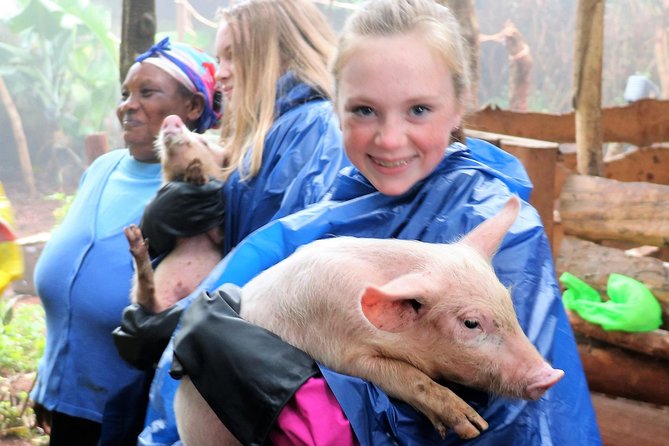
Meeting Kikuyu grandmothers near Nairobi gives you something a standard city tour cannot: time with the women who hold families together. You learn about childcare, community leadership, and pig farming while sharing lunch and tea in a village setting. The personal exchange is the point, not a quick photo stop.
I like the small maximum of nine people, which gives the visit a more natural feel, and I like that the program supports a working source of income rather than offering a one-off donation. You can also join in with farm chores and singing, so the visit is not just a talk.
The main consideration is the price, $265 per person. That is a serious half-day cost in Kenya, though it includes hotel transport, lunch, tea, and a community program. You should book this for the human connection and social impact, not as a bargain sightseeing outing.
Key points to know before you book
- Meet Kikuyu grandmothers in their own community, with time to hear about family care, leadership, and daily life.
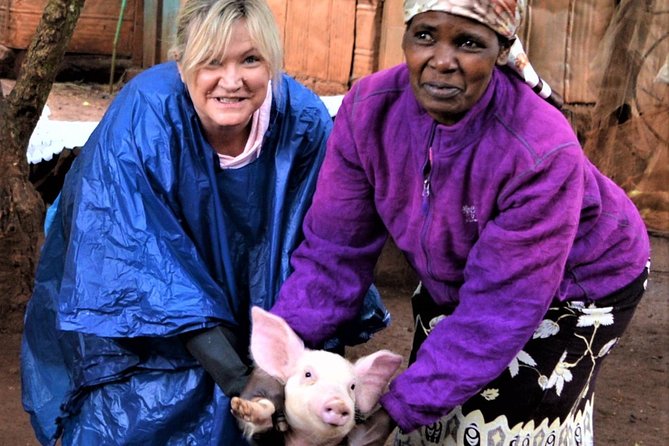
- Visit a pig-farming project supported by One Horizon, a practical income program for families facing severe financial pressure.
- Take part if you wish, with optional farm chores and joyful group singing.
- Share lunch and tea with the community, which creates the best setting for conversation.
- Keep the group intimate, with a maximum of nine people.
- Allow about six and a half hours, starting at 9:30 am and including round-trip hotel transfers.
Why this visit feels different from a normal Nairobi outing
Many Nairobi excursions focus on wildlife, landmarks, or food. This one asks you to slow down and spend time with people whose daily work rarely appears in a sightseeing program.
The women you meet are Kikuyu grandmothers and community leaders. They may also be raising grandchildren and caring for extended family members. In some homes, as many as 20 family members live together in a single-room corrugated iron house. That detail gives the visit its weight, but the women are not presented only through hardship. You also see their work, humor, songs, and efforts to build steadier lives.
I appreciate that balance. A respectful cultural visit should not turn poverty into a display. Here, the focus is on the women as decision-makers, carers, farmers, and hosts. You hear about difficult circumstances, but you also see a program designed to help families earn money through pig husbandry.
The experience is linked to One Horizon, which supports the small business program. That matters because your visit connects to an ongoing project, rather than being only a one-day encounter with no wider purpose.
More history days around Nairobi:
- Nairobi: Historic and Modern Highlights Walking Tour
★ 4.8 · 703 reviews - Nairobi Historical Walking City Tour
★ 5.0 · 258 reviews - Full Day Nairobi Cultural and Historical Tour
★ 5.0 · 153 reviews
Leaving Nairobi at 9:30 am for the Kikuyu village
The scheduled start is 9:30 am, with pickup offered from your hotel and return transport included. That makes the morning easier, especially if you are staying in Nairobi and do not want to arrange a separate driver for a village visit.
The total experience lasts about six hours and 30 minutes. The village portion is listed as about four hours, so the remaining time is likely used for driving and transfers. Exact travel time can vary, and you should keep the rest of your day fairly open.
The setting is described as a Kikuyu village near Nairobi, with Ngong Hills listed as the first stop. The supplied details do not promise a hike or a formal viewpoint, so do not book this expecting a hill walk. The hills help place the visit in the wider area, but the heart of the day is the community meeting and farm visit.
A mobile ticket and hotel pickup remove two small but useful hassles. You do not need to print a voucher, and you do not need to find a village meeting point on your own.
Meeting the grandmothers and hearing their stories
The first real stop is a personal introduction to the grandmothers. They are involved in raising grandchildren when parents can no longer care for them, and some support large extended families under tight financial conditions.
This is where the visit becomes more than a cultural presentation. You are listening to women explain their responsibilities in their own community. The subject matter can be difficult, particularly when you hear how many relatives may depend on one grandmother, but the conversation also shows their strength and practical judgment.
A manager and assistant help guide the program, according to the available feedback. Their role is useful because it gives structure to the visit while leaving room for direct conversation. You should expect an organized community experience, not an independent drop-in visit.
Take your time with this part. Ask simple, respectful questions about family roles, farming, and community work. You do not need to force a dramatic conversation. Often, the most useful exchange comes from ordinary subjects, such as how the farm operates or how responsibilities are shared at home.
Some personal accounts from the women have been described as compelling and inspirational. That does not mean the visit is light entertainment. You may leave thinking about the gap between family duties and available income, and about how easily one household crisis can affect several generations.
Seeing the pig farm as a working business
Pig farming is the practical center of the program. One Horizon supports the grandmothers with a small business model based on pig husbandry, giving them a more sustainable way to earn money for food and family needs.
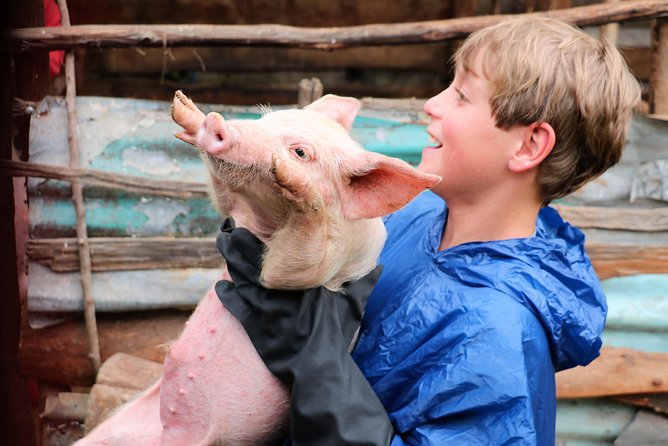
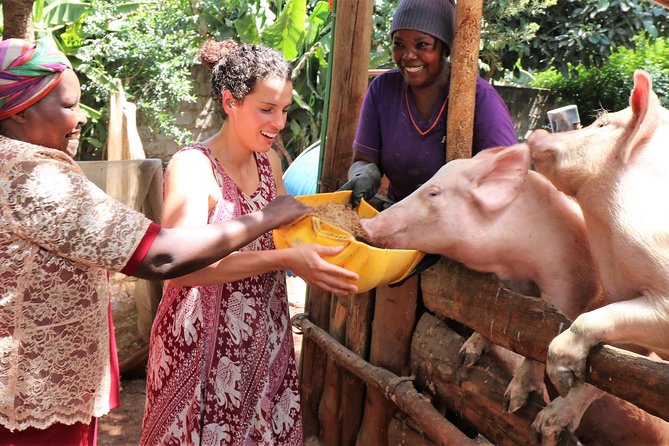
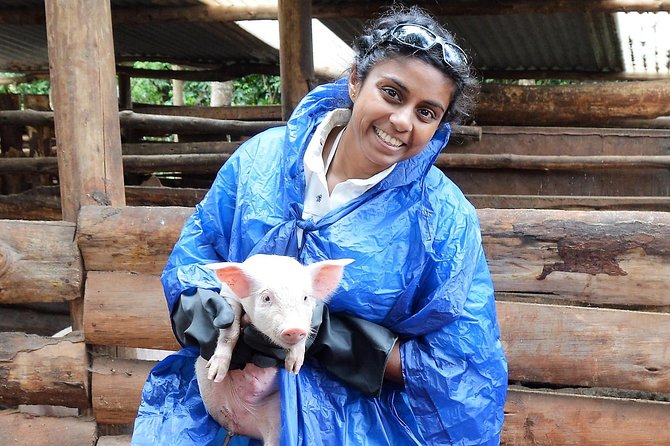
You are shown around a pig farm and can help with chores if you choose. This hands-on element gives you a clearer idea of what the program involves than a short donation presentation would. You see that income projects require regular care and work, not just an initial contribution.
The chores are optional. That is important. You can participate if you are comfortable, or stay nearby and learn by watching. The supplied information does not specify exactly which tasks are offered, so you should not expect a particular farm activity. The useful point is that the visit lets you engage with the project at a practical level.
I like this part because it connects culture with economics. You are not simply learning what Kikuyu family life looks like. You are seeing one response to a real problem: how to support households where one woman may care for many relatives.
It is also a good reminder to approach the farm with respect. This is someone’s livelihood and home environment, not a petting zoo. Follow instructions, ask before touching anything, and let the hosts set the pace.
A few more Nairobi days to weigh up
- Nairobi National Park Half-Day Tour; Free Wi-Fi connection
★ 5.0 · 878 reviews - Nairobi: National Park & Optional Elephants & Giraffe Center
★ 4.8 · 874 reviews - NAI NAMI: Nairobi Storytelling Tour with Street Children
★ 5.0 · 792 reviews - Nairobi National Park Half-Day Game Drive
★ 4.5 · 738 reviews
Singing, lunch, and tea with the community
After the farm visit, the social side of the day becomes more relaxed. You have a chance to join in singing, then share lunch and tea with the grandmothers and other community members.
The meal matters because it changes the rhythm of the visit. Instead of moving from one explanation to another, you sit together and talk. Food creates a more ordinary setting, and that can make it easier to ask questions or simply enjoy the company without treating every moment as a formal lesson.
The exact lunch menu is not provided, so do not book this expecting a specific Kenyan dish. Lunch and tea are included, however, and they are part of the experience rather than an afterthought.
The singing is described as joyful. You can join in, but you are not required to perform. If you are shy, listening and responding respectfully is enough. The goal is participation, not a test of musical ability.
This is likely to be the most memorable section if you value human contact. A wildlife drive can show you Kenya’s animals, but a shared meal can show you something about how people welcome others, spend time together, and create joy in difficult circumstances.
One useful tip: leave room in your schedule and your attention for conversation. The formal program may be finished before the day feels finished. Rushing away immediately after lunch would miss part of what you are paying for.
What the $265 price really covers
At $265 per person, this is not a low-cost local excursion. The price needs to be judged against what is included and what kind of day you want.
You are paying for approximately six and a half hours, hotel pickup and drop-off, a small group capped at nine people, a community-led visit, the pig-farming program, lunch, and tea. The small group is especially useful here. Nine people or fewer means the grandmothers do not have to address a crowd, and you have a better chance to ask questions and take part naturally.
The price also supports access to a setting that would be difficult to arrange independently. You could perhaps find a cheaper village transport option, but that would not necessarily provide the introductions, program structure, meal, or connection to the One Horizon project.
I would compare this cost with the price of another organized half-day activity, not with the cost of a taxi ride. If your main goal is to see as many Nairobi sights as possible, the value may feel weak. If you want a focused cultural meeting with a social enterprise element, the cost makes more sense.
The included food and transport add practical value, but they are not the main reason to book. You are choosing a small, personal program that puts community relationships ahead of a long list of sights.
Who will enjoy this experience most
I would recommend Go Granny Go to you if you want a slower day and real conversation. It suits visitors who are curious about family life, women’s roles, rural enterprise, and the challenges faced by households caring for several generations.
It is also a good choice if you have already seen wildlife or major Nairobi sights and want a different view of Kenya. One personal account described the meeting with the women and their families as a highlight alongside seeing wildlife for the first time. That comparison makes sense: the two experiences show very different sides of the country.
Families may also find the visit meaningful, although the provided information does not give a minimum age or specific child program. If you are booking with children, consider whether they will be comfortable listening, sharing a meal, and taking part in a community setting.
You should think twice if you want a packed sightseeing schedule, a formal museum-style explanation, or a scenic hike. The Ngong Hills reference should not lead you to expect a long outdoor adventure. This is a people-focused visit with some practical farm activity.
The tour is accessible to most people according to the supplied details, and service animals are allowed. Specific information about surfaces, toilets, transport vehicles, and food requirements is not provided, so ask the operator if those points matter to you.
Keeping the encounter respectful
The best way to approach this experience is as a meeting, not a performance. The grandmothers are sharing their community and work with you, but you should not assume that every personal question is appropriate.
Listen carefully when family hardship is discussed. Ask before taking photographs, especially inside homes or around relatives. If you join a song or farm chore, follow the hosts rather than trying to take over.
The program has a clear social purpose, but you should still keep your expectations realistic. A tour fee cannot solve the problems faced by a large extended family. What it can do is direct attention and income toward a community program while giving you a more personal understanding of the people involved.
I also like that the visit does not reduce the women to recipients of help. The pig project presents them as people building businesses and caring for their families. That framing makes the experience more dignified and more useful.
Booking details that matter
The tour begins at 9:30 am and offers hotel pickup and drop-off. Confirmation is received at booking, and the ticket can be used on a mobile device.
The maximum group size is nine people. That is small enough to support a personal visit, but you should still expect to share the experience with other members of your group rather than having a private appointment.
Free cancellation is available if you cancel at least 24 hours before the local start time. Cancellations made less than 24 hours ahead are not refunded, and late changes are not accepted. Keep that deadline in mind if your Nairobi plans may shift.
The operator is One Horizon Africa. The available details do not provide the names of the guide or assistant, so you should not expect to select a particular host when booking.
Should you book Go Granny Go?
Book this tour if you want a personal, community-based experience and are willing to pay for quality time rather than a long checklist of attractions. The strongest reasons are the group size, the chance to speak with Kikuyu grandmothers, and the link to a working pig-farming program.
Skip it if $265 feels too high for a half-day or if you mainly want Ngong Hills scenery. The day is about people, family responsibility, farming, lunch, tea, and shared singing.
For the right visitor, this can be one of the more lasting experiences in Nairobi. It asks for attention and respect, then gives you a direct look at the women who care for families, lead communities, and work to create a steadier future.
FAQ
Where does Go Granny Go take place?
The experience takes place in a Kikuyu village near Nairobi, with Ngong Hills listed as the first stop.
What time does the tour start?
The scheduled start time is 9:30 am.
How long does the experience last?
The full experience lasts approximately six hours and 30 minutes. The village visit itself is listed as about four hours.
Is hotel pickup available?
Yes. Hotel pickup and drop-off are offered as part of the experience.
What is included in the visit?
The experience includes meeting Kikuyu grandmothers, learning about their community work and family responsibilities, visiting a pig farm, optional participation in chores, singing, lunch, tea, and round-trip transfer from your hotel.
How many people can join the tour?
The maximum group size is nine people.
Is lunch included?
Yes. Lunch and tea are included.
Can I take part in farm chores?
Yes, you may pitch in with farm chores if you wish. Participation is optional.
Are service animals allowed?
Yes. Service animals are allowed.
What is the cancellation policy?
You can cancel for a full refund if you cancel at least 24 hours before the experience start time. Cancellations or changes made less than 24 hours before the start are not accepted for a refund.
Recently added around Nairobi
- Nairobi; City Walk Tour★ 4.5 · 3 reviews
- Private 3-Day Masai Mara Safari Adventure★ 5.0 · 3 reviews
- Kenya safari★ 5.0 · 3 reviews
- 2 Days Amboseli National Park Safari★ 3.5 · 3 reviews
- 11-Days Best of Kenya & Tanzania Big 5 Safari on a 4×4 Jeep★ 5.0 · 3 reviews
- Full Day, Small Group Guided Tour to Amboseli National Park★ 4.5 · 3 reviews
- 10-Days Explore Kenya Wildlife Private Safari★ 5.0 · 3 reviews
- Nairobi: Giraffe Center, Beads Factory & Bomas of Kenya Tour★ 4.5 · 3 reviews
Nairobi Tours, compared.

Nairobi National Park Half-Day Tour; Free Wi-Fi connection
Read our review →
National Park & Optional Elephants & Giraffe Center
Read our review →
NAI NAMI: Nairobi Storytelling Tour with Street Children
Read our review →




Elephant Orphanage and Giraffe Center Tour with Options
Read our review →Browse the lists this tour appears in